CHIROKCHI HAZRATI LANGAR MONUMENTS (Chirokchi district)

In the foothills of three districts in Kashkadarya region, there are villages named after Langar Ota and Langar.
According to the elders of Chirakchi Langari, a historical article titled “Manoqib” was once written about Langar Ota. Toponymic dictionaries provide several different interpretations of the term “Langar”. These are:
1. Langarchöp - a handheld stick that helps maintain balance.
2. In Islam, Sufis and dervishes determined their place of settlement by “casting an anchor” - this place would become their dwelling. Additionally, this place served as a refuge for widows and the poor, providing them with shelter and food.
3. In some sources, this term is also described as having Mongolian origins. It is noted that “langar” means a sacred grave, and this word in Mongolian – “langur” - as a result of a slight change in pronunciation, became Langur-Langar-Muazzam, giving the meanings of a grave or a large cemetery.
Another meaning of the word “langar” is “stick or point of balance”, which is widely interpreted as “central village” among the people. Experts have emphasized that this ancient settlement deserves to be called not just a village, but a town situated between villages. This place, which has attracted the attention of world travelers, is located in the Chirakchi district. At present, this shrine is also drawing international ecotourism. The cemeteries, pilgrimage sites, historical monuments, natural landmarks, rock paintings and inscriptions, primitive human dwellings in the Konizar cave, stone statuettes, thousand-year-old plane trees, and mineral springs in the village of Langar all testify to the uniqueness of this location.
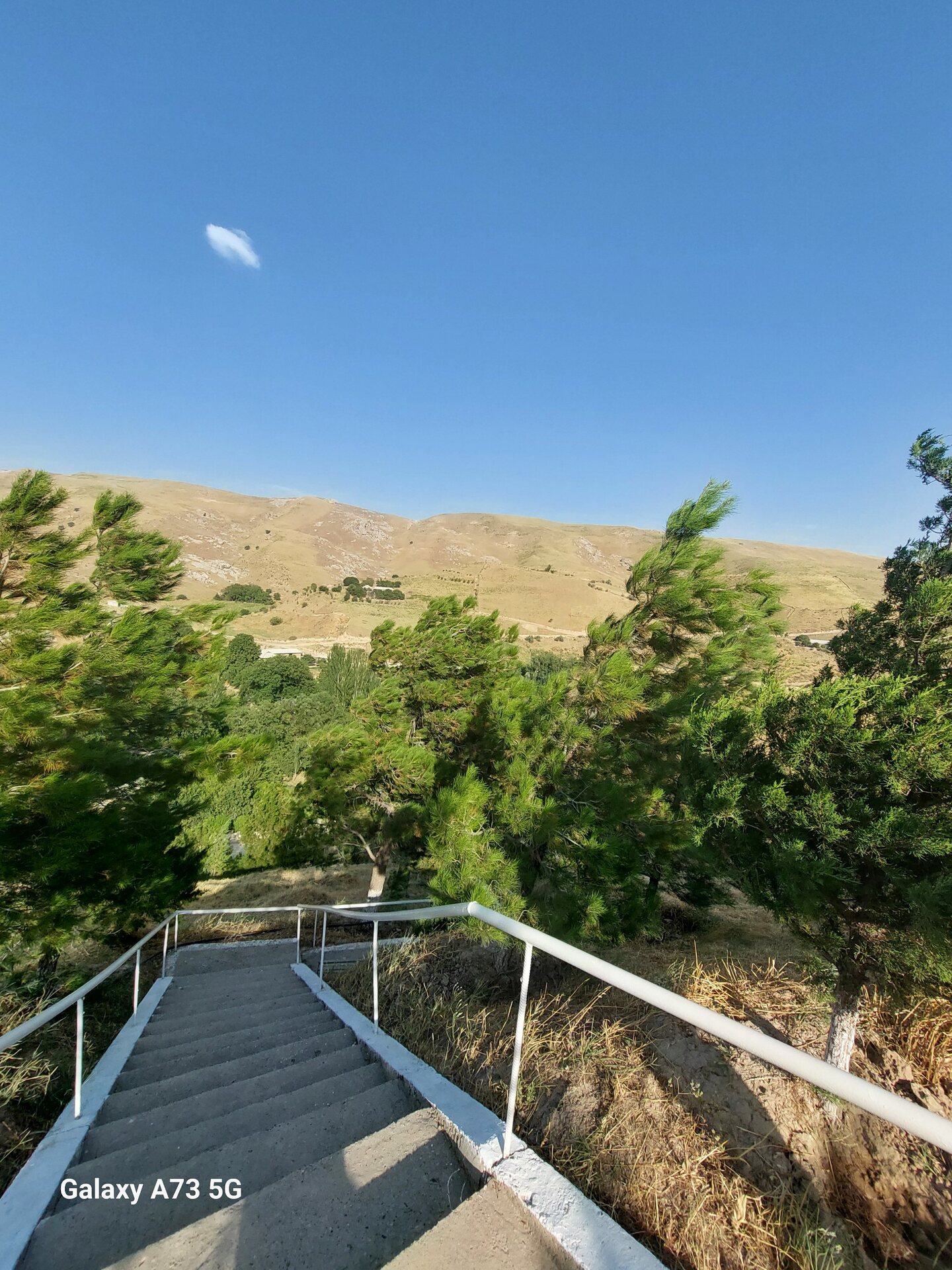
In the Chirakchi district, 45 km north of Chirakchi city, the village of Langar-ota is situated at the center of the Kalkama oasis. It is located between the Karatepa and Chakilikalon mountain ranges, which extend from the Hazrat Bashir mountains to Jom, at the junction of the Hissar and Zarafshan mountains bordering the neighboring Samarkand region. According to archaeologist and academician Rustam Sulaymanov, people have been living in the village of Langar-ota for five thousand years. Some artifacts found in the village’s Gedalisoy include a double-edged bronze dagger, an arrowhead, an ancient burial site with black stones, and two ossuaries (ceramic coffins). The exhibits at the Langar Ota History Museum date back to prehistoric times. The oldest item in the museum is a fossilized relic of unicellular organisms from when the area was underwater during the Paleozoic era.
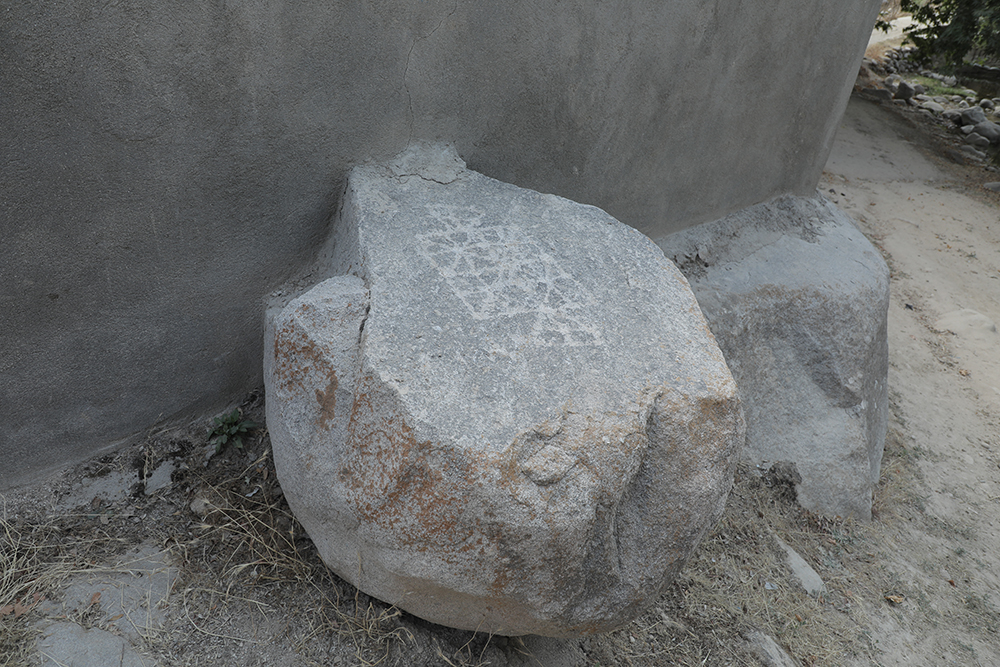
According to ancient traditions, pilgrimages began at the footsteps of “Qadamjo”. This structure, dating back to our times, was built by a wealthy individual to protect a stone called “The Hand of God” from precipitation. It appears as if two wooden screw-like structures are guarding this miraculous site. No matter how closely we examine the stone, no traces of human manipulation can be found. Such impressions are common in dough but rarely seen in stone. In ancient times, even kings, khans, and officials would ride their horses to visit this sacred place, but they would walk barefoot from this point to the shrine.
The shrine of Langar Ota in Chirakchi is also known as Yangi Langar or Second Langar. One of the legends associated with this monument tells of the miraculous assistance provided by the “Avliyos” (saints) to common people. This legend is connected to the ritualistic site of “Langar-ota”, where the famous Sheikh Ahmad Yasawi cast a net over villagers who were reluctant to accept Islam and threw it into the sky. Another sheikh of Langar-ota caught the net with his staff, accepted their plea regarding the adoption of the religion, and guided the villagers towards faith. Since then, Langar-Ata has become their sacred dwelling place.
The pilgrimage to Langar Ota begins at the Kadamjo - a stone platform at the village entrance where Sultan Vays and his companions met. Then, on the hill in the village, the tombs of the sheikhs are visited before entering the old mosque. In ancient times, every king and beggar who came to visit Langar Ota would dismount at this Kadamjo pilgrimage site and proceed barefoot to visit the sheikhs' tombs.
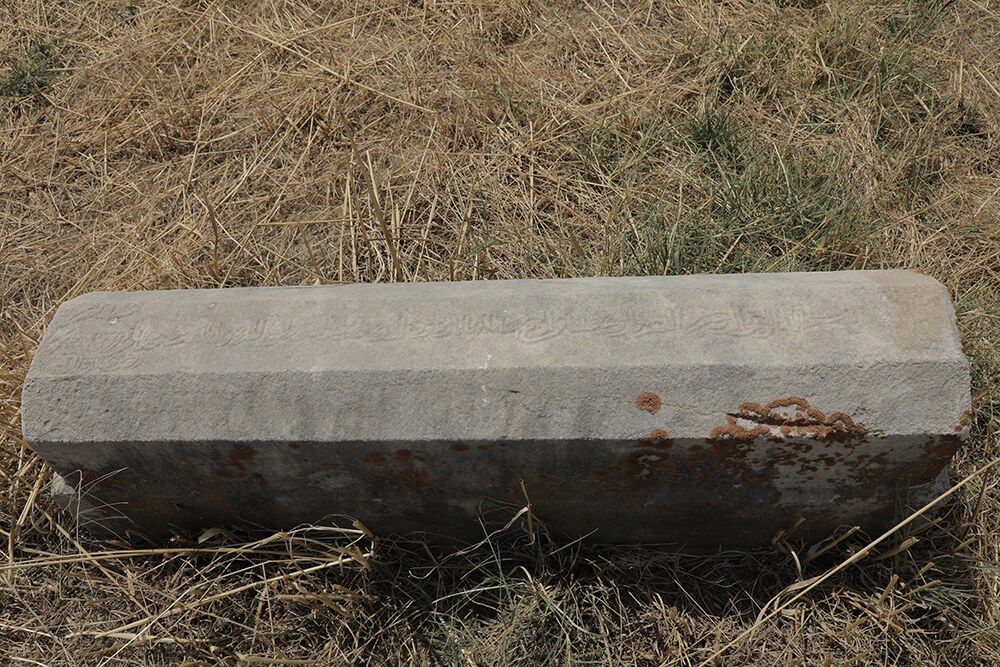
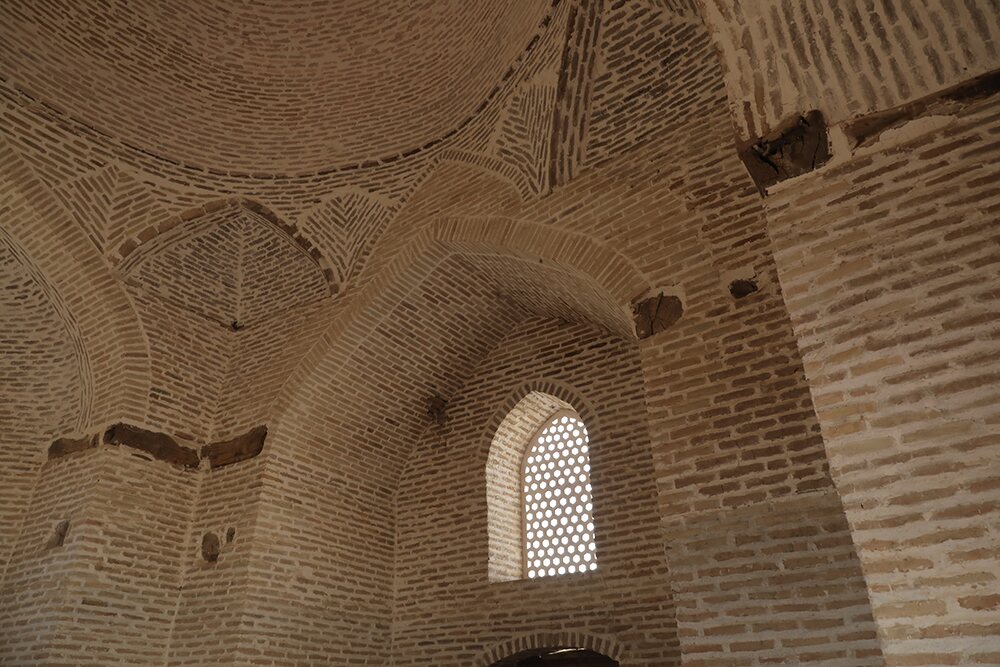
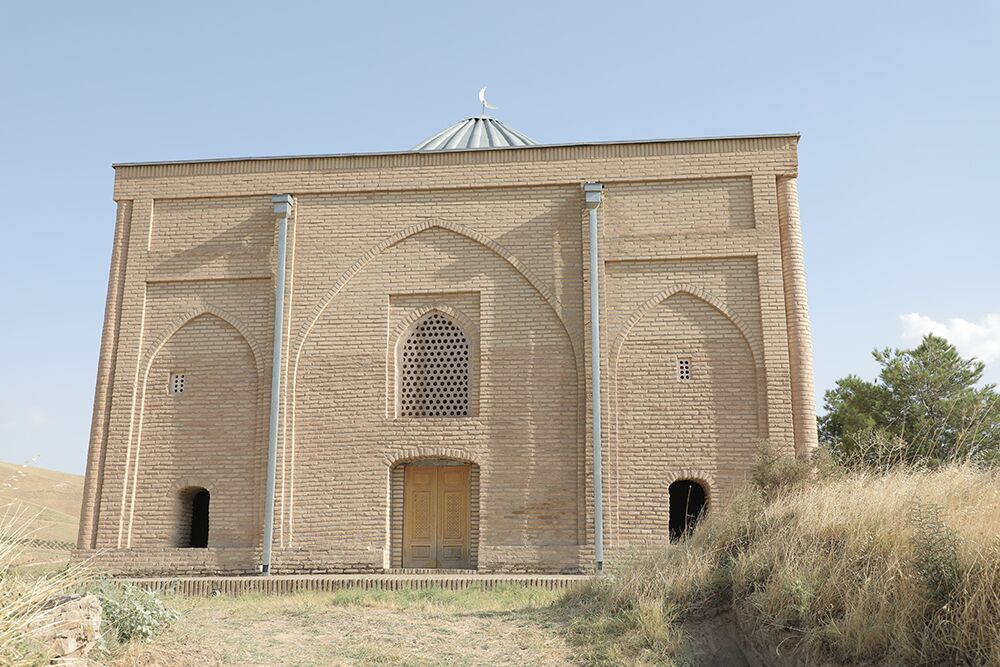
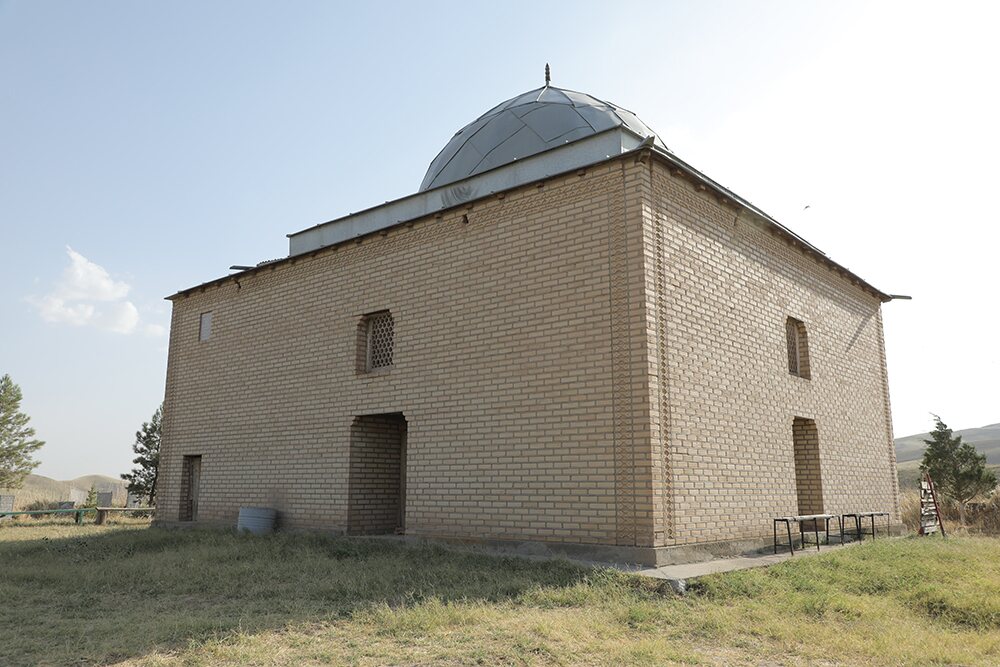
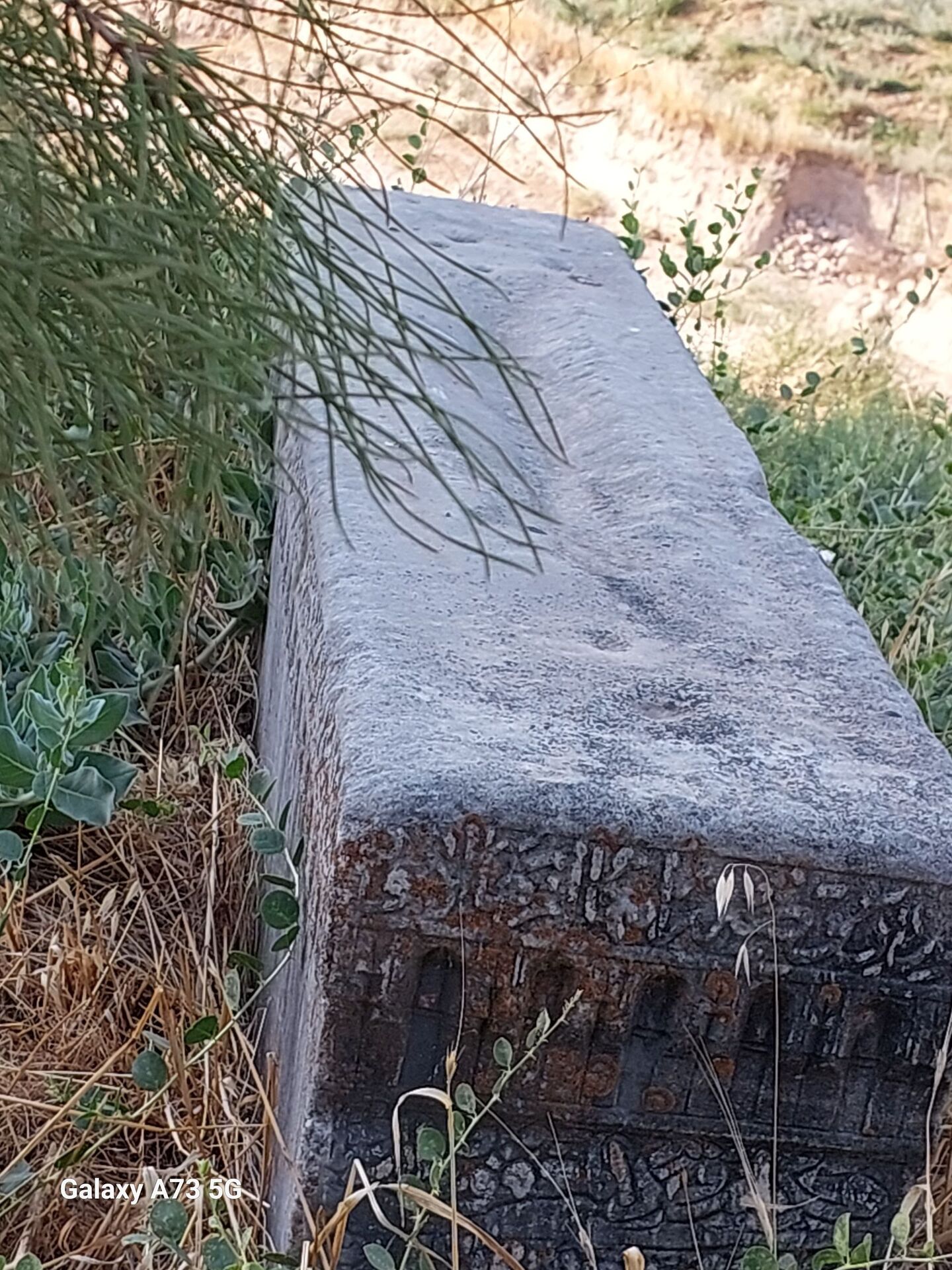
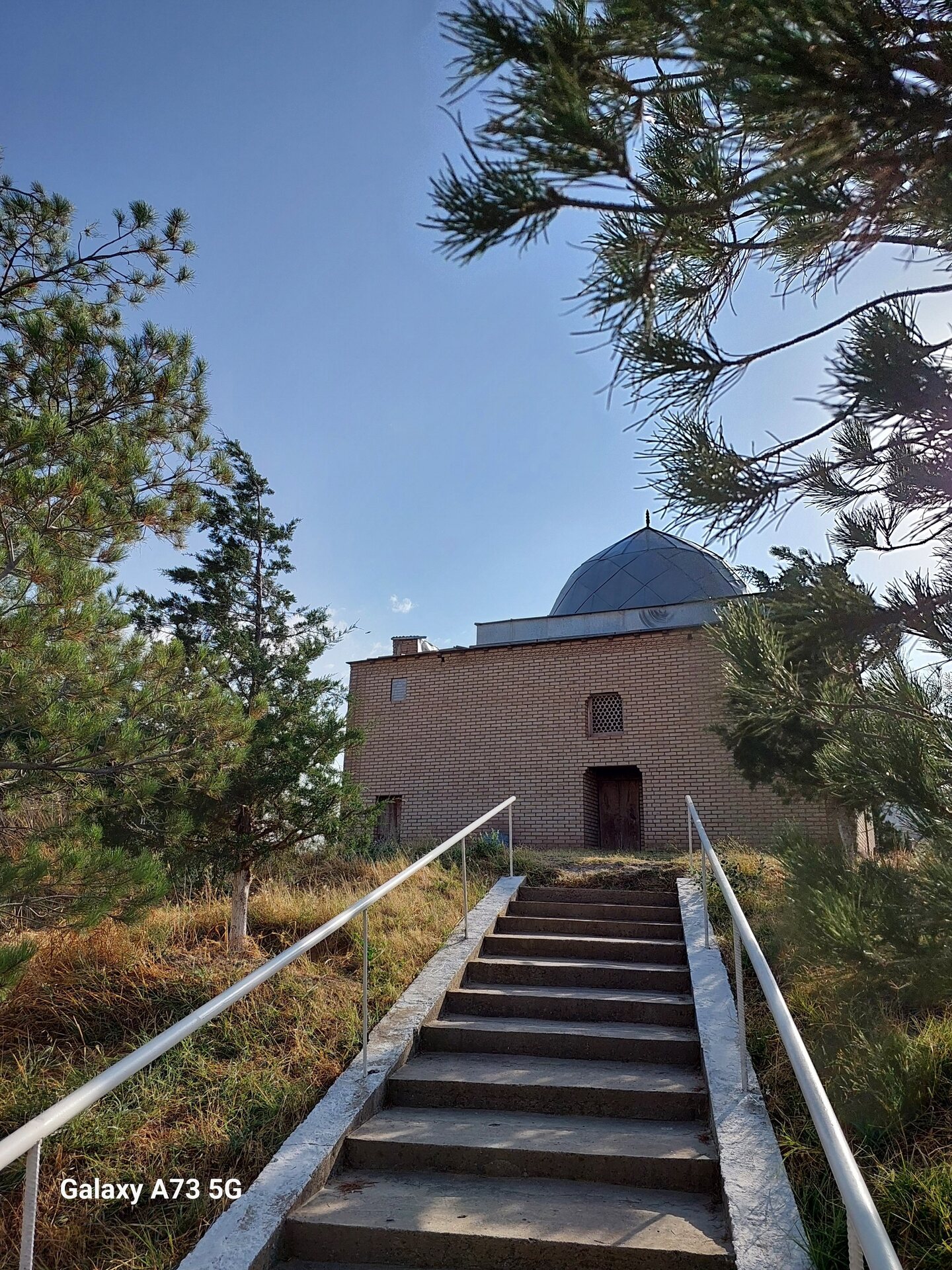
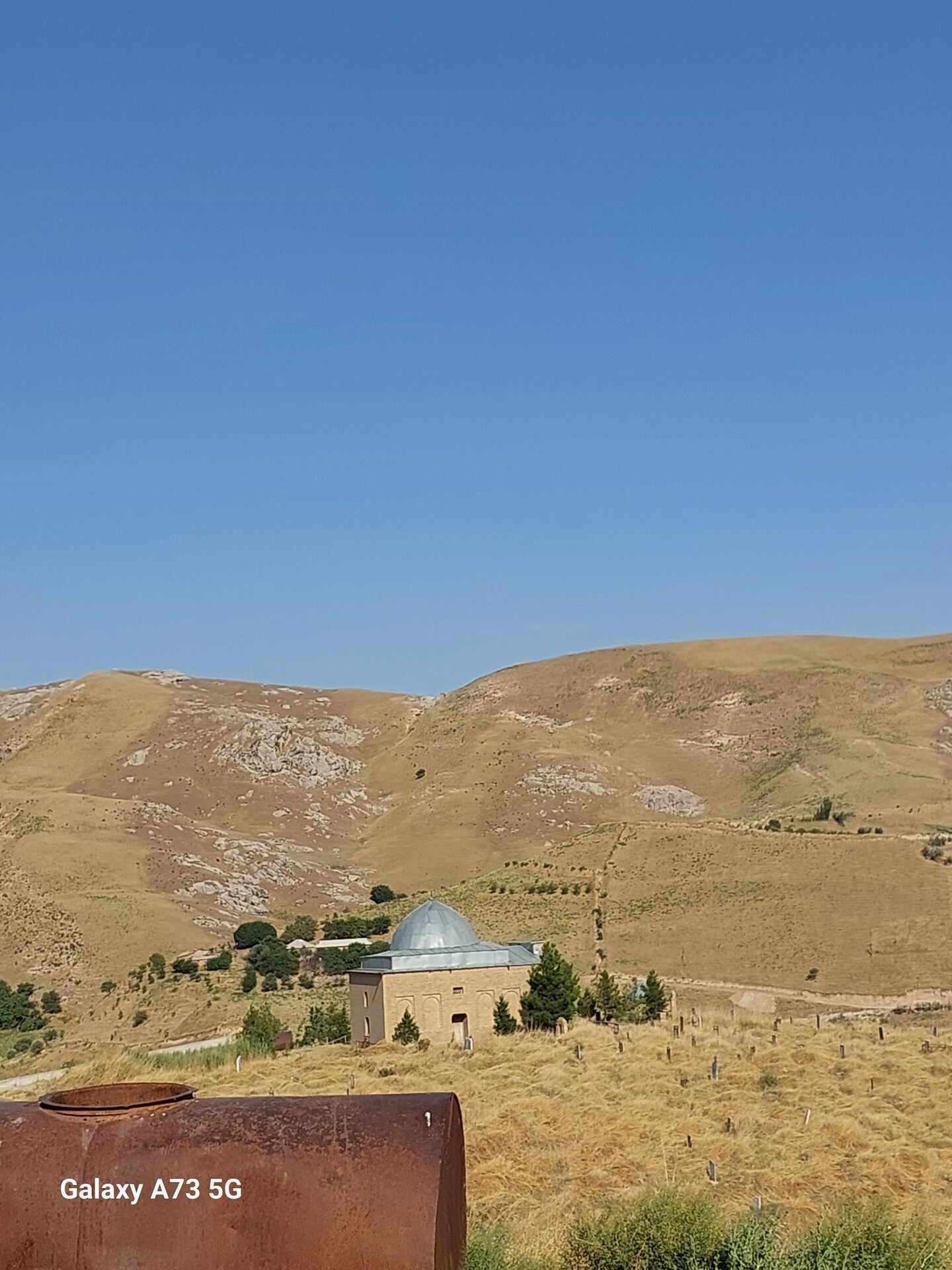
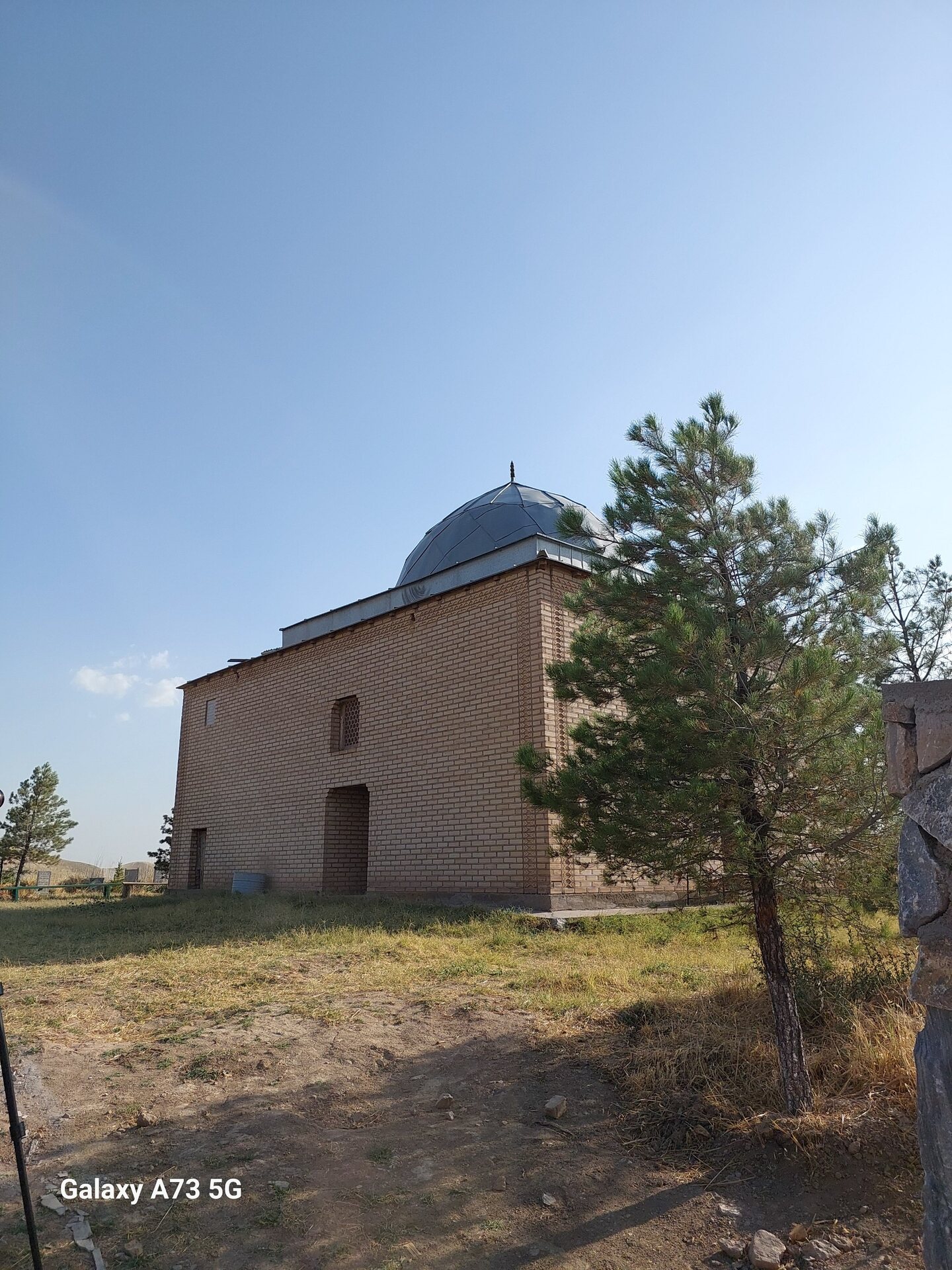
Currently, the large cemetery in Langar Ota covers an area of nearly twenty hectares. On two equal hills of the cemetery, two khanaqahs - one large and one small - were built without any foundation, using highly durable, square flat bricks to form domes. According to research, they were constructed in the 16th century. At the end of the 16th and the beginning of the 17th centuries, two mausoleums were built by the Ashtarkhanid state at an altitude of 1000 meters above sea level - one for Sheikh Abul Hasan Ishqi and another where the descendants of Langar Ota are buried. There are no written sources about who specifically built these mausoleums or for whom. However, the inscriptions on top of the tombs indicate that sheikhs were buried here long ago.
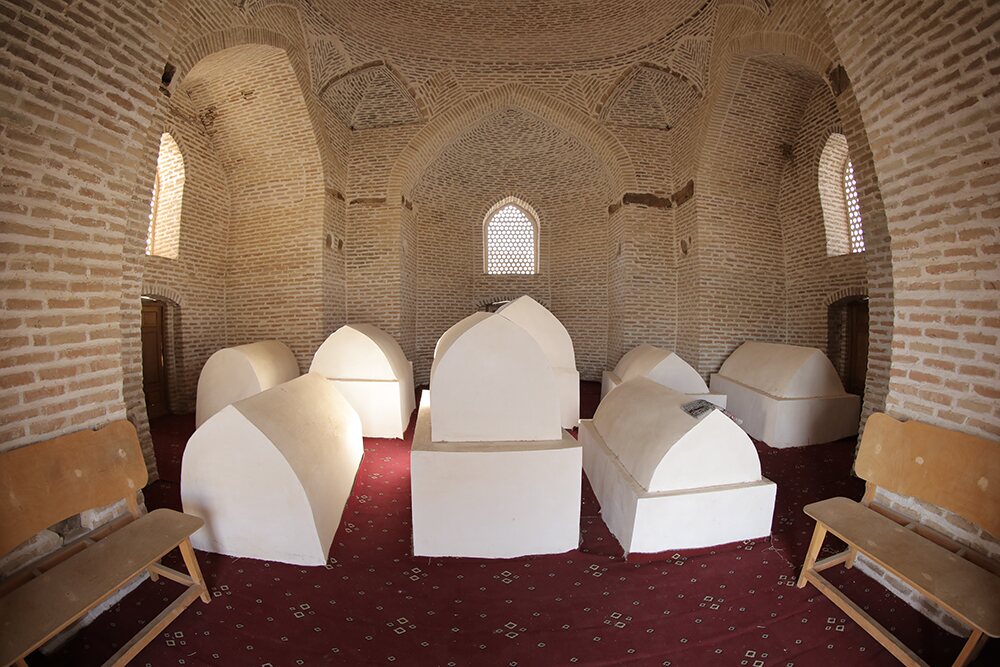
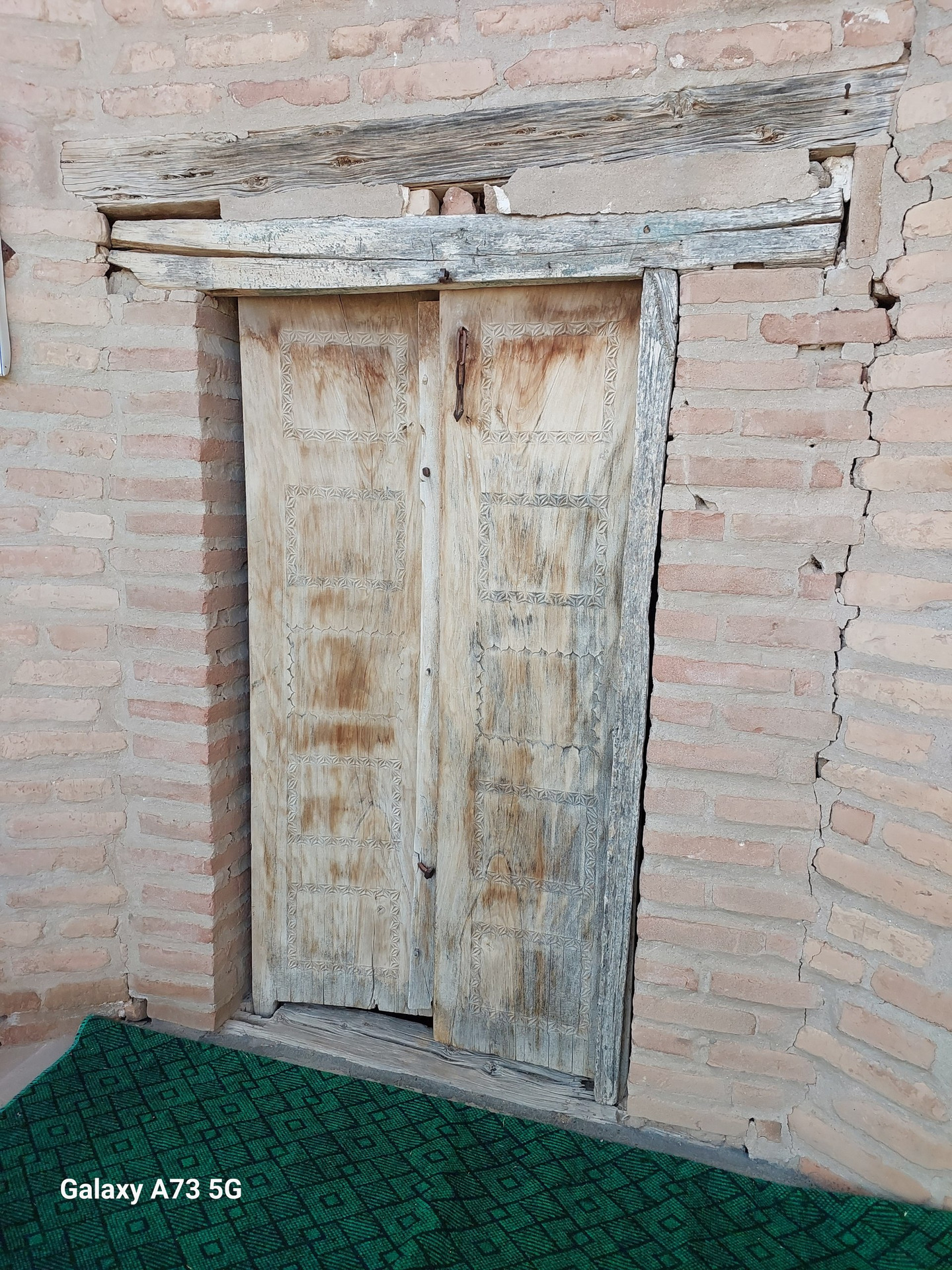
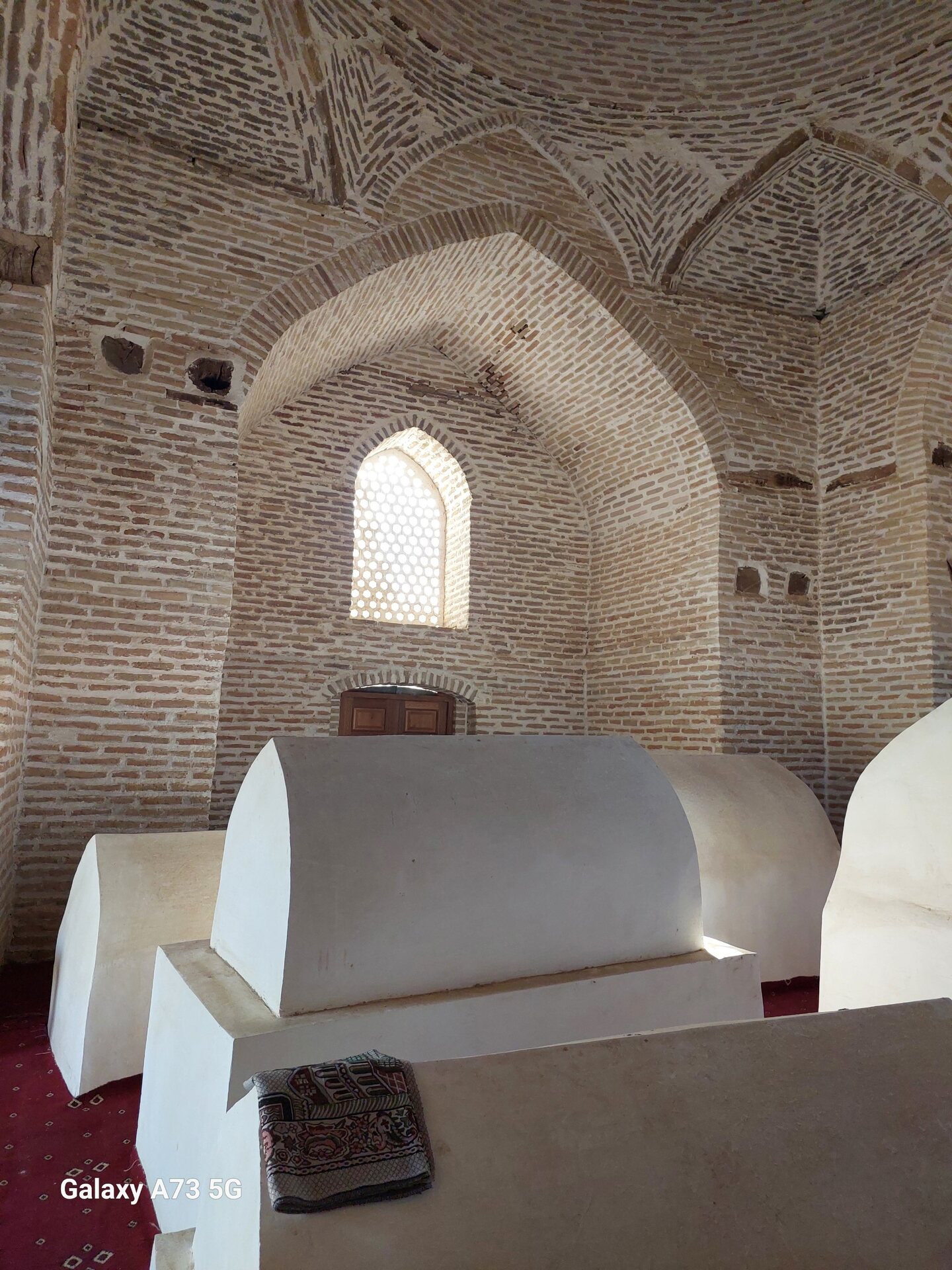
As noted, neither of the mausoleums contains records of the building's construction history or information about who is buried there. It is believed that the smaller mausoleum belongs to Hazrat Mirimshaykh, one of the descendants of Sheikh Abul Hasan Ishqi.[2] This mausoleum features a dome with a high portal, and inside there are 4 tombs of varying sizes. The mausoleum measures 11 x 9.5 m and is constructed of flat bricks in a dome shape, with bricks measuring 25 x 25 cm. The eastern khanaqah is magnificent, unique, and has spacious chillakhanas (retreat chambers). It is believed that Mirimshaykh, the grandson of Sheikh Abul Hasan Ishqi, was buried in the largest of the 4 tombs located in the eastern portico of the mausoleum. It is believed that Mirimshaykh, the grandson of Sheikh Abul Hasan Ishqi, was buried in the largest of the 4 tombs on the eastern porch of the mausoleum.
In the western part of the mausoleum, there is a second portico measuring 15 x 12.5 meters. This portico contains 8 tombs of different sizes, arranged according to the status and rank of the sheikhs.
According to Mahmud bin Wali, in the 17th century, more precisely in 1640, Shahrisabz and Guzar were divided into separate principalities, where the Ashtarkhanids ruled [3:86-87]. During this time, the Ashtarkhanid rulers paid more attention to the sheikhs of this area. As a result, two grand mausoleums were erected in Langar. Between the two mausoleums, Quli Sheikh Ishqi and Baba Sheikh Ishqiya were buried (died in 1039 AH, 1629/30 CE) [3:87]. The inscriptions on the tombstones indicate that the sheiks buried in this place belonged to the Ishqiya order of Sufism. It is possible to see that they contain the names of the descendants of Abul Hasan Ishqi: Sheikh Muhammad Boqi Ishqi, Salimkhoja son of Niyazmuhammad Khoja, and others. The tombs of sheikhs from the Ishqiya order are also found in the Qiyomiddin Sheikh cemetery in Shahrisabz district, in Katta Langar (Kamashi district), and in the Astana Ata cemetery in Samarkand [4].
The village elders possess a book titled “The Dynasty of Abul Hasan Ishqi”, which consists of three parts. One of the books is preserved in very good condition.[5]
In the “Genealogy” of Sheikh Abulhasan Ishqi, which has been passed down through generations, special praise and description are given to Hazrat Mirimshaikh, the son of Sheikh Mukhriddin. It is noted that “Mirimshaikh was the pillar of the sheikhs, the cream of the noble classes, the solver of all intricate problems, and a person comparable to the hoopoe bird”.
LIST OF USED LITERATURE
- http://visitkashkadarya.uz/ru; https://meros.uz/uzc/object/langar-ota
- Оғзаки тарих. Зиёратгоҳ Имом хатиби билан суҳбатдан олинган маълумотлар.
- Xamidova M.S. Amir Temur va Temuriylar davrida shaharsozlik va me’morchilik. – Toshkent, 2024.
- Қашқадарё вилояти маданий мерос бошқармаси маълумоти. − Қарши шаҳри, 2019 йил 19 август.
- http://azu.uz/assorty/tour; http://ahmadk.narod.ru/langar/toglik