ISHAQ BUVA SANCTUARY (Mirishkor district)

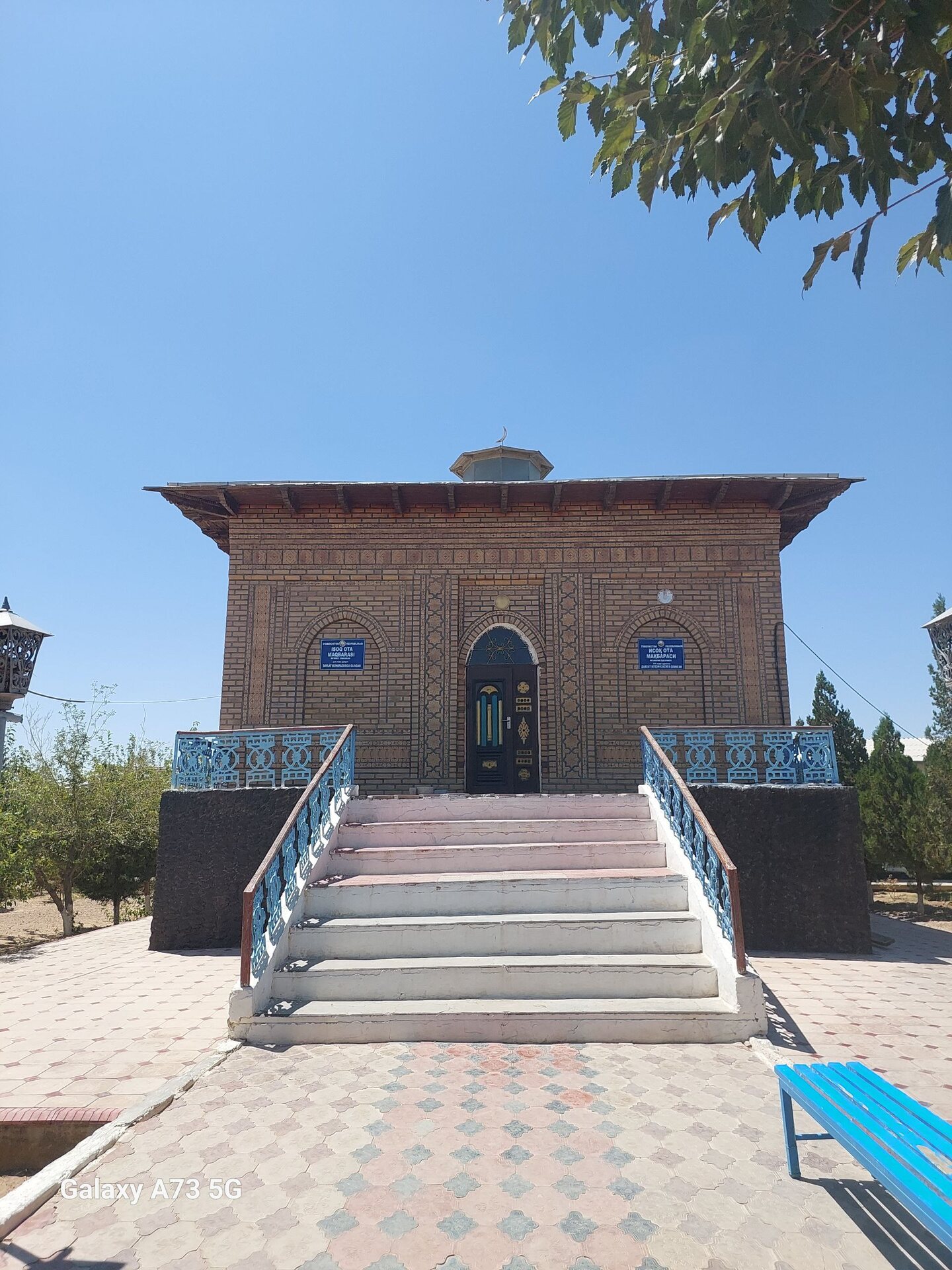
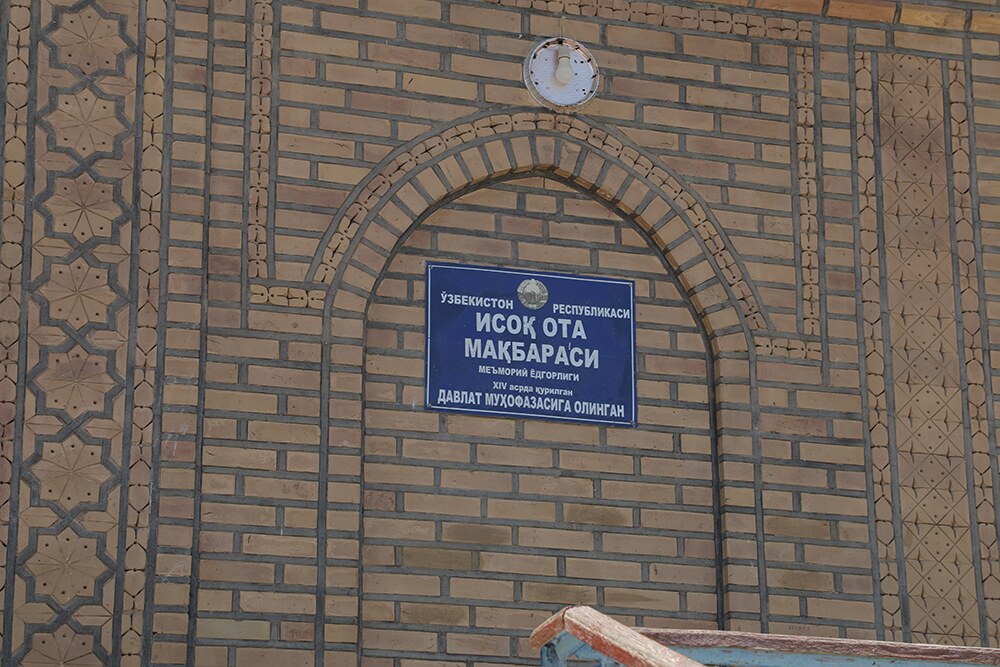
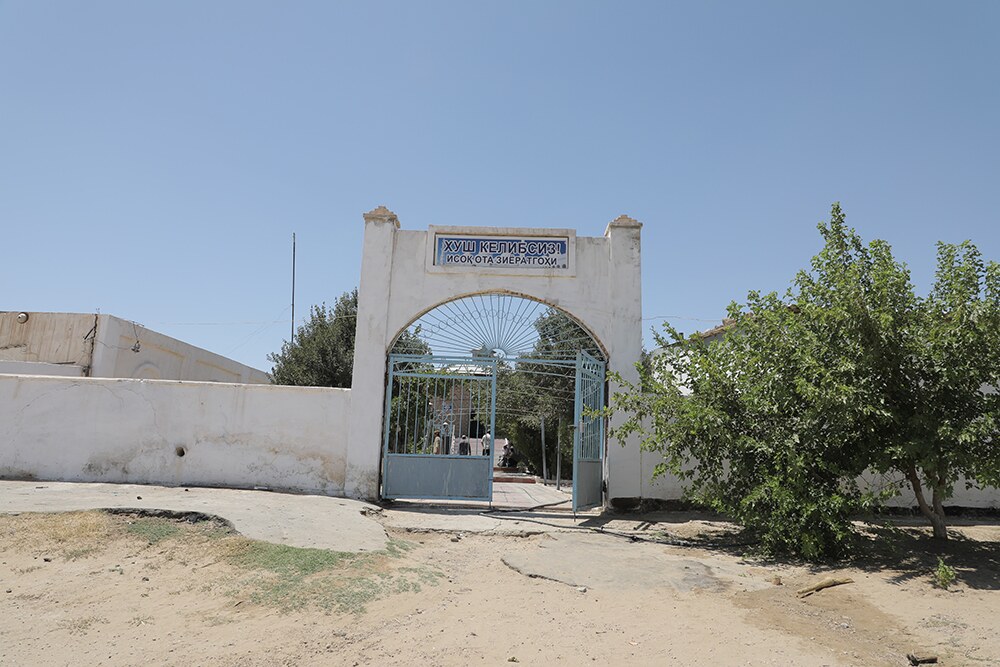
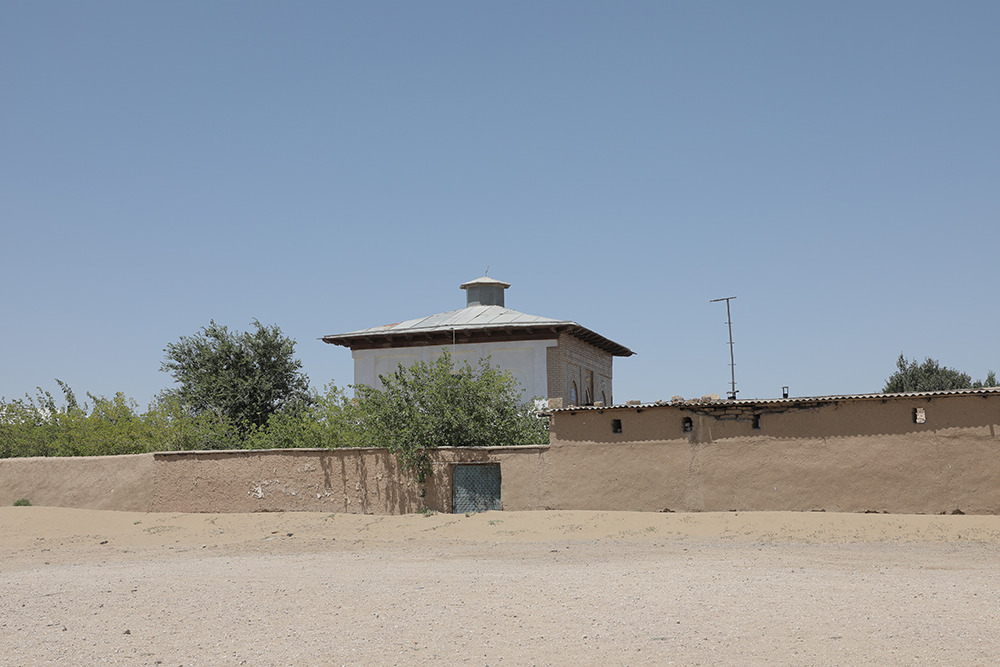
70 km west of Pamuk village, on the territory of Noroldi there is a sanctuary "Ishak Buva" [1]. There is no information about who Ishaq buva was. Ishaq buwa is popularly called a representative of Sufism, a saint, and it is also mentioned that he hails from Isfahan (Iran). At the same time, there is a legend that once a camel with a dead man crossing the Jeyhun River sank in a place associated with the Ishaq Buva sanctuary in the Pamuk deserts of Turan land. The locals knew Ishaq as a righteous man and regularly came to visit him. It is said that Turan's land was located at the famous place of the Ishaq buva stage in the Pamuk desert [2:6-7].
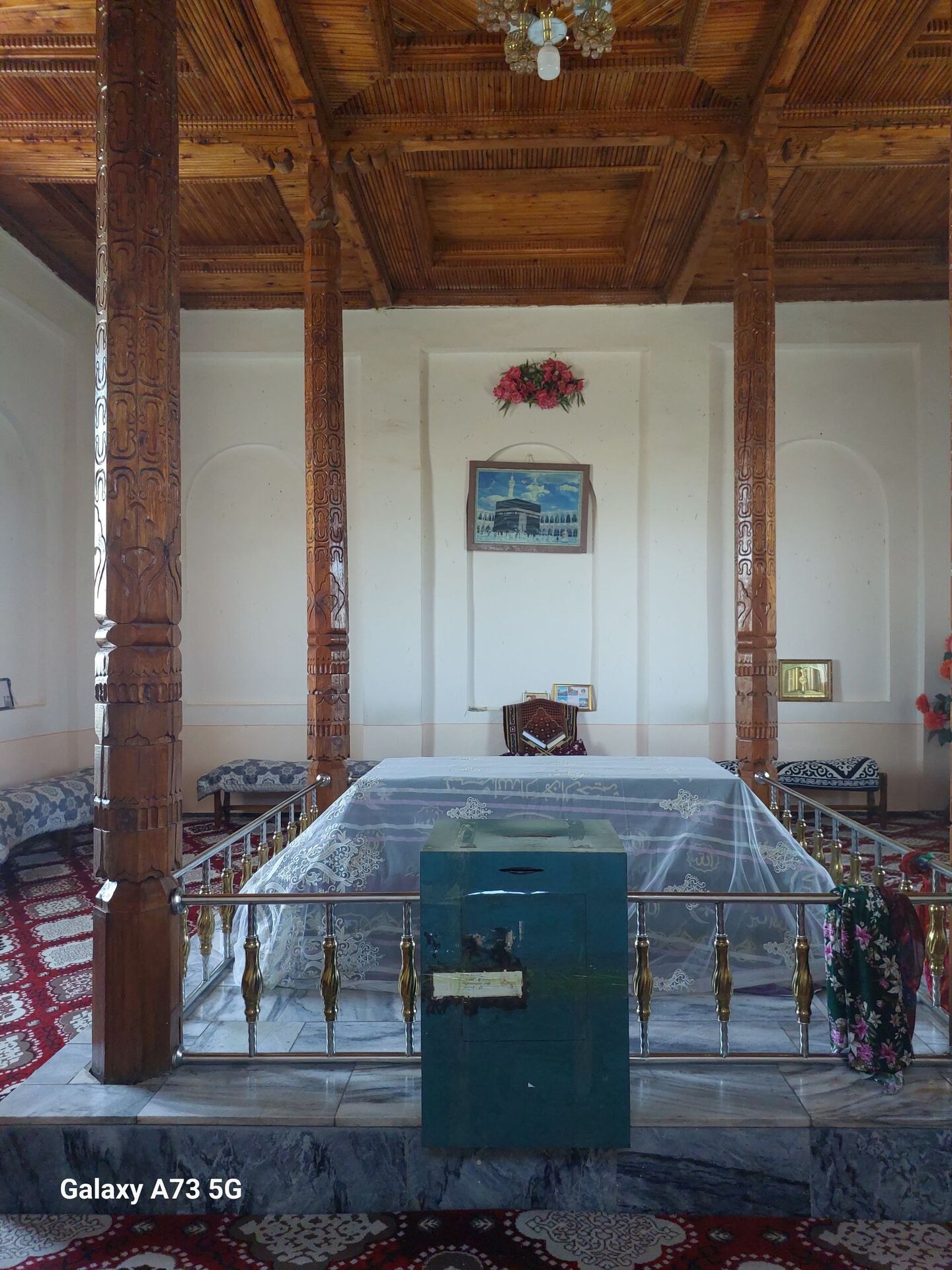
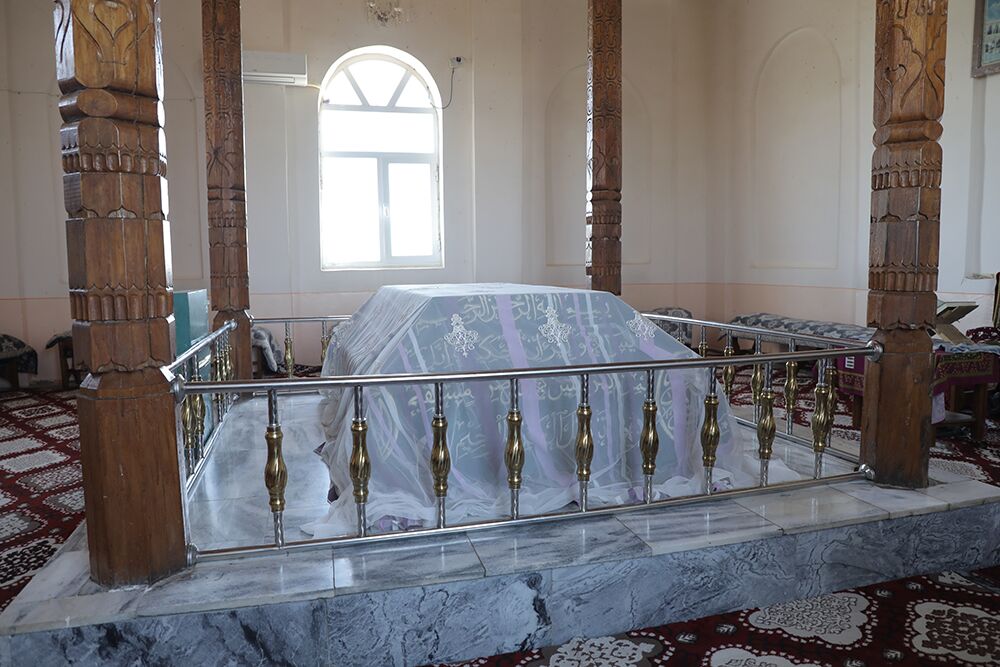
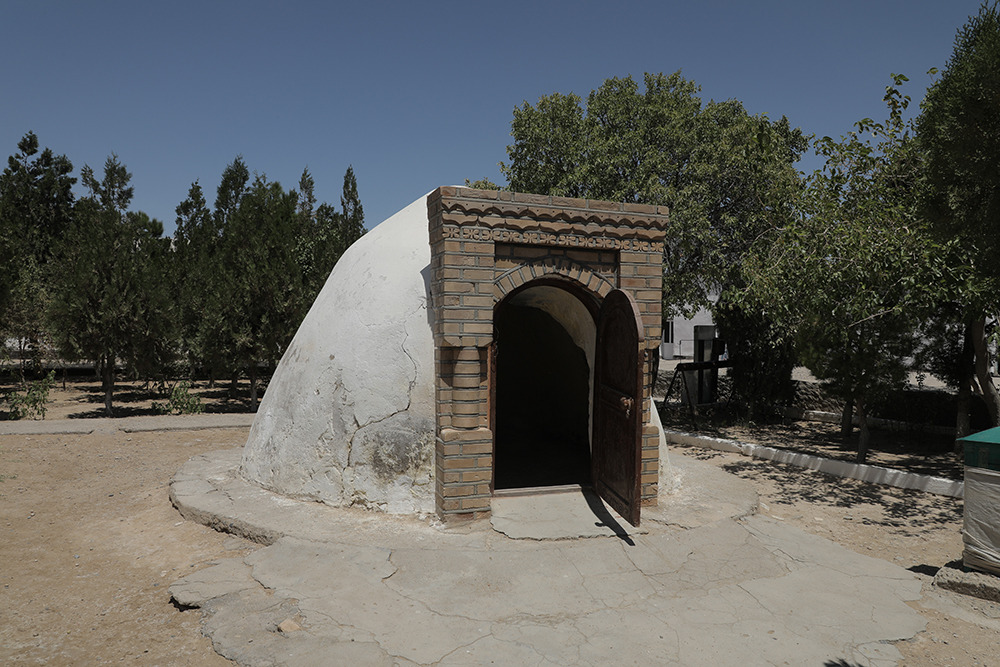
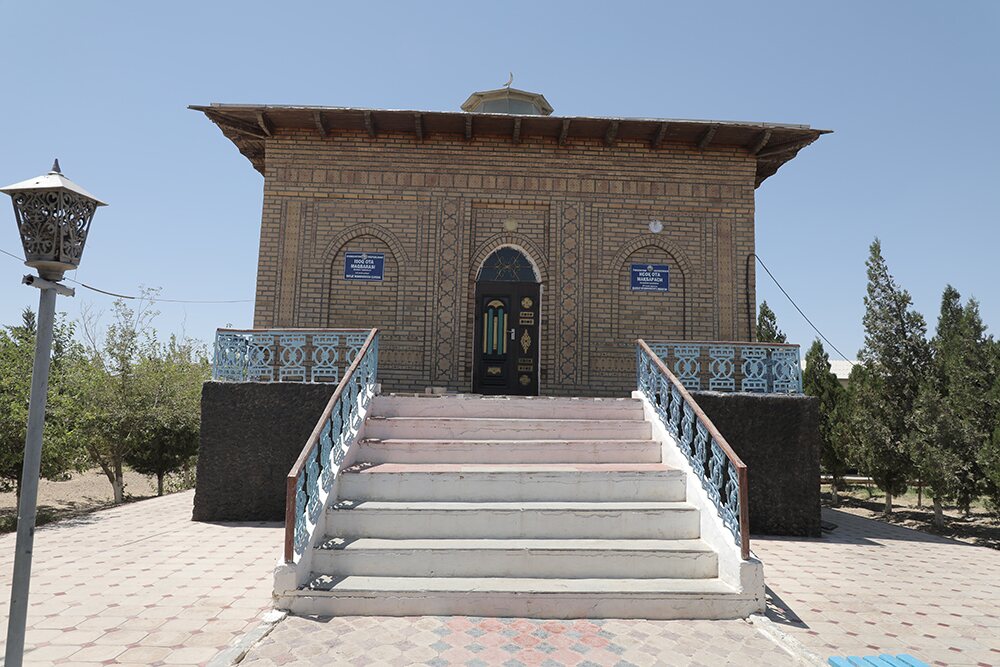
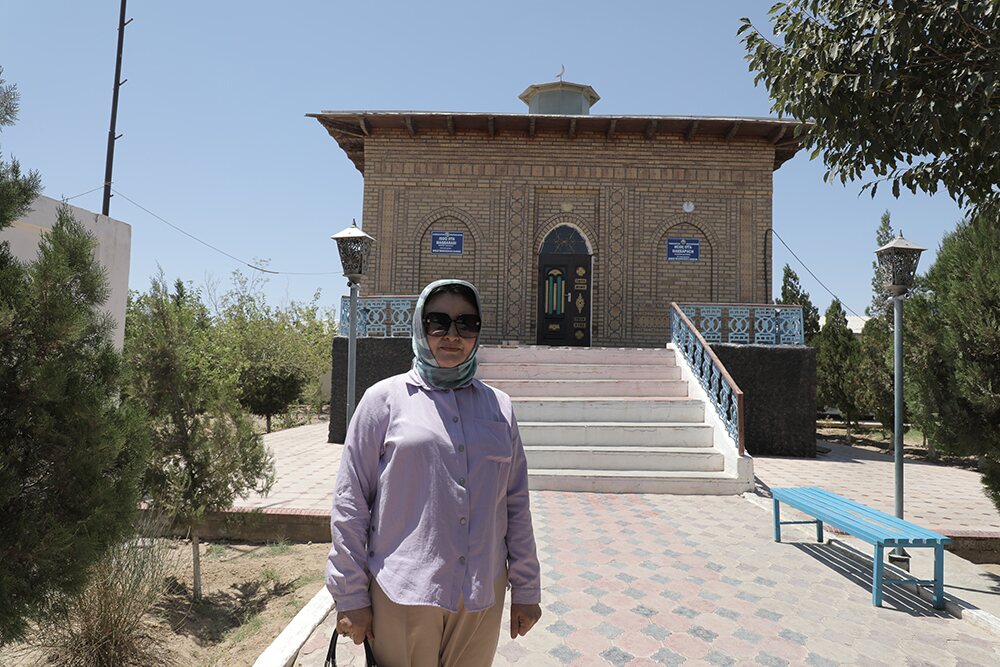
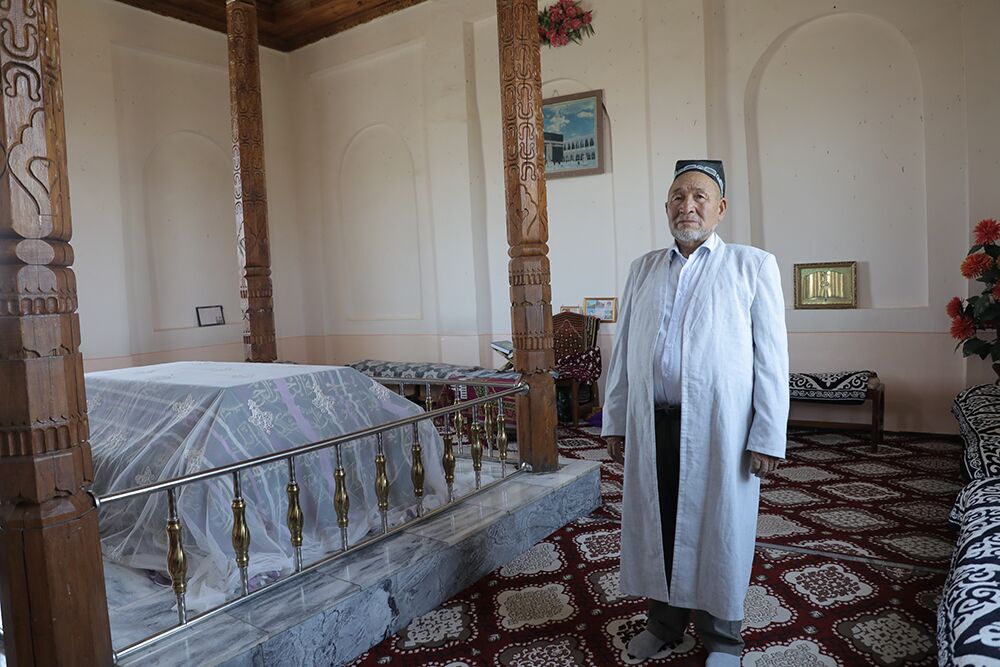
The style of construction of this sanctuary went as far as back as to the Timurid era, but the period of its construction is unknown. The structure of the mausoleum is resembling to the architectural monument of Hazrat Bashir, and it can be said that it dates back to the end of the XV - beginning of the XVI century. The room is square, the roof is placed on a two-tiered base, the top is flat, but has a luxurious look. There is a dome in the form of a chimney on the roof. The ceiling inside the mausoleum is decorated with carved wood patterns. The wooden sagana, located on four sides of the monument, represents a unique architectural style [1].
In the late 1980s, the shrine was renovated by Rustamov Nurmamat, one of the local residents. In the early years of our independence, thanks to the attention paid to the preservation of the shrines that are our historical and cultural heritage, it was restored and landscaped [2].
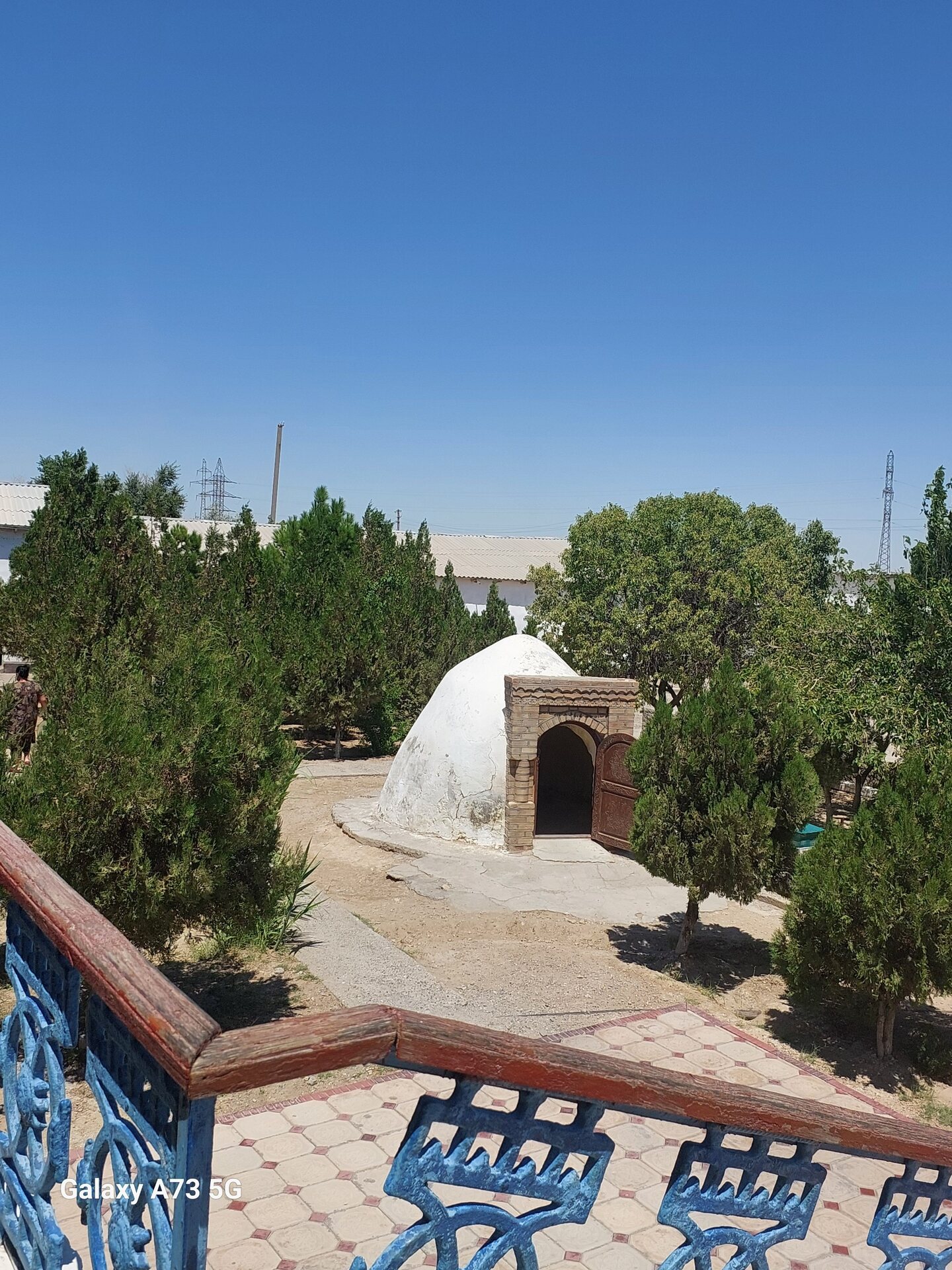
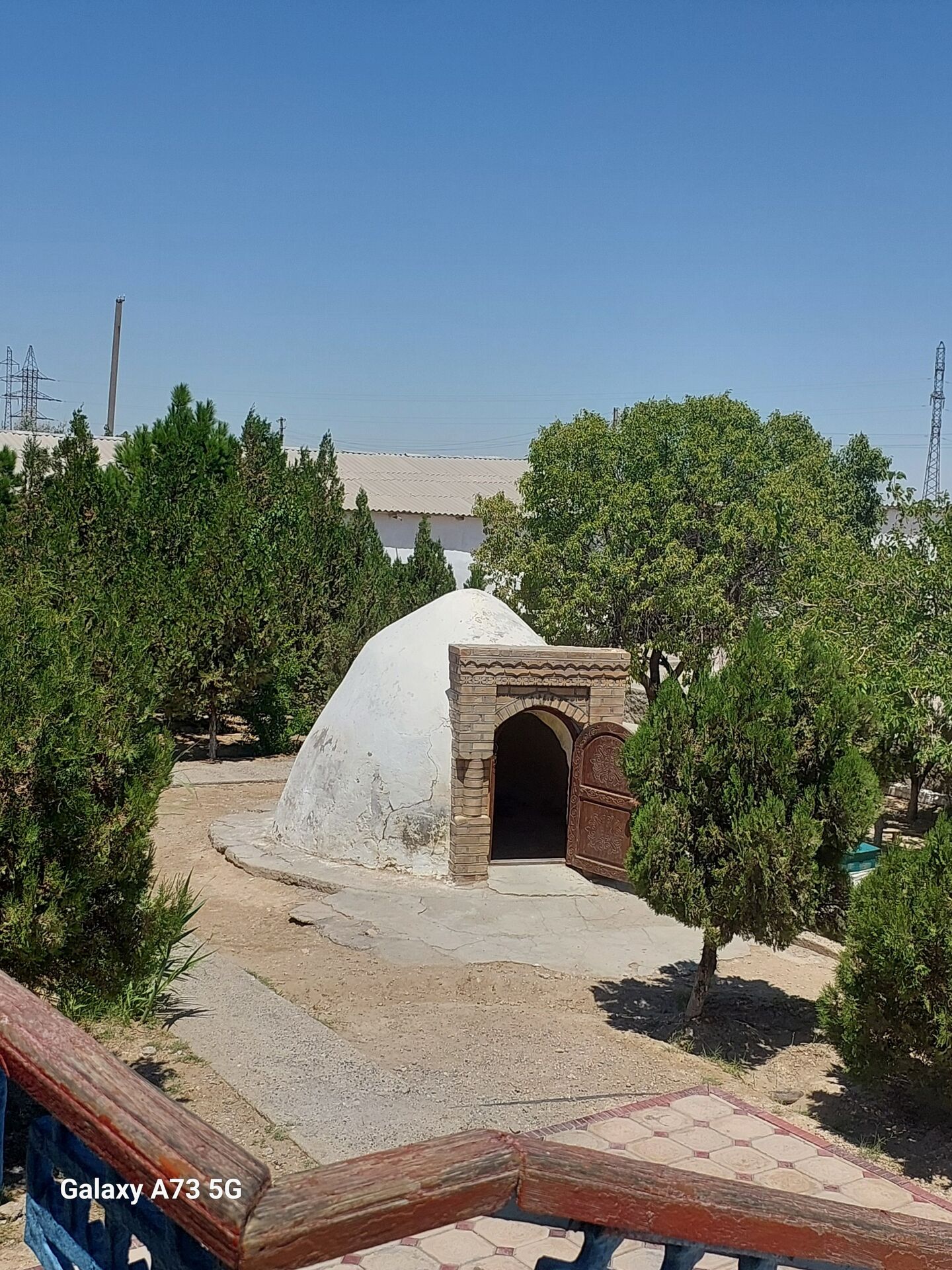
According to local residents, since Ishaq ota was martyred during the Mongol attack in the Noruldi area of the Pamuk desert of the current Mirishkor district, the place where his blood was shed has been turned into a symbolic shrine. There is also a 15th-century chapel next to the mausoleum.
According to other sources, Ishaq's father was the brother of Kusam Sheikh (Kusam Muhammad), who worked in Pudino at that time [1].
According to sources, Gavhari Khushtoy, who was the daughter of Gavhari Shahnoz Ahmed Yassawi, married Khanzada Muhammad Hajj, a descendant of Hussein Sheikh Atoya from Bukhara. They gave birth to Kusam Muhammad, Ishaq Muhammad, Mansur Muhammad, Arslankhoja, Hasankhoja and Husainkhoja. Twenty-year-old Kusam Muhammad, eighteen-year-old Ishaq Muhammad and sixteen-year-old Mansour Muhammad follow in the footsteps of their grandfather Ahmad Yassawi and go to study in Mecca and Medina. Twenty years later, when he was returning to his homeland, he saw the Mongols attack in Balkh and defeated them with his prayers. The head of Balkh asks that one of the three brothers become their patron in Balkh. Mansur Muhammad stayed in Balkh to spread out knowledge, bring the population to spiritual maturity and guide them on the right path. Kusam Muhammad and Ishaq Muhammad reach Devdara in a month on camels. His brother left Ishaq Muhammad here and went to Pudino himself. Ishaq Muhammad lived there and contributed to the prosperity of the population. However, the Mongol invasion also reached Devdara. Ishaq Muhammad dies as a martyr. Qusam Sheikh buried his brother himself [3:40-47].
The architectural monument associated with the name of Kusam Sheikh in the village of Pudin in the Koson district was studied by archaeologists back in the Soviet period, and they found that the oldest mausoleums in the architectural monument of Kusam Sheikh were built in the X-XI centuries [4 :30].
Among the architectural monuments, the Iskhak ota mausoleum is the second mausoleum adjacent to it, dating from the beginning of the XI–XIII centuries [5:10-16]. This monument is one of the oldest and most unique examples of Central Asian architecture. The building style of the monument is typical for the XIV century, repeating the architectural style of the Timurids. According to archaeologist L.Y. Mankovskaya, the mausoleum on the north side of the courtyard, where the mausoleum of Qusam Sheikh (XI-XII centuries) is located, is also very interesting, it is connected to the main complex by corridors surrounded by a moat. According to one tradition, Ishaq ota was buried in one of the oldest sagan, according to others – Sogotai Khan. This covering of the mausoleum with a rectangle in the center is very simple. This mausoleum, considered one of the oldest monuments in Central Asia, may have been built at the end of the tenth century. The temple mausoleum of the southern complex is united with it. It has three-tiered shelves, on the walls of which there are lamps. This is one of the ancient monuments, and according to historical and archaeological data, it was built in the late XI-early XV centuries [6:77].
In 1990-1995, the Qusam Sheikh complex was restored again, and sidewalks were laid in front of the mosque to the mausoleums of Sevinch ata, Mansur Muhammad and Ishaq ata.
It is worth noting that in ancient times the Great Silk Road passed through the territory of the Ishaq Ota sanctuary and connected with the Kelif crossing of the Amu Darya. This road led to Balkh, Iraq, Syria, Mecca and Medina. Once upon a time, spring water gushed from a place that is now called "Horta Bulak" on the territory of Nor Oldi.
A lake of table salt appeared on the site of a huge reservoir where waves once beat. This lake and the spring are located just three to four kilometers from the shrine of Ishak ota. The shrine is located on the highest point of the Pamuk Desert.
LIST OF USED LITERATURE
- Полевые исследования. Миришкорский район Кашкадарьинской области, пустыня Помук, святилище Исхака оты. 13 июля 2024 года.
- Шарипов Ш., Холиёров И. Исҳоқ бува зиёратгоҳи. – Тошкент: Voris nashriyot, 2016.
- Ашурова Ш., Аҳмедова Қ. Қусам Шайх. – Қарши: Насаф, 2005.
- Абдурасулов Р.Р., Ремпель Р.И. Неизвестные памятники архитектуры бассейна Кашкадарьи. (Искусство зодчих Узбекистана). – 1962, Вып. 1.
- Маданий мерос агентлиги архиви. КД-9112 фонд, И-рўйхат, 97-иш, 10-16 варақлар.
- Архив агентства культурного наследия. Фонд КД-9112, I-опись, дело-97, 10-16 лл.
- Маньковская Л. Ю. Қашқадарё воҳасининг архитектура ёдгорликлари (Йўл кўрсаткич). -Тошкент: Ўзбекистон, 1979.