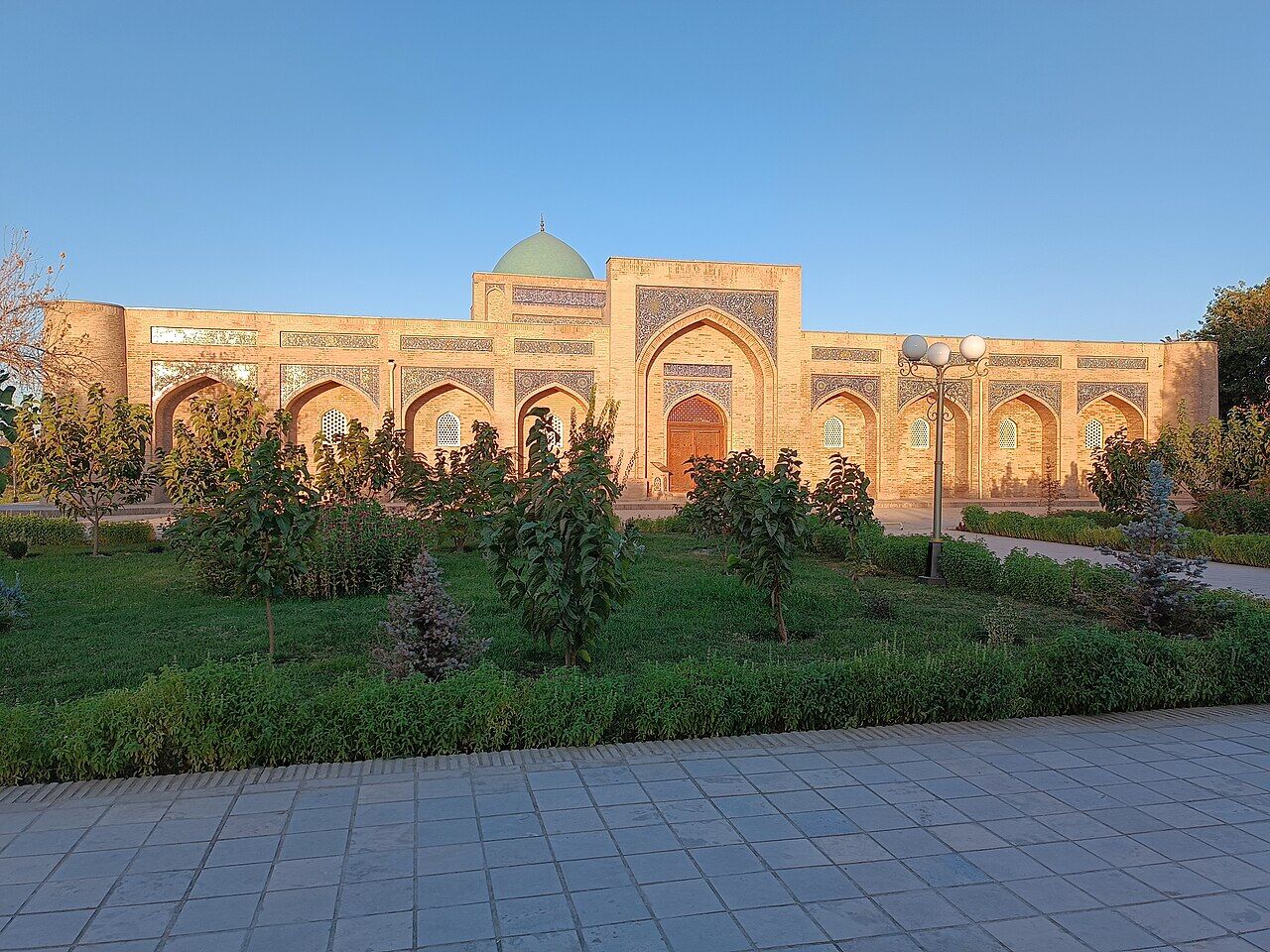
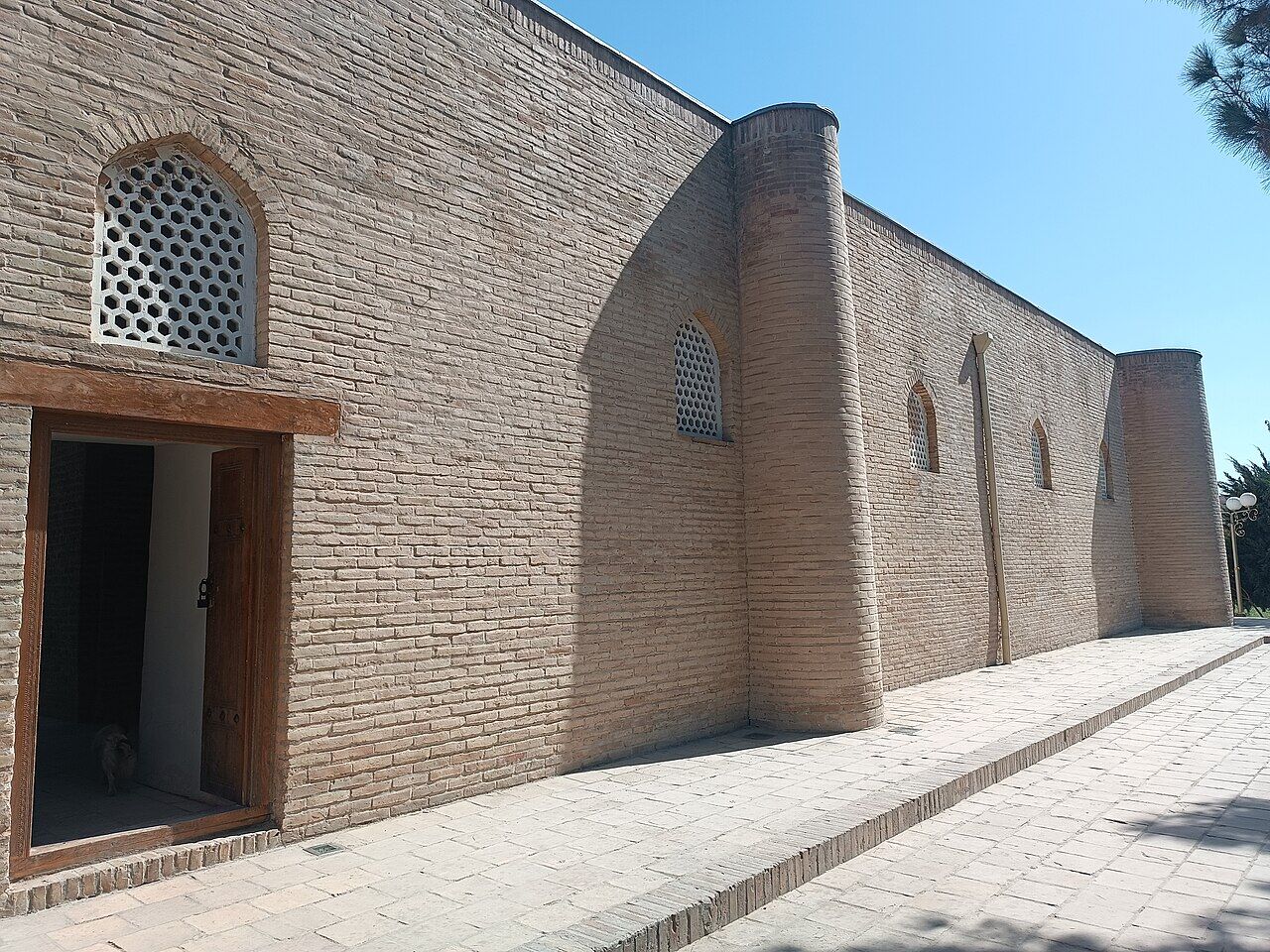
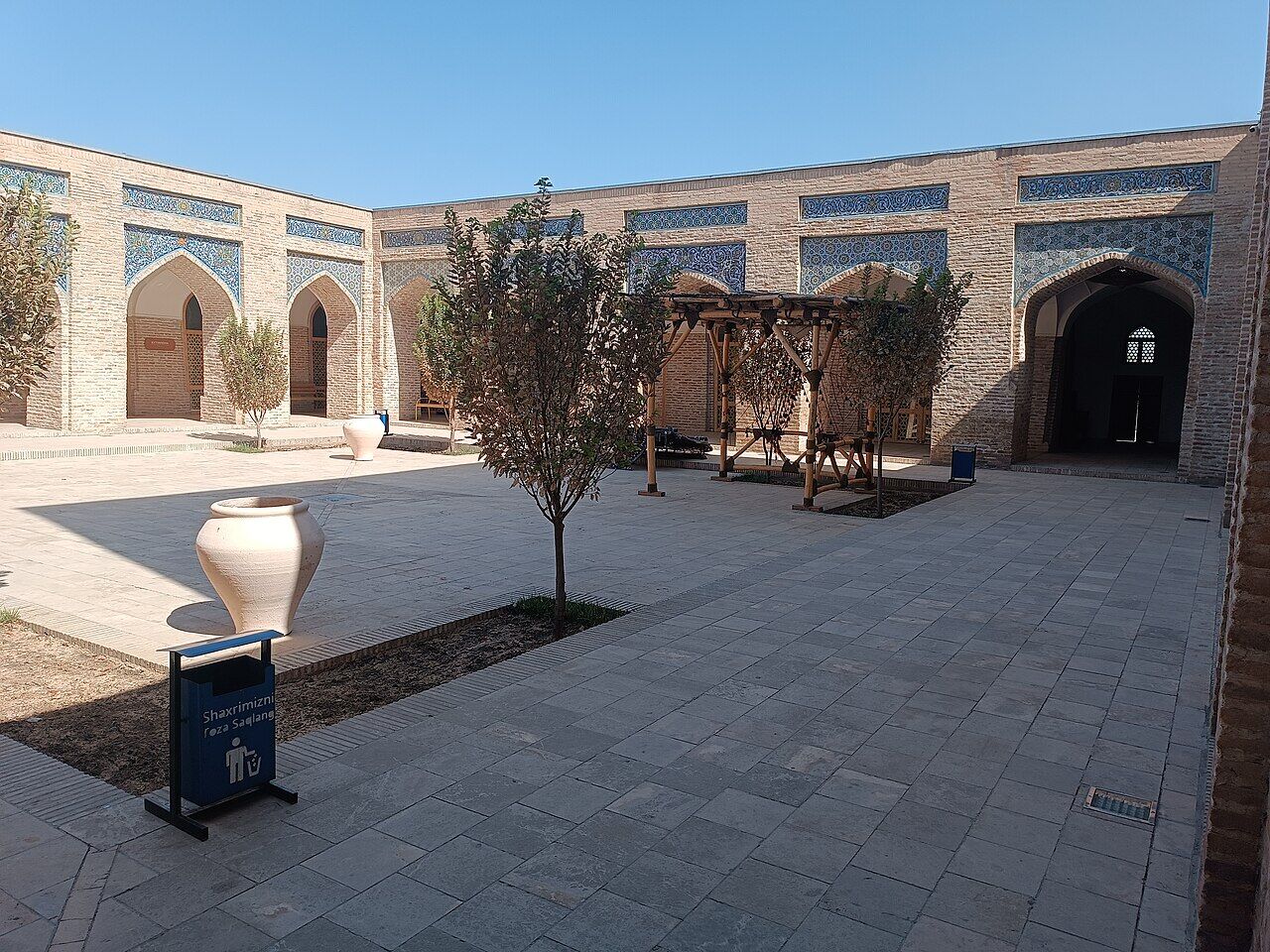
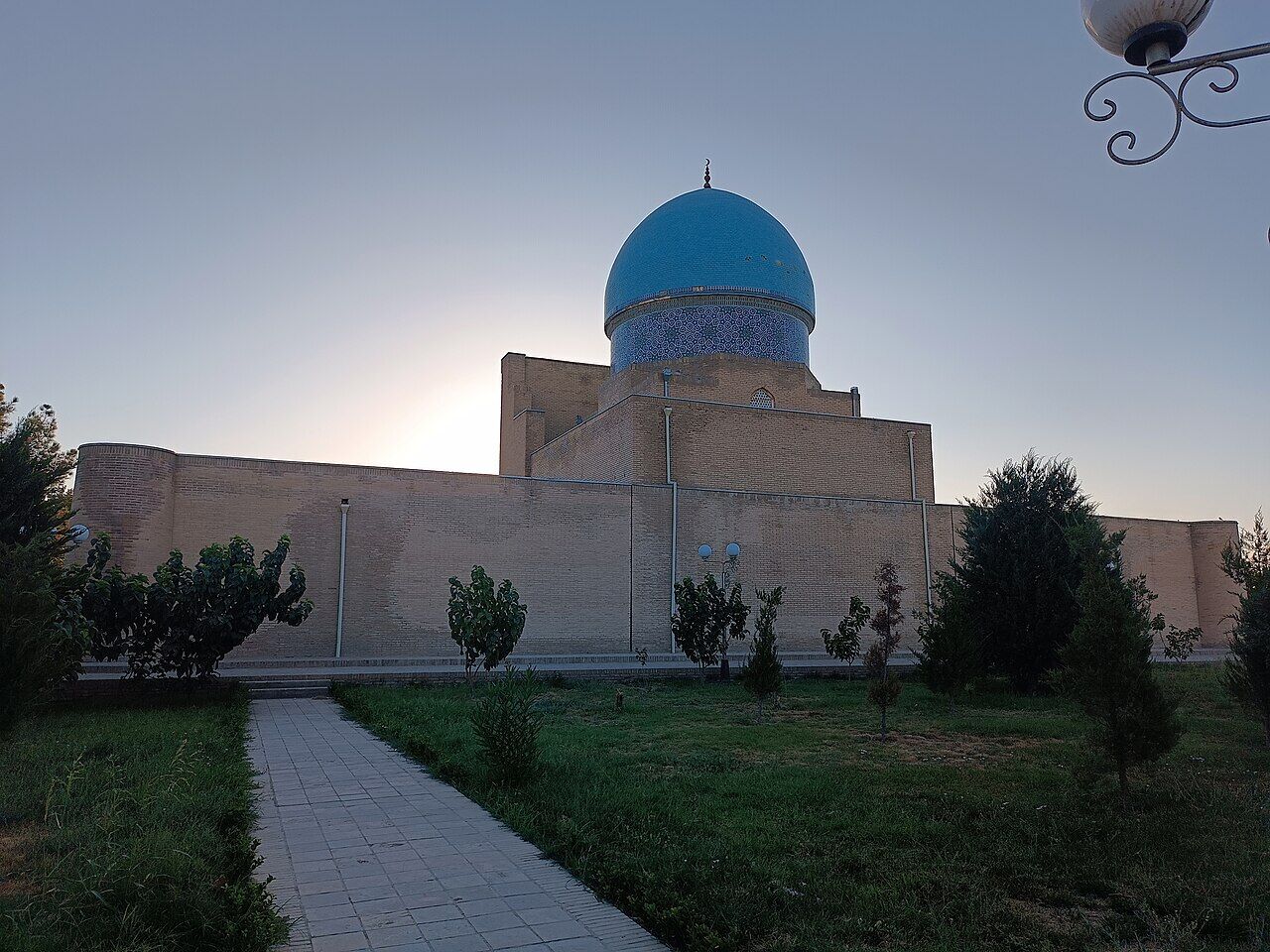
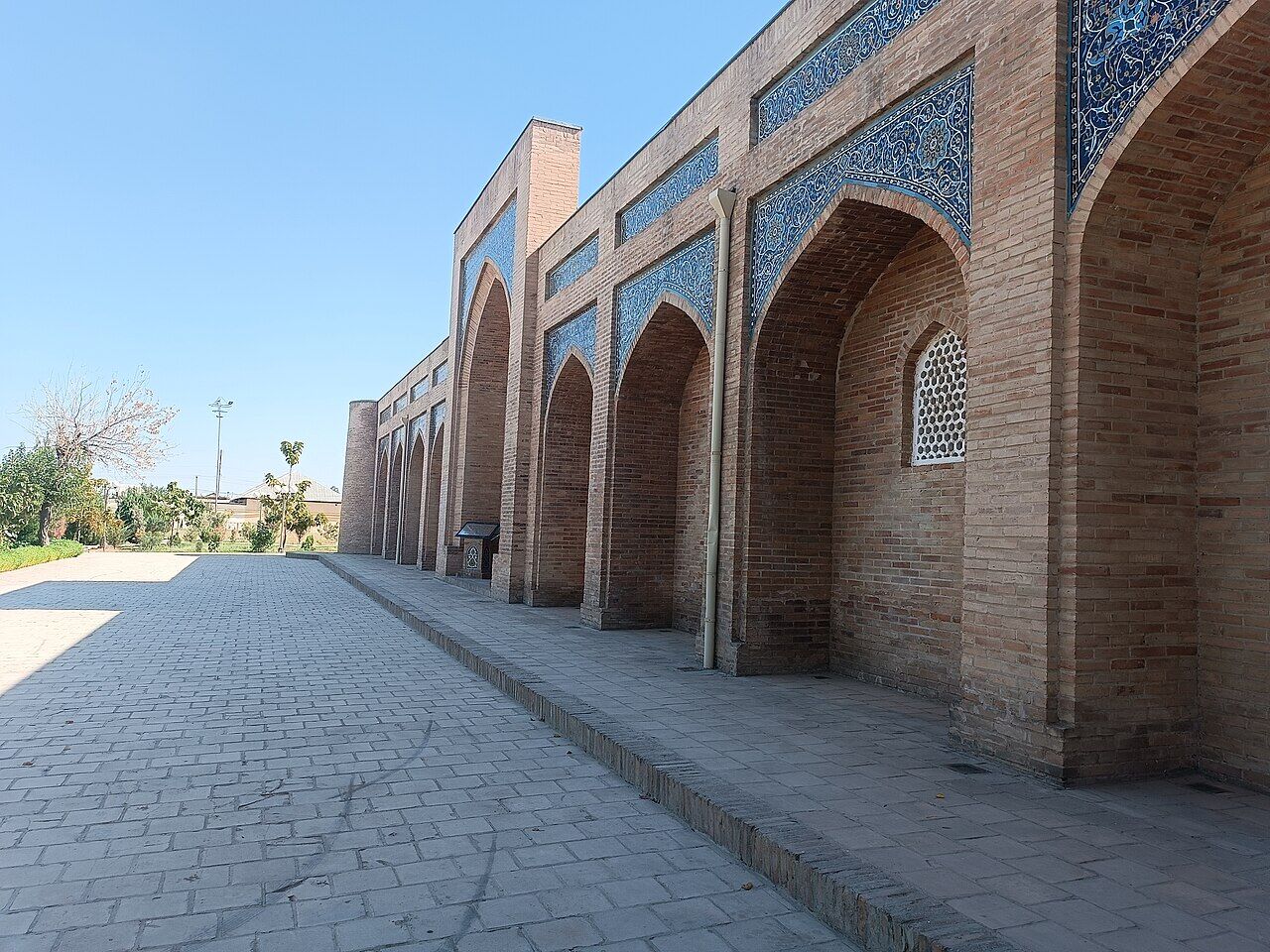
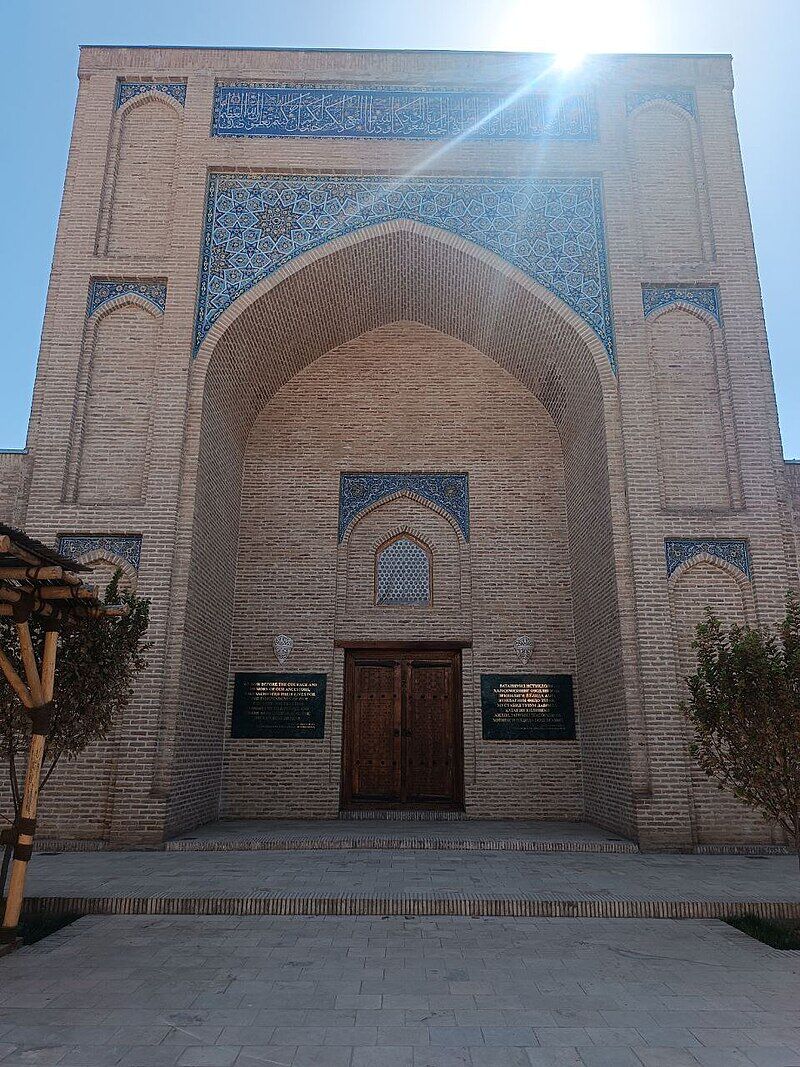
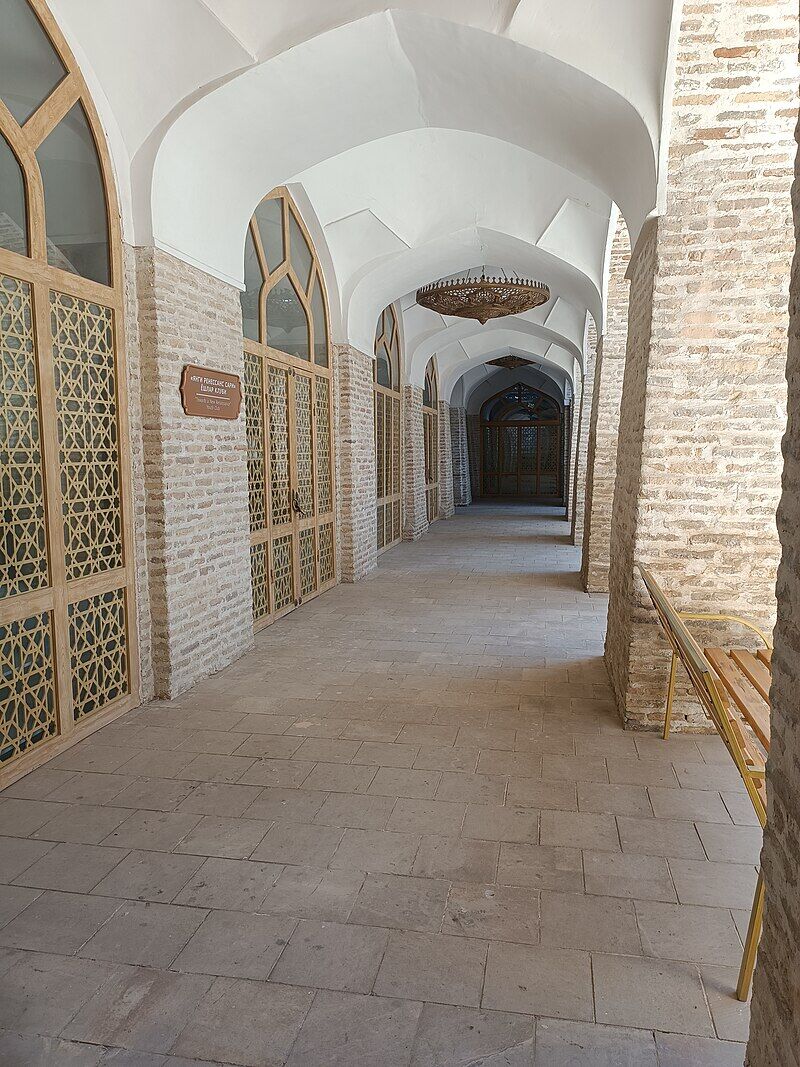
ODINA MOSQUE (Nasaf Grand Cathedral Mosque, Qarshi city, XIV century).

The Odina mosque is located in the center of Karshi district in Kashkadarya region [1]. Sahibkiran Amir Timur built the Odina mosque in Karshi Registan, in the center of Karshi, during his visit from Samarkand to the city of Karshi in 1385-1386 [2]. The mosque's current location is in the "Old City" part of Karshi and is situated in Odina Park. The Karshi mosques and madrasahs were studied by M.E. Masson and N.A. Khanikov.
The Karshi Registan was an exceptionally well-maintained, beautiful square, stretching 70 meters in length from northwest to southeast and 50 meters in width. According to M.E. Masson's description, the Odina (Friday) and Abdullah Khan madrasahs stand majestically in Registan, forming a "paired" architectural complex. The Friday (Odina) mosque, standing at the western end of the Registan, was unadorned on the exterior and had a rectangular layout measuring 50 x 40 meters. The corners and intervals were embellished in the style of a flower garden. The outer structure connected to the doors leading into the inner courtyard acquired architectural elegance. The door latch was made in the shape of a large fish, with a hole left for the key. The key was also quite large. They were beautifully painted. Above the door latch, similar to the Shah-i Zinda complex in Samarkand, a slightly smaller fish-shaped object made of copper was affixed [3:78].
Apart from the areas occupied by the Odina Mosque and Abdullah Khan Madrasah, the perimeter of the Registan was lined with trading shops. From the southeast, behind these shops, the dome of Sardoba was visible [4:590]. In subsequent centuries, several more public buildings, mainly madrasas, were constructed in the territory of Registan Square.
The Odina Mosque was destroyed by artillery fire in the late 1860s. The remains of the mosque's dome and minarets were preserved until 1914. During the Soviet period, the Odina Mosque was used as a warehouse [2]. In 1938, the mosque was surrounded by a high wall and converted into a prison. According to M.E. Masson's research, when the prison was relocated, he concluded that the palace of Kepakhan had once stood on the site of the Odina Mosque. Abdusabir Raimkulov, a researcher from the Institute of Archaeology of the Uzbekistan Academy of Sciences, conducted a scientific investigation and confirmed that the palace of Kepakhan had indeed been located on the site of this structure [5:19].
In accordance with Decree No. PQ-4068 of the President of the Republic of Uzbekistan dated December 19, 2018, the Odina Mosque was included in the list of immovable objects of material and cultural heritage of Uzbekistan and placed under state protection.
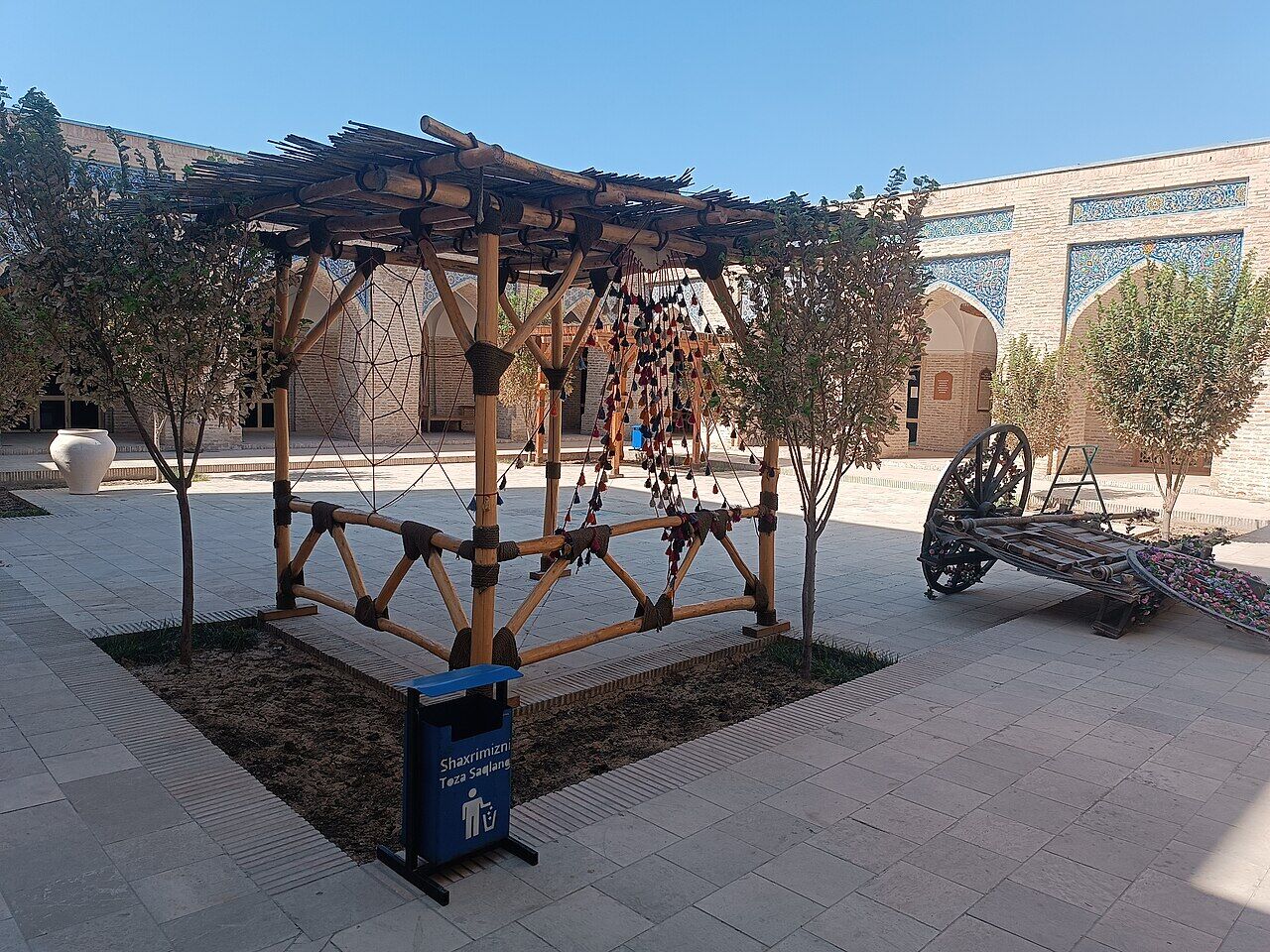
In accordance with the order of the President of the Republic of Uzbekistan dated October 8, 2020, the Museum of Memory of Repression Victims was established in the Odina Mosque in 2021.
References
- Дала тадқиқотлари. Қашқадарё вилояти Қарши шаҳри. 2024 йил 7 август.
- https://uz.wikipedia.org/wiki/Wiki/Odina_masjidi
- Массон М.Е. Столичные города в области низовьев Кашкадарьи с древнейших времен. – Ташкент: Издательство “Фан” Узбекской ССР, 1973. – С. 78.
- Равшанов П. Қарши тарихи. – Тошкент: “Янги аср авлоди”, 2006. – Б. 590.
- Пўлатов С., Бўтаев А. Қарши-қадимий шаҳар. – Қарши: Насаф, 2006. – Б. 19.