QUSAM SHEIKH SHRINE (Koson district)

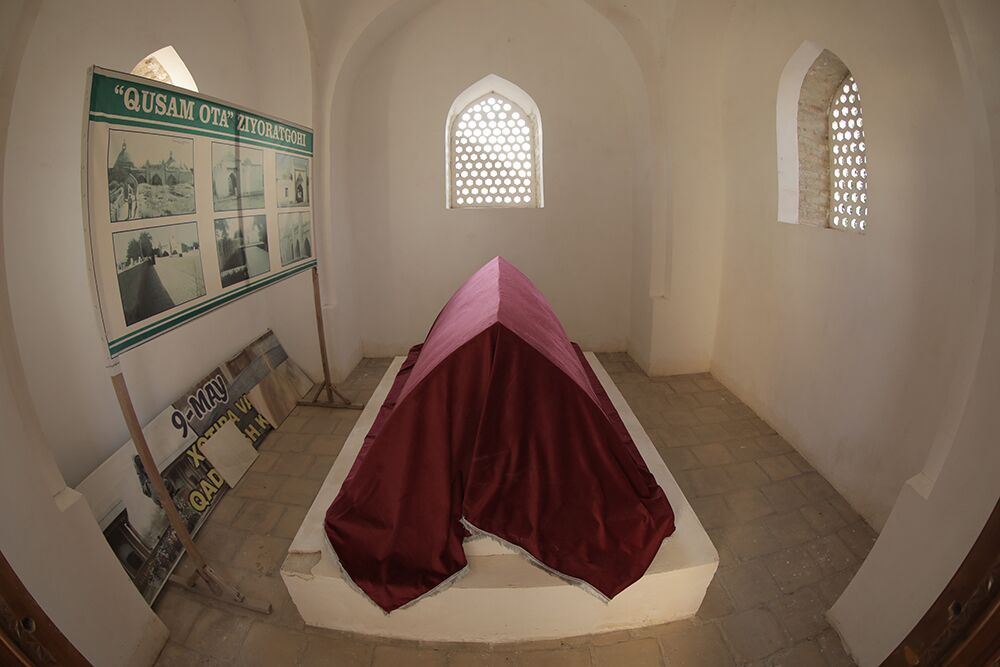
The shrine of Kusam Sheikh is situated 15 km northwest of the city of Karshi, in the village of Pudina in the Koson district[1]. The preacher of the Yassawi order, one of the founders of the Naqshbandi Order and one of the great saints, the son of Khonzada Muhammad al-Mashhour Kurrahoja Ataya, Sheikh Qusam, who lived at the end of the XI century (1198-1199) and the middle of the XIV century (c. 1336-1338), is the sheikh of the Islamic world. The activities of Sheikh Ibn Muhammad Qusam were connected with the village of Pudin in the Koson district of Kashkadarya region. Despite the fact that Kusam Sheikh was born in Turkestan in the family of Ahmed Yassawi (his great-grandson through his daughter), he spent almost a hundred years of his life on the territory of Pudin.
He was born to the granddaughter of Ahmad Yassavi Hazrat Gavhar Shahnozybegim, and on his father's side he is a descendant of the family of Hussein Sheikh Atoya from Bukhara, that is, Khonzada Muhammad Khoja. 5 sons are born in the family [2:4] and Kusam Muhammad was the eldest son, he travelled with his brothers Ishaq Muhammad and Mansur Muhammad to Arab countries studying Islamic science, but upon his return his brothers were killed due to the Mongol invasion. He remains to live at the burial place of the brothers at this place in Nasaf in the village of Pudin. One of the local patrons allocates Waqf lands to him. This man always had a civil servant named Sevinch ota by his side. It is worth noting that it is during the period of the Qusam Sheikh's residence in the village of Pudino that prosperity is observed here.
In ancient times, this place was part of the territory of the city of Nasaf, and the city of Nasaf was considered the center not only of Turan, but also of Muslim countries and the main trading area of the Great Silk Road in the IX-X centuries. There were a caravanserai, a mosque, a madrasah, a khanaka, trading houses, baths, rabats and guest houses. At the madrasah, students received education in the religious and secular spheres. The merits of Kusam Sheikh in turning Pudina into a cultural center are stunning. Sayyid Amir Kulol, Shamsiddin Kulol, Bahauddin Naqshband and other scientists were educated at the school of Pudin village.
The great poet Abdurrahman Jami in his work "Nafasat ul-uns" wrote about Sheikh Qusam: "Muhammad Qusam Atoyi is a Turkic sheikh, a descendant of Ahmed Yassawi, the teacher of Bahauddin Naqshband" [4]. The thinker and poet Alisher Navoi in his work "Nasaim ul-Mukhabbat" recognizes him as the "sheikh of sheikhs". At the same time: Kusam Sheikh is one of the Turkic shaykhs. He is a descendant of Khoja Ahmad Yassawi (cas). It was only after Khoja Bahauddin Amir Sayyid Kulol gave him permission that they joined the service of Sheikh Qusam. They stayed in the service of Sheikh Qusam for about three months. Finally, the sheikh gave permission and said, "I have nine sons. You are great and more valuable than all of them"... — he wrote [5:118-119]. After Saint Sayyid Amir Kulol of Nasaf taught Khoja Bahauddin in Bukhara, he ordered him to go to study with Sheikh Bahauddin, the founder of the Pudin Center [6:12]. Recognizing him as a muddaris, it is worth noting that Qusam Sheikh founded a school of Hadith studies in Pudin. Hazrat was called "Sheikh Sheikhs" because of honoring of the award for his service.
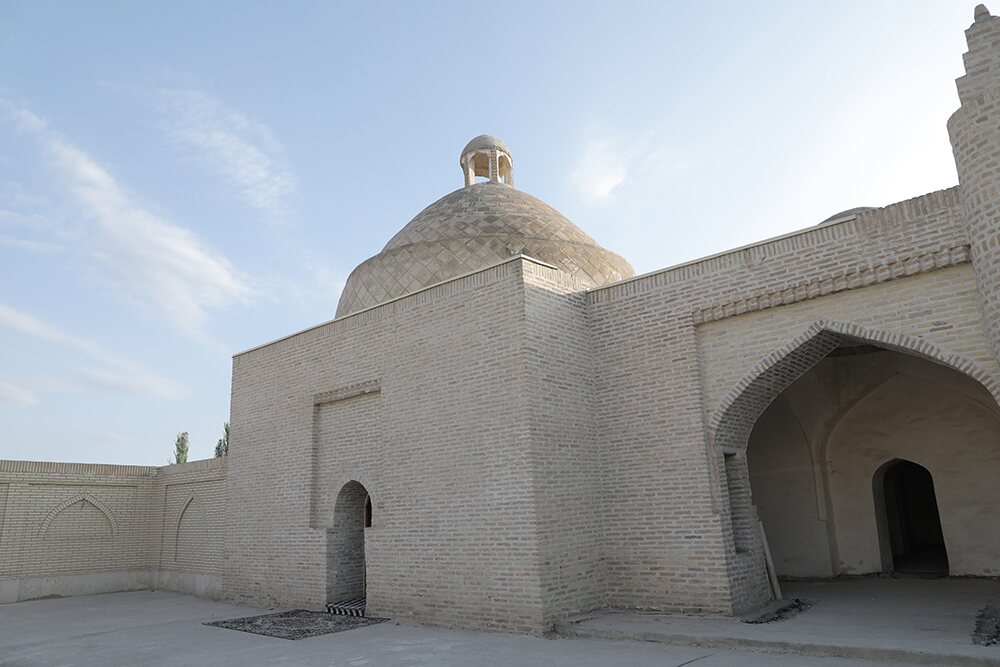
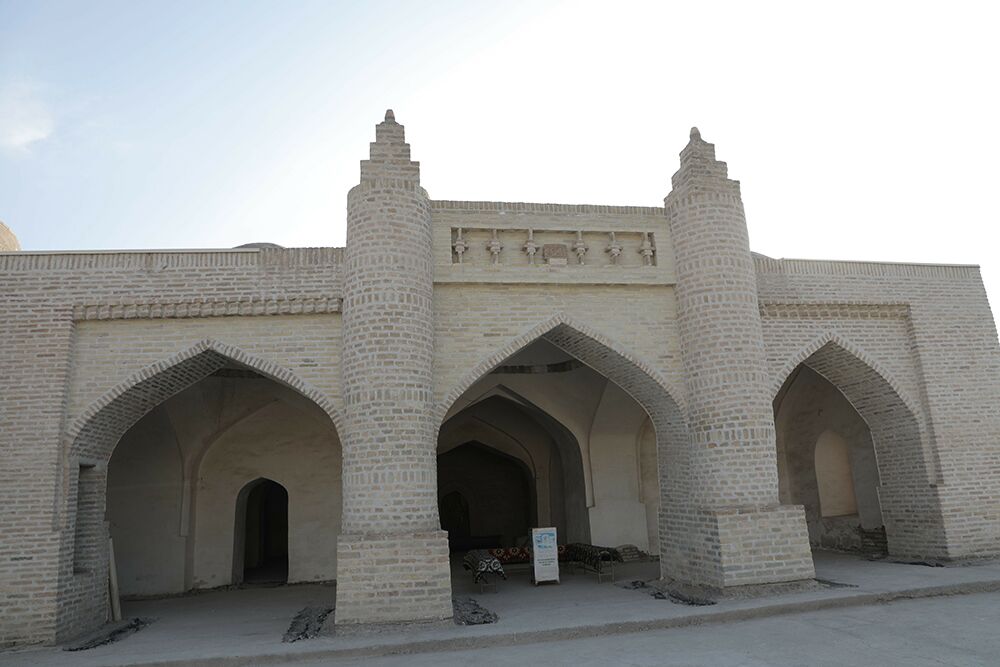
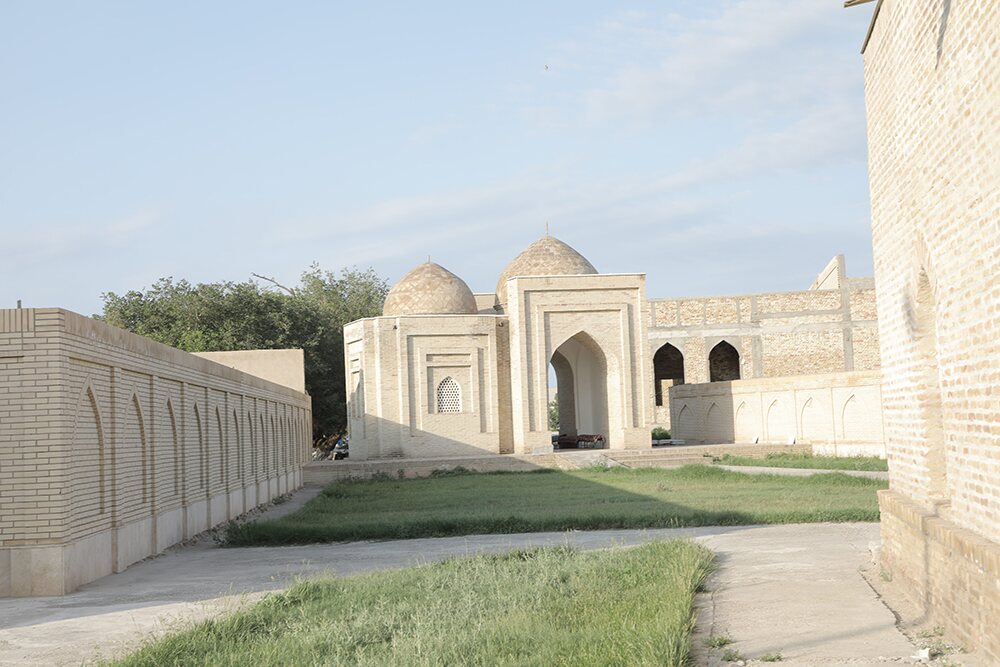
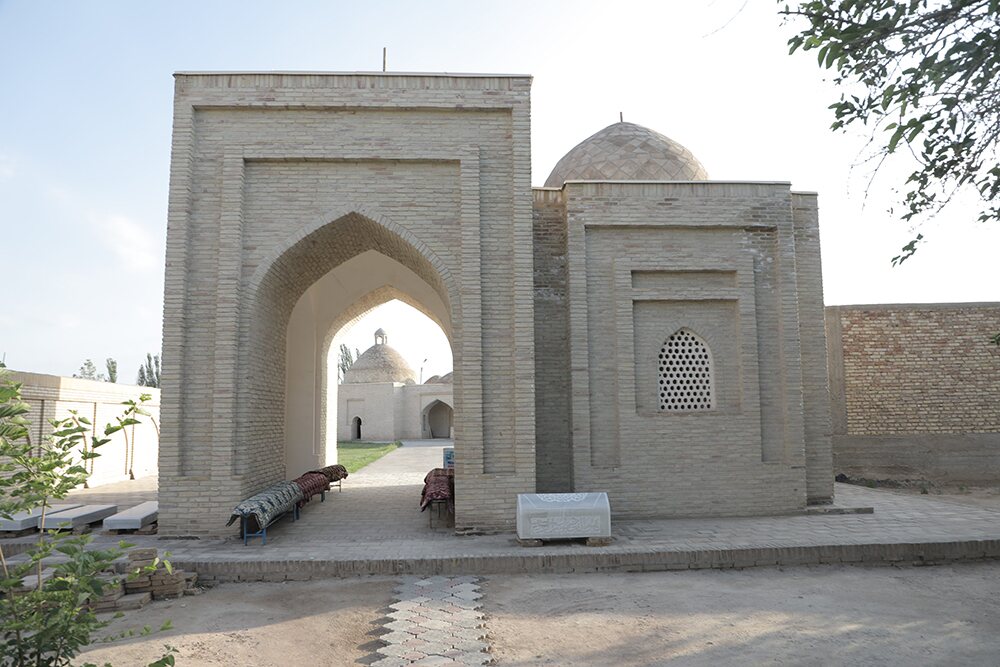
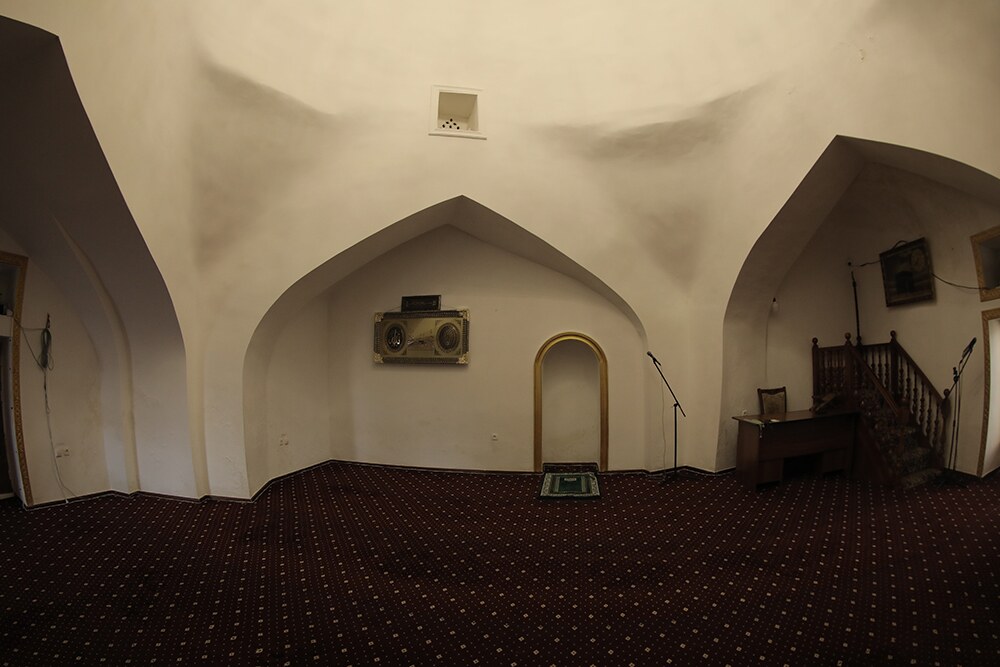
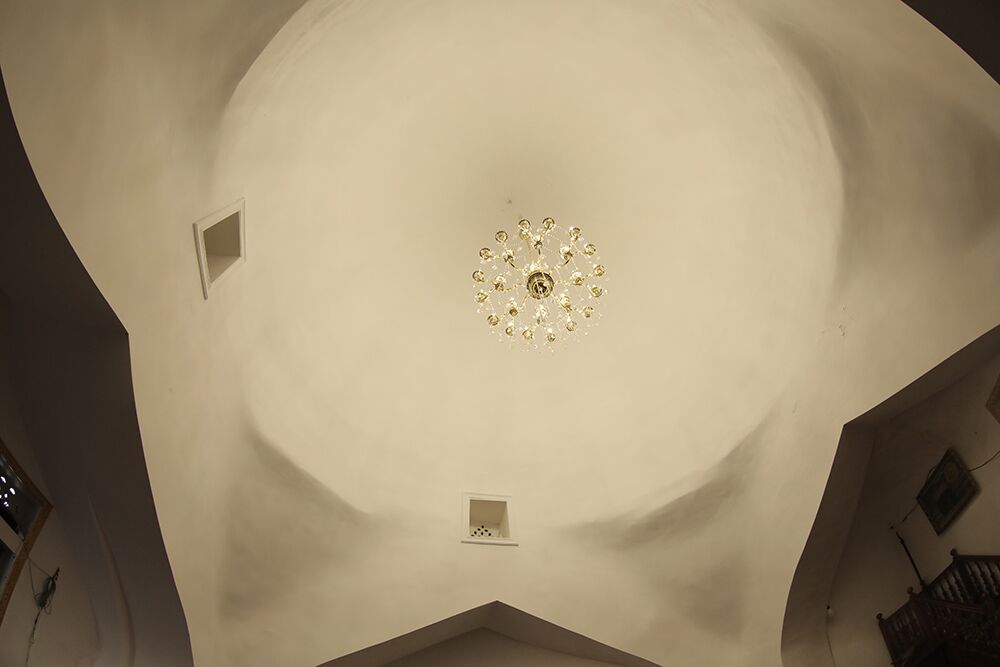
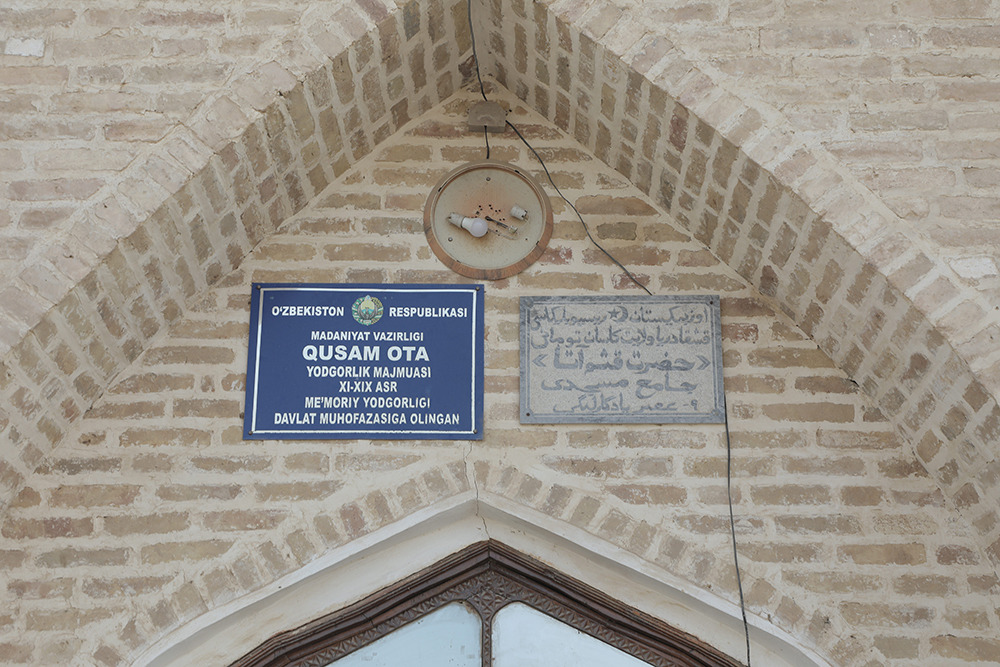
The history of the archaeological monument of the XI century in the village of Pudina in the Kosonsky district, associated with the name of Kusam Sheikh, is mentioned in articles and brochures written during the expedition by archaeologists R. Abdurasulov, L. Rempel, L. Mankovskaya in the Soviet years. Archaeologists have established that the oldest mausoleums in the Qusam Sheikh architectural monument were built in the X-XI centuries [7:30; 8:98-99]. At the entrance to the Kusam Ota ensemble there are three small buildings, actual resembling to gates, through which pilgrims pass to the center of the ensemble. The foundation of the first gate contradicts their antiquity. The gate wall was built of bricks of the X-XI centuries and was built mainly in the XVI-XVII centuries. The last construction works date back to the 19th century. The second gate is smaller, surrounded by a clay wall and consists of two rooms. From the side, you can enter the grave of Sevinch ota. A little further on, a mosque with a large dome was built. The quadrangular room is covered with a wide dome, dates from the construction no earlier than the 17th and 18th centuries, judging by the broken bricks and the rough shape of the vaults and arches, it was built in the late 19th-early 20th century. In this case, the new wall extends towards the old wall in the form of a shell at the corners. Thus, it seems that the original shape of the room was changed intentionally. A two-sided peshawan was built outside, and the building was turned into a district mosque [8:74-76]. Among the architectural monuments of Qusam Sheikh, the most ancient is the mausoleum named after Is’haq ota, and the second mausoleum adjacent to it dates back to the beginning of the XI-XIII centuries.
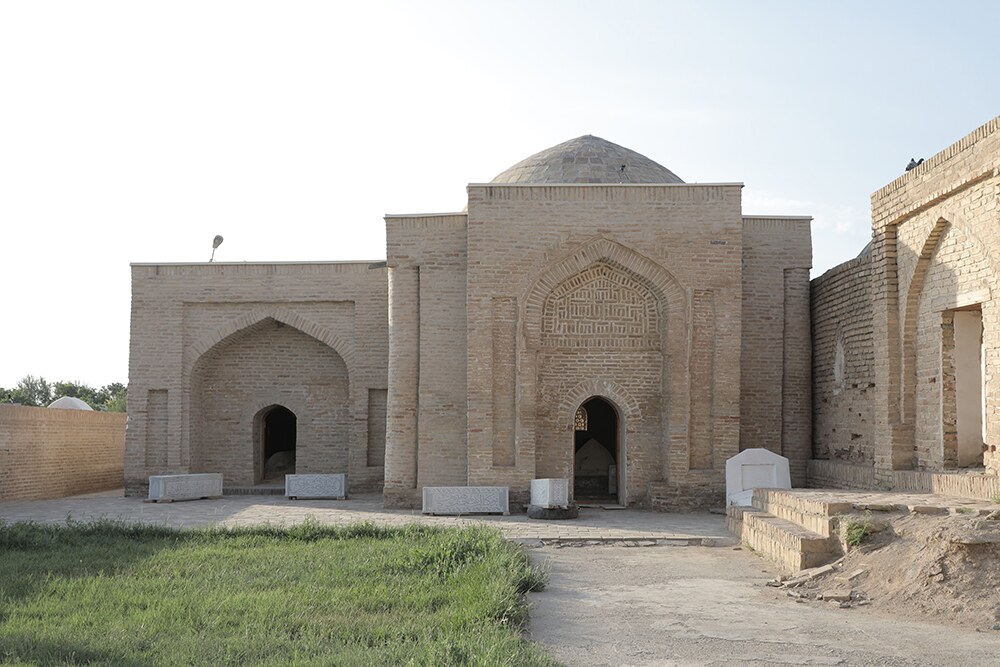
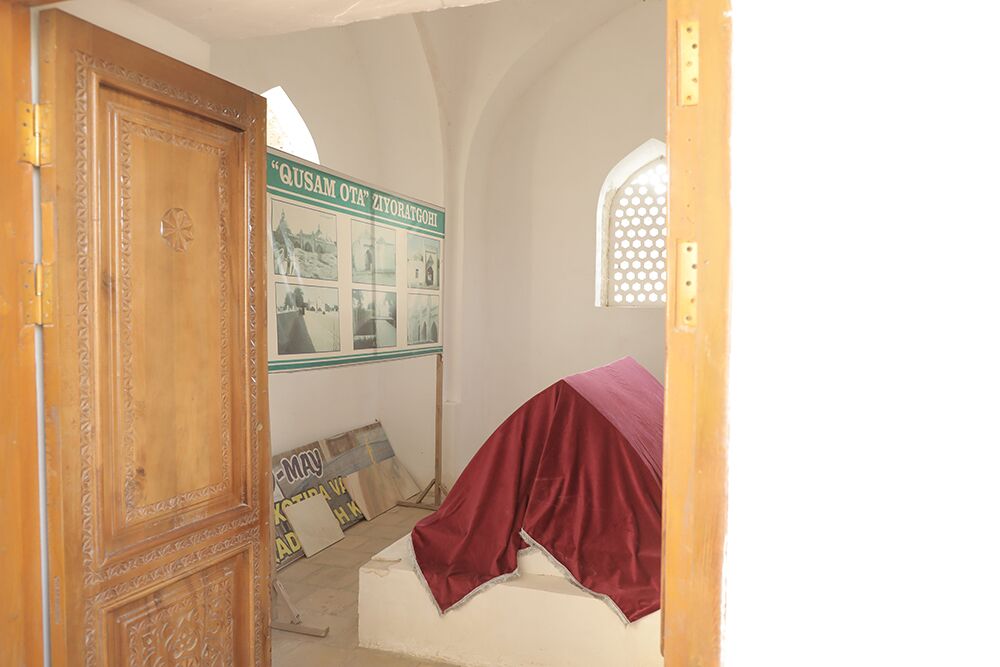
According to archaeologist L.Y. Mankovskaya, the mausoleum on the north side of the courtyard, where the mausoleum of Qusam Sheikh (XI-XII centuries) is located, is also very interesting, it is connected to the main complex by trench corridors. According to one of the traditions, Ishaq ota was buried in one of the oldest sagan, others said that was – Sogotai Khan. This covering of the mausoleum with a rectangle in the center is very common structure. This mausoleum, considered one of the oldest monuments in Central Asia, may have been built at the end of the twentieth century. The shrine-mausoleum of the southern complex is in harmony with it. It has three-tiered shelves, on the walls of which lamps are placed. Its walls are plastered with fragments of brick for the sagana of the middle of the XIV century. This is one of the ancient monuments, according to historical and archaeological data, it was built in the late 11th-early 14th centuries [8:77].
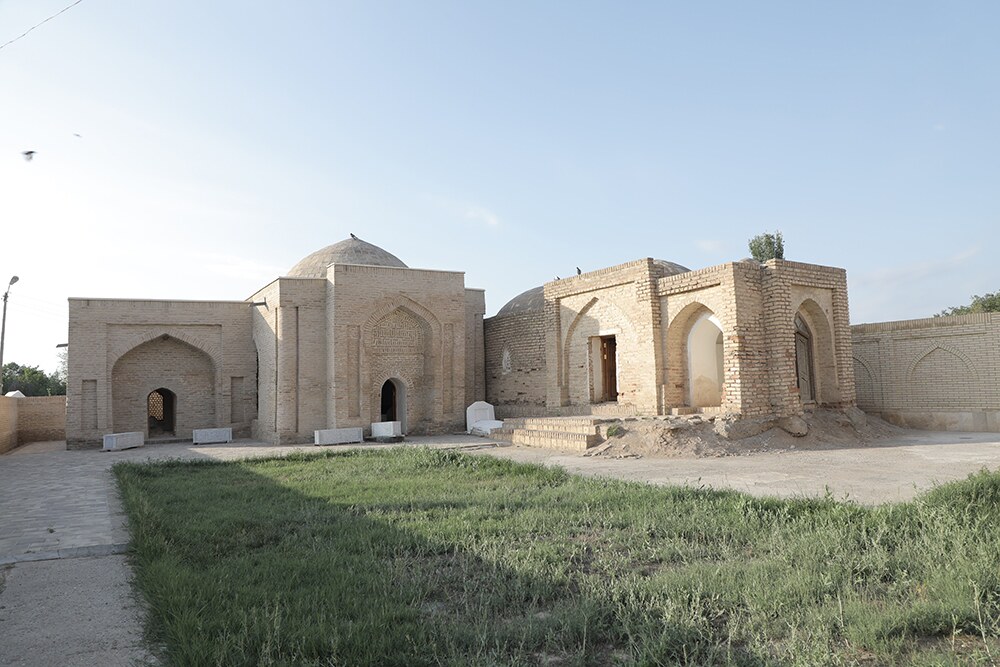
The complex was not built at the same time, but during the XI-XIX centuries [9]. In the center of the monument is the mausoleum of Hazrat Qusam Sheikh, a shrine and two small temples, and in front of it is a nine–domed mosque. In the courtyard of the complex there is a later mosque, as well as a well and a house [7:30]. From the point of view of the decoration of the courtyard of the Kusam Ota complex, it has a general resemblance to the practical decoration of Ali Nasafi in Shahi Zinda. This monument is one of the oldest and unique examples of Central Asian architecture. It should be noted that the style of the Kusam Sheikh ensemble in Koson is characteristic of the XIV century and repeats the architectural style of the Timurids [8:87; 10:48;]
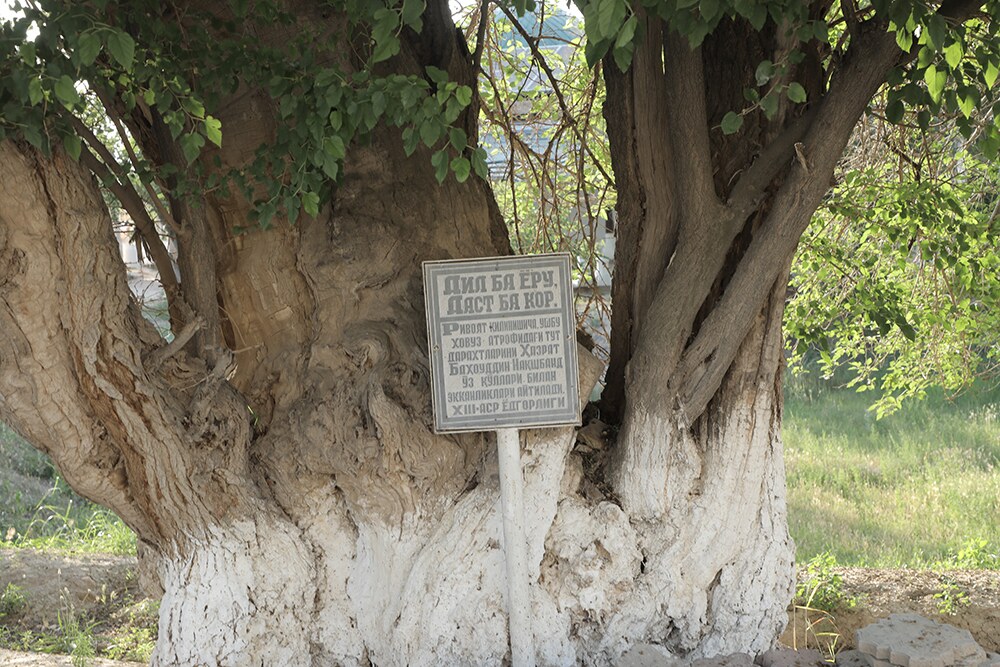
In 1990-1995, the Qusam Sheikh complex was renovated, and sidewalks were laid in front of the mosque to the mausoleums of Sevinch ota, Mansur Muhammad and Ishaq ota. In 2020, major repairs and landscaping were carried out in the Qusam Sheikh sanctuary and signs were installed [11].
LIST OF USED LITERATURE
- Информация Управления культурного наследия Кашкадарьинской области. - Шахрисабз, 26 мая 2024 г.
- Ашурова Ш., Ахмедова Қ. Қусам Шайх. − Қарши: Насаф, 2005. − Б. 4.
- Қашқадарё вилояти Косон тумани Пудина қишлоғида яшовчи, 1952 йилда туғилган Норов Рўзимурод билан қилинган суҳбат. Зиёратгоҳ мутаваллиси. 2024 йил 25 май.
- Архив агентства культурного наследия. КД-9720 фонд, опись-4, дело-97, 13-18 лл.
- Алишер Навоий. Насойим ул-Муҳаббат. Ҳикоялар ва ҳидоятлар. − Tошкент: Ўзбекистон. 2018. − Б. 118-119.
- Абдул Муҳаммад Боқир ибн Муҳаммад Али. Баҳоуддин Балогардон. −Tошкент: Ёзувчи, 1991. − Б. 12.
- Абдурасулов Р.Р, Ремпель Л.И. Неизвестные памятники архитектуры бассейна Кашкадарьи. ИЗУ (Искусство зодчих Узбекистана). Вып.l. − Ташкент, 1962. − С.30.;
- Маньковская Л. Ю. Қашқадарё воҳасининг архитектура ёдгорликлари (Йўл кўрсаткич). -Тошкент: Ўзбекистон, 1979. -Б. 74-76.
- Архив агентства культурного наследия. КД-9112 фонд, I-опись, дело-97, 10-16 лл.
- Раимқулов А. Қашқадарё воҳасининг ўрта аср шаҳарлари. – Қарши: Насаф, 2018. − Б. 48.
11. Полевые исследования. - Город Карши, 26 мая 2024 года.