DAR UT-TILOVAT COMPLEX (Shakhrisabz)

Hamidova M.S.
Acting Professor of NUUz,
Doctor of Historical Sciences (DSc)
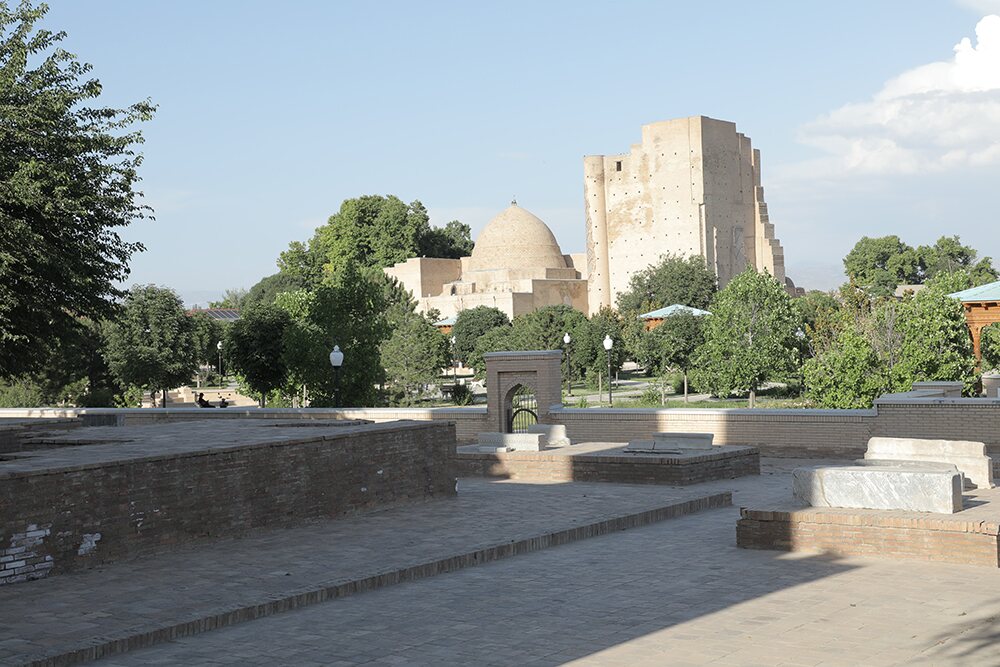
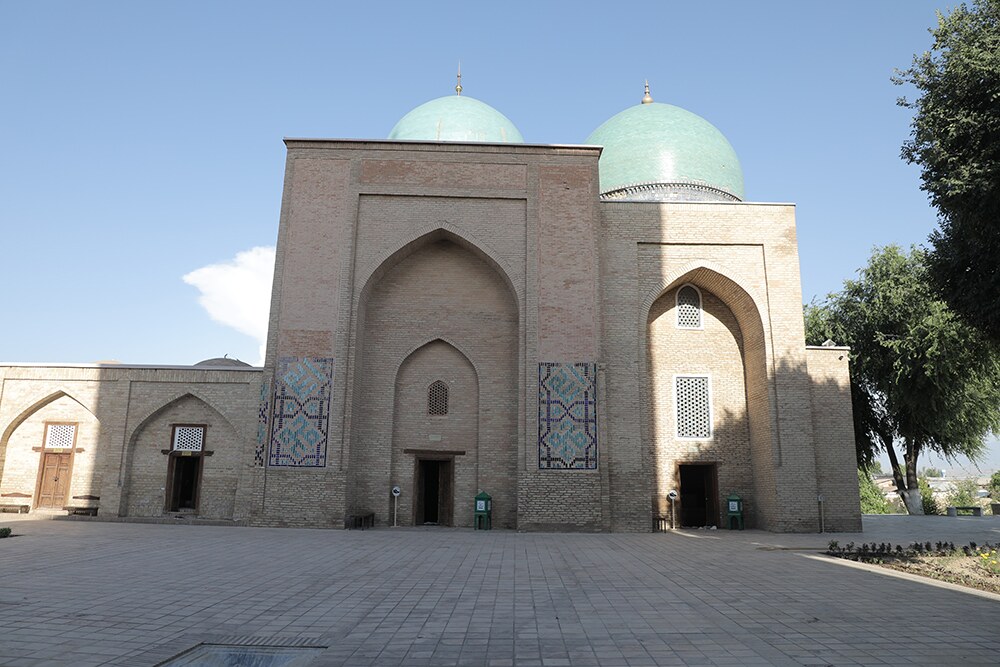
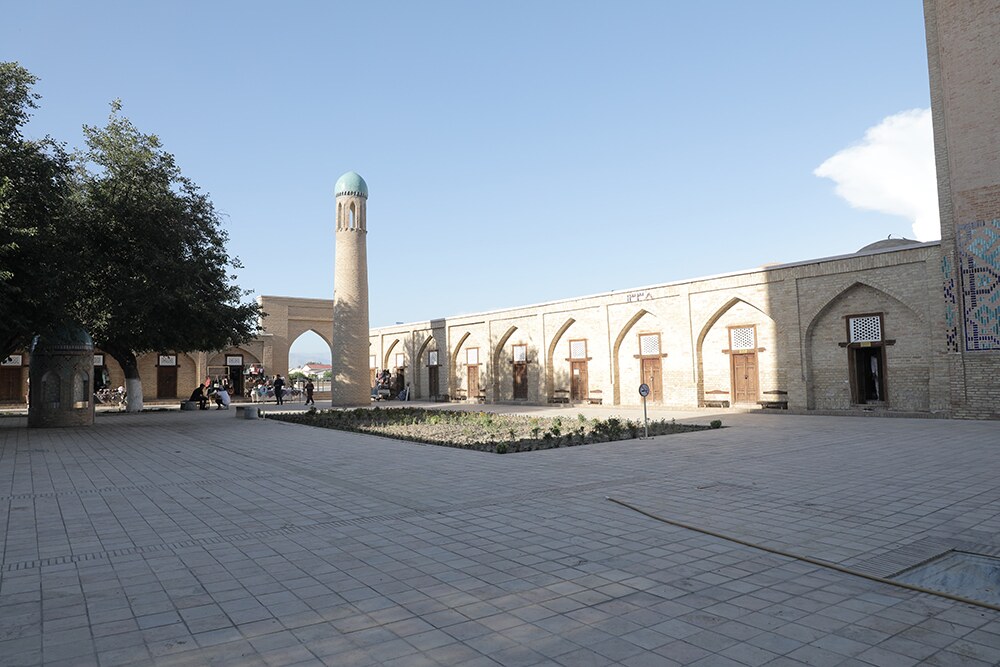
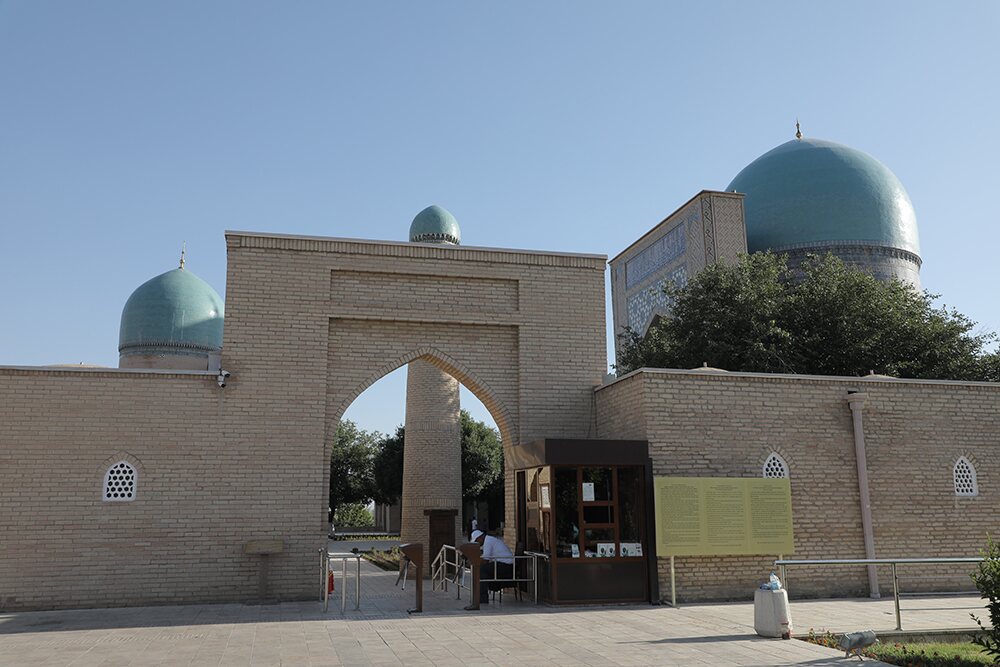
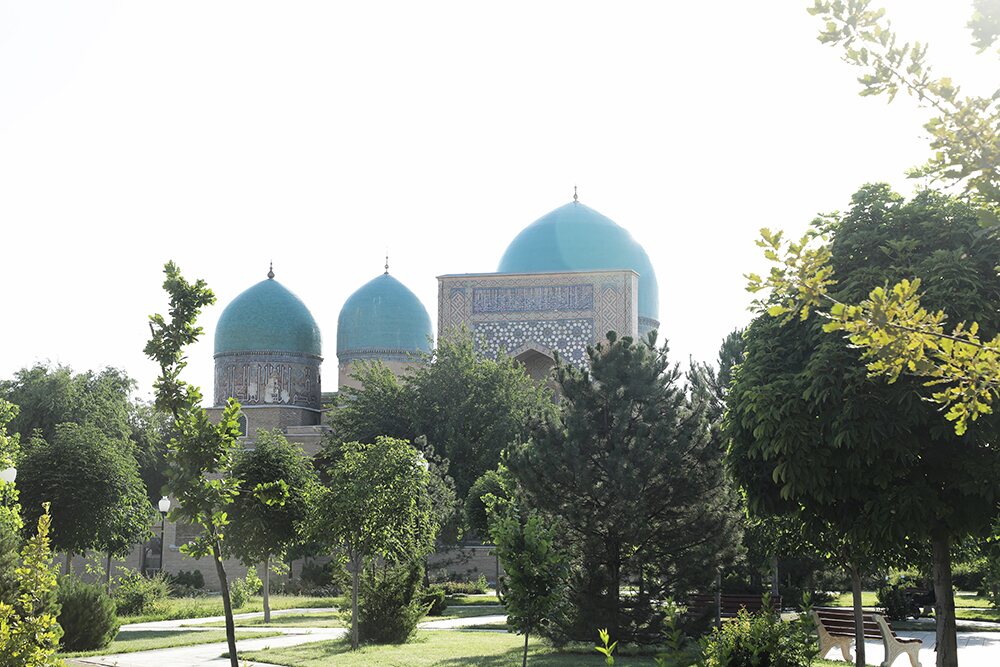
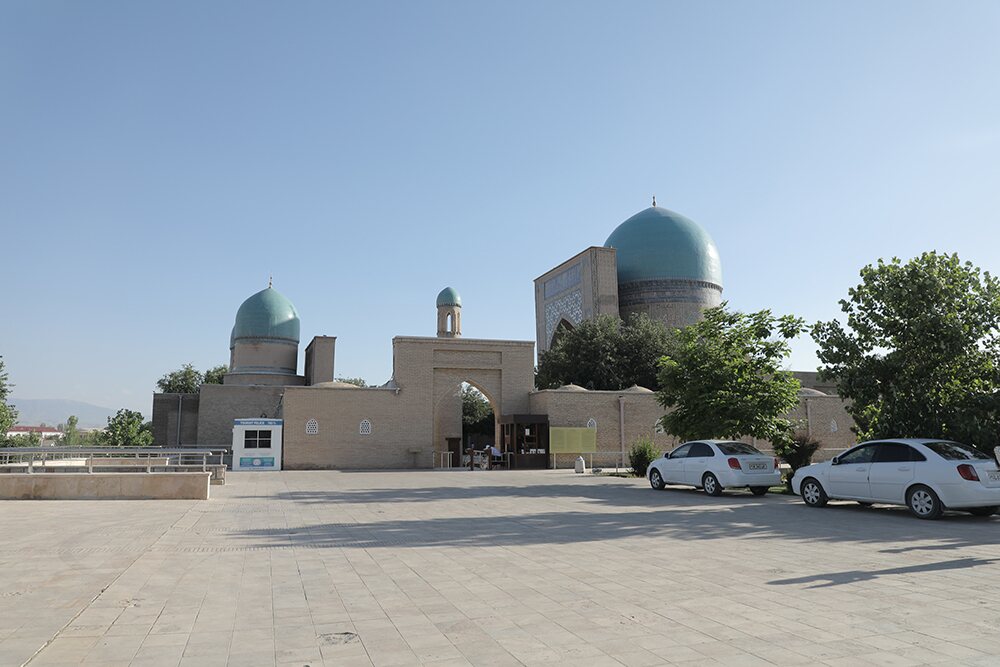
The Dor ut-Tilovat complex was constructed in the late 14th and early 15th centuries [1:104]. It encompasses the Kok Gumbaz Mosque, Shamsiddin Kulol Mausoleum, and Gumbazi Sayidon Cemetery Mosque. The total area of Dor ut-Tilovat is 500x500 m, forming a square shape. The initial formation stage of this architectural complex, located in the southeastern part of Shahrisabz city, dates back to the 11th-12th centuries [2:105]. During Amir Temur's reign, he built the Kok Gumbaz Mosque on the site of previously destroyed monuments and erected a mausoleum over the tomb of Sheikh Shamsiddin Kulol.
Regarding the birthplace of Amir Timur, Kesh, and the magnificent structures built there, the Spanish ambassador Clavijo, who witnessed its grandeur, noted the following: "Kesh is situated on a green plain covered with trees, intersected by irrigation structures... The city was encircled by an earthen wall and a deep moat, with drawbridges in front of the gates... There are numerous houses and mosques here. In particular, Timur had ordered the construction of one of them, but its construction remained unfinished. It contained a large mausoleum where his father was buried" [3:102]. This architectural complex, which Clavijo referred to as the "Great Cemetery," later became popularly known as Dor ut-tilovat. During the reign of Mirzo Ulugbek, construction work continued on the incomplete parts of the Kok Gumbaz mosque.
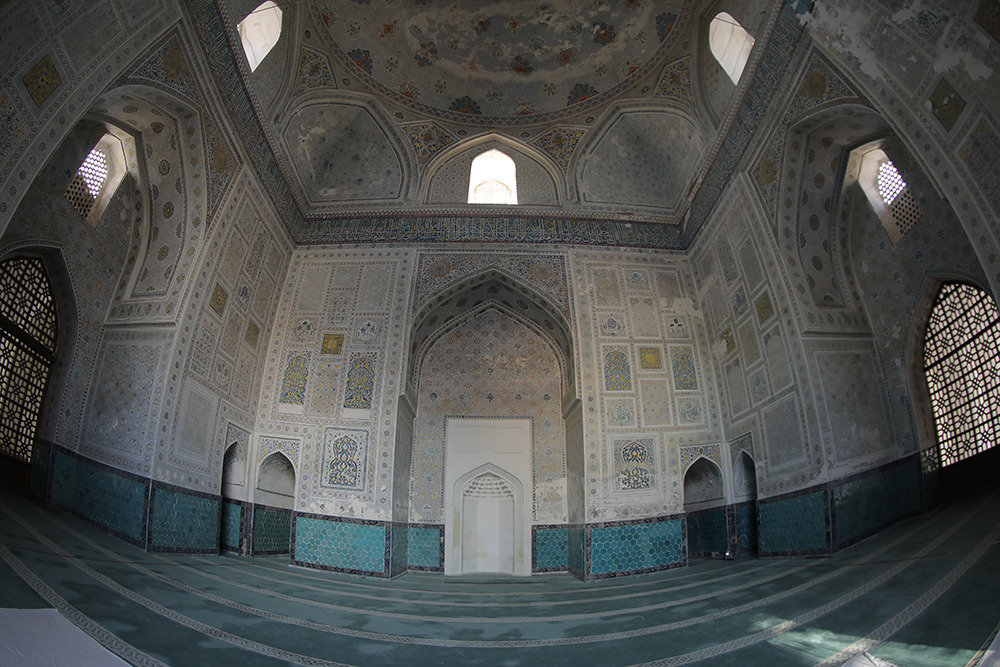
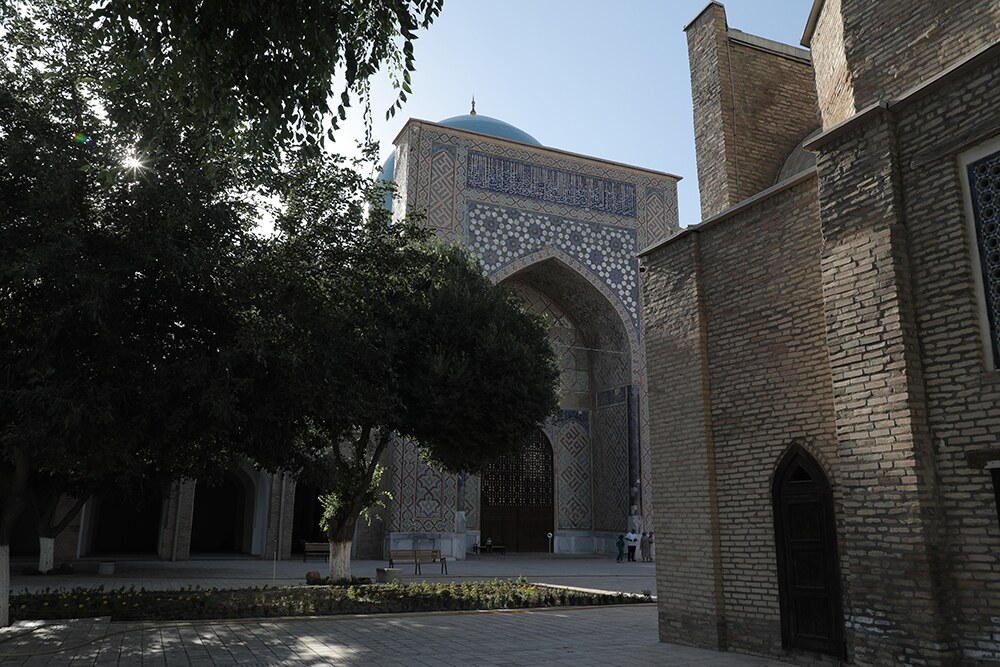
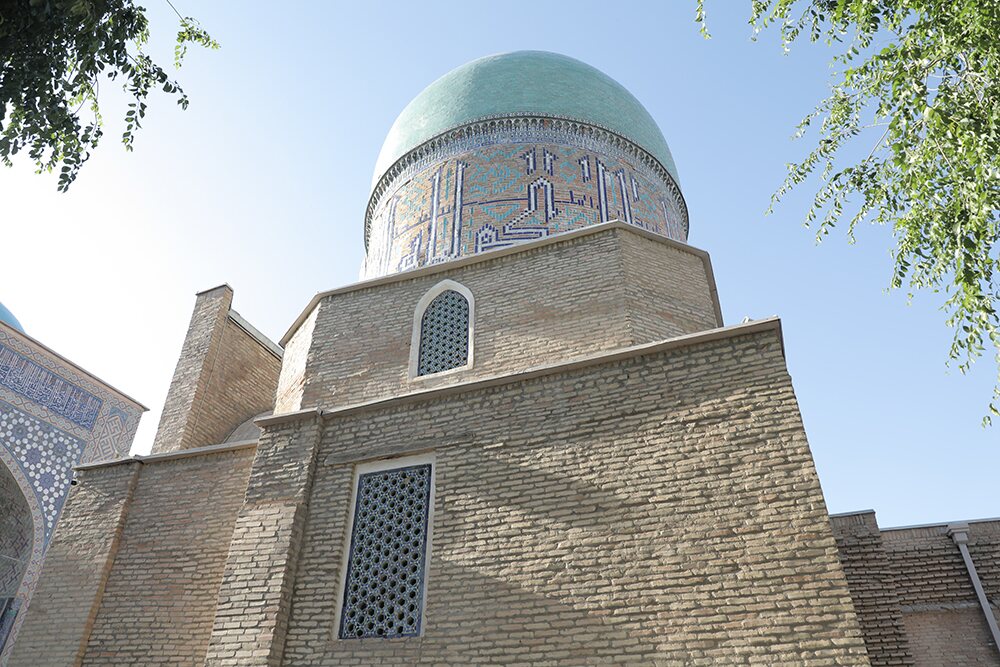
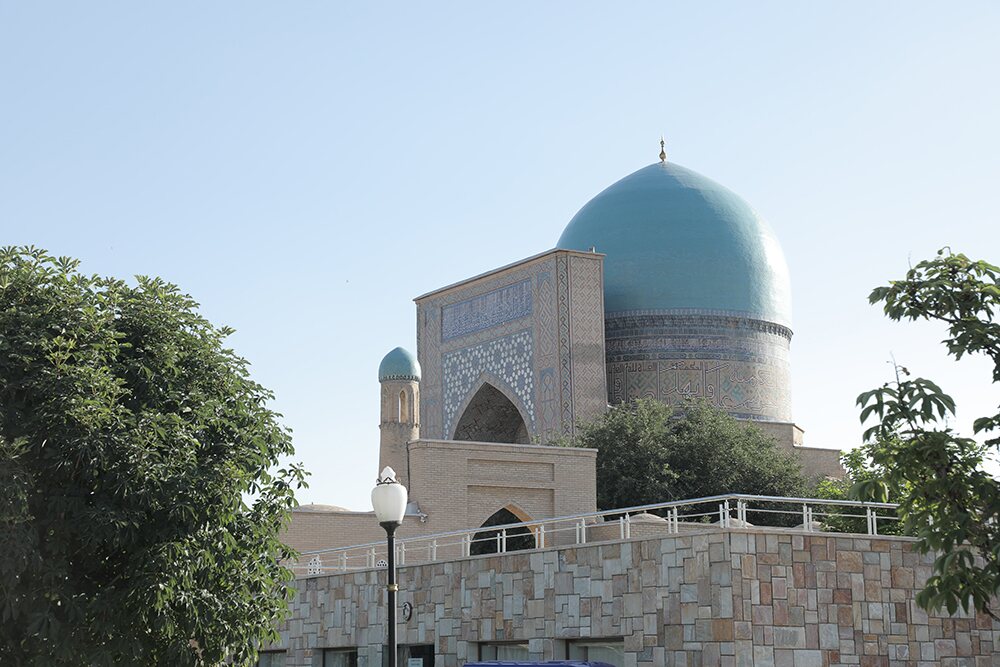
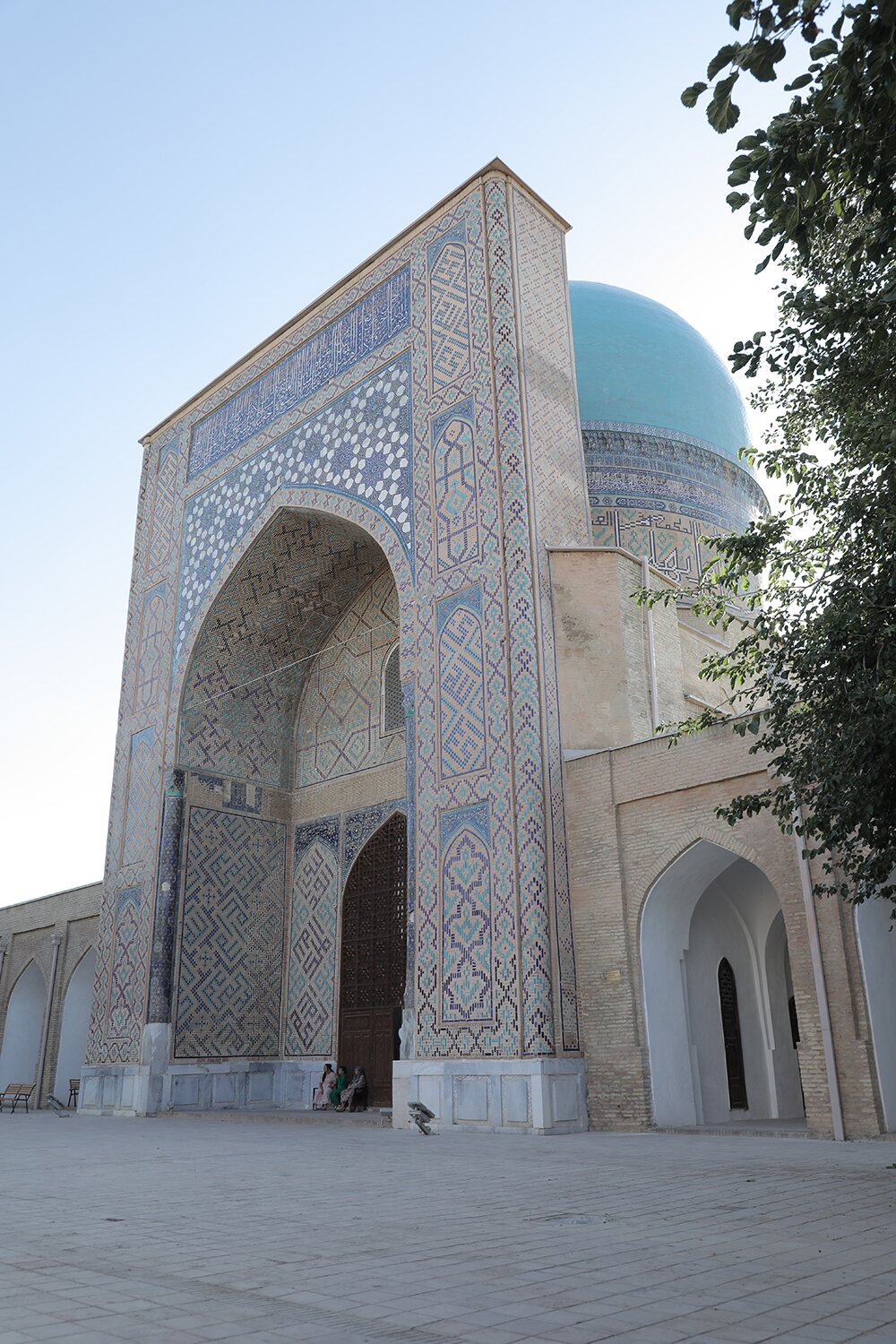
During the reign of Mirzo Ulugbek, the Dor ut-Tilovat architectural complex was further expanded with several structures. Notably, during Amir Timur's era, a small mausoleum covered with marble slabs was built over the grave of Shamsiddin Kulol, one of his influential mentors. Later, in Mirzo Ulugbek's time, a domed structure was erected above this mausoleum. Opposite this mausoleum, there used to be a madrasa. In 1434-1435, following Shah Rukh Mirzo's order, Mirzo Ulugbek constructed the Blue Dome Mosque in its place. This mosque became the largest structure in the architectural complex and served as the main congregational mosque. The arch of the mosque's portal bears inscriptions with the names of Shah Rukh Mirzo and Mirzo Ulugbek, praises in their honor, and information about the mosque's completion years. The Blue Dome Mosque derives its name from the blue tiles used in its exterior architectural decorations. Geometric patterns dominate the facade decorations. The columns on both sides of the mosque's entrance and its upper gallery have deteriorated [4]. Floral (islimi) decorations were also used on these elements and the main arch. The mosque's prayer hall measures 12.7×12.7 meters, and the exterior of the dome's base features epigraphic decorations in blue and white colors, containing Quranic verses. The interior space is adorned with eight small arches interconnected by rhombus-shaped shield-like elements, supported by 16 arch-shaped pillars. Four circular staircases in the corners of the prayer hall's brick walls led to the roof of the iwan [5:38-40].
The Blue Dome Mosque was renovated in the 1970s and during the years of independence in 1995-1996 in connection with the anniversaries of Amir Timur and Mirzo Ulugbek. Additionally, a number of scientific articles have been published revealing information from historical sources about monuments built during the era of Amir Timur and the Timurids [6:28-36; 6:100-101]. According to a government decision, restoration and repair work was also carried out at the Blue Dome Mosque in 2016 [7].
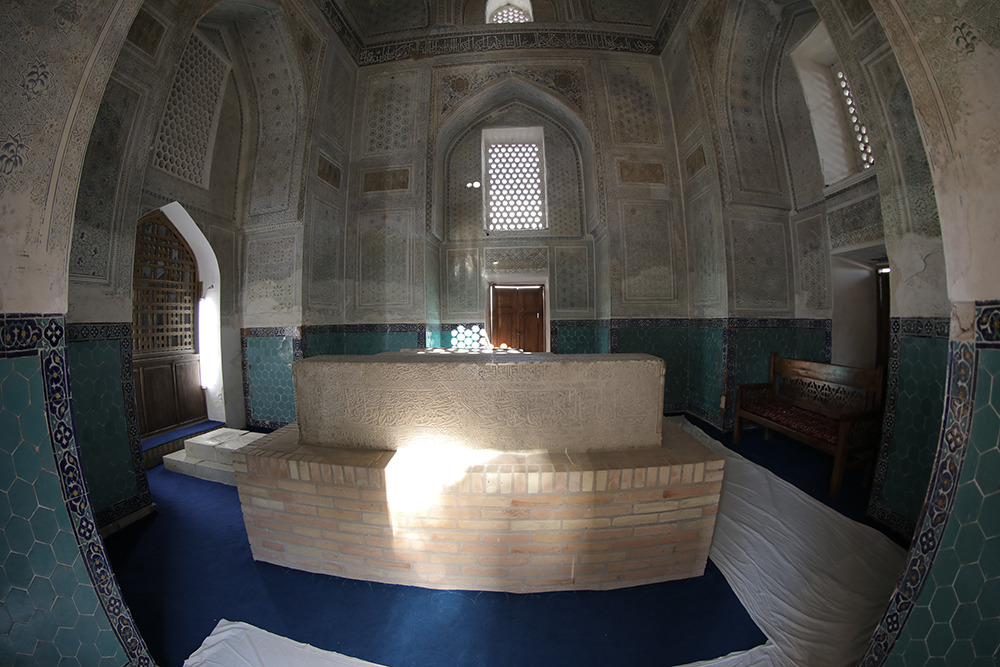
In 1437-1438, Mirzo Ulugbek constructed a new mausoleum for members of the Timurid dynasty behind the southern wall of the Shamsiddin Kulol mausoleum. Researchers note that among the tombstones from the 15th-17th centuries in this mausoleum, the names of Termez sheikhs are also found. Based on this, the mausoleum was named Gumbazi Sayyidon [8:36].
"Dor ut-tilovat" means a place where the Quran is read and recited, and is a shrine located in the center of Shakhrisabz, west of the "Dor us-saodat" complex, dating back to the Timurid era [9:66-67].
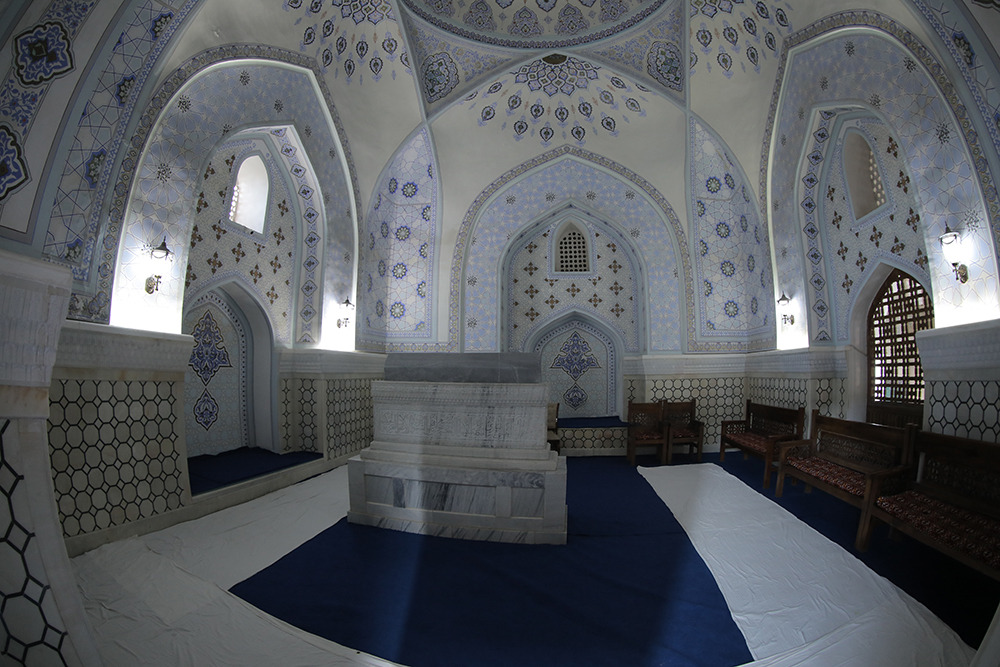
The "Gumbazi Sayyidon" (Dome of Sayyids) forms part of the "Dor ut-Tilovat" complex in the center of Shakhrisabz. The tombstones inside the mausoleum (dated to the 15th-18th centuries) bear the names of descendants of the Sayyids of Termez (Amir Abdul Muoniy, Muhammad Sayyid, and Ma'rufjon Muoniy) [10]. Amir Timur deeply loved his eldest son Jahongir Mirzo and was profoundly affected by his son's death. For this reason, he had a mausoleum built in his name [11], which became a burial place for the Timurids, serving as a vivid manifestation of the material culture of the Timurid era [12].
The architectural monument of Gumbazi Sayyidon was constructed in 1437-1438 by Mirzo Ulugbek, who built it as the "Ulugbek Family Mausoleum" [13:139-141].
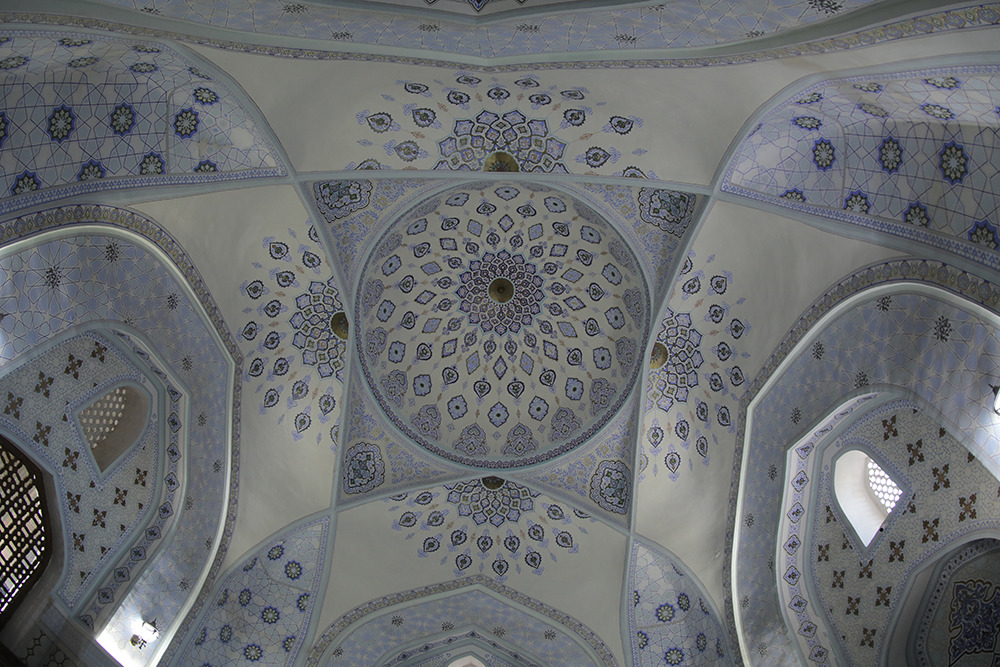
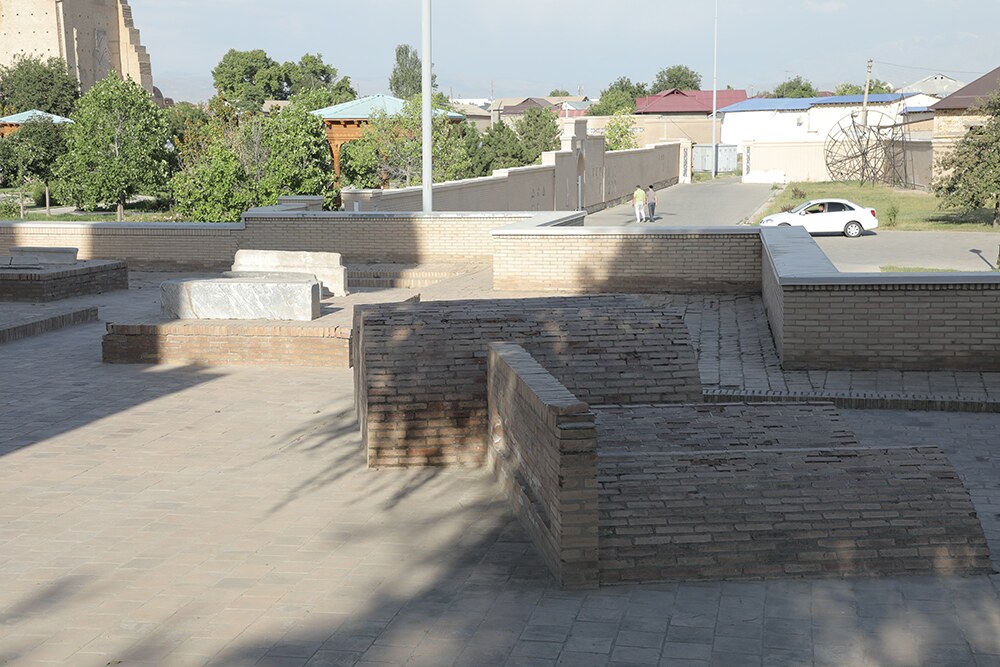
The buildings constructed in Shakhrisabz primarily consist of mausoleums. The mausoleum has a square plan (outer dimensions 9×9 meters, inner dimensions 5.75×5.75 meters), covered with an octagonal (prismatic) dome. The arches on the inner walls of the mausoleum are arranged in two rows, with openings and wide niches in the upper corners. Inside the mausoleum, there are several other sarcophagi brought from the neighboring cemetery during the 15th-18th centuries. Their inscriptions mention the names of the Termez Sayyids [14].
The work of discovering, registering, preserving, and restoring this monument began as archaeological expeditions in the Kashkadarya region from 1923 to 1970. Notably, in 1925, Academician V.V. Bartold and archaeologist V.L. Vyatkin initiated the study of historical monuments in Shakhrisabz [15]. The organization Sredazkomstaris registered the Aksaray monument, Imam Zoda mausoleum, Gumbazi Sayyidon cemetery, Shamsiddin cemetery, and Kuk Gumbaz mosque in Shakhrisabz, as well as the Abdullah Khan mosque and madrasah, Namozgoh mosque, Zahoki Maron and Shulluktepa monuments in Karshi [16].
In connection with the celebration of Mirzo Ulugbek's jubilee in Uzbekistan, on October 1, 1993, an expedition was organized to study the monuments in the city of Shahrisabz, and funds were allocated for the restoration of anniversary-related sites [17]. Specifically, 106.4 million soums were allocated for the historical architectural monuments in Shahrisabz, and restoration work was carried out on the Shamsiddin Kulol mausoleum, the Kok Gumbaz mosque, Dor ut-Tilovat, and the Gumbazi Sayyidon mausoleum [18].
REFERENCES
- A. Sagdullayev va boshqalar. Qadimgi Kesh-Shahrisabz tarixidan lavhalar. – T., 1998. – B. 104.
- O‘sha asar. – B. 105.
- Клавихо. Дневник путешествия в Самарканд ко двору Темура. – Москва: Наука, 1990. – С. 102.
- O‘zMA R-2406-fond, 1-ro‘yxat, 284-ish, 8-varaq.
- Mankovskaya L.Yu. Qashqadaryoning arxitektura yodgorliklari. – Toshkent: O‘zbekiston, 1979. – B. 38-40.
- Юсупова Д.Ю. Вопросы науки и культуры эпохи Темуридов в трудах Хондамира // Материалы международной научной конференции “Расцвет науки, культуры и образования в эпоху Темуридов”. – Ташкент – Париж, 1996. – С. 28-36.; O‘sha muallif. The international Scientific conference on Honor the 600th birthday of Mirzo Uluhg beg / Tashkent – Samarkand. Uzbekistan. 12-16 October 1994. Booklet (ingliz, o‘zbek va rus tillarida). 3 п.л.; O‘sha muallif. Education under Amir Temur and the Temurids // Materials of the international scientific conference “Amir Temur in world history”. – Tashkent: Uzbekistan, 1996. – P. 100-101.
- O‘zbekiston Respublikasi Vazirlar Mahkamasining “Qashqadaryo viloyatining Shahrisabz shahridagi ob’ektlarni qurish va rekonstruksiya qilishga doir kompleks chora-tadbirlari dasturi to‘g‘risida”gi 31-sonli Qarori. 2014 yil 20 fevral.
- O‘zMA R-2406-fond, 1-ro‘yxat, 1526-ish, 20-varaq; Mankovskaya L.Yu. Qashqadaryoning arxitektura yodgorliklari. – T.: O‘zbekiston, 1979. – B. 36.
- Ртвеладзе Э.В., Сагдуллаев А.С. Памятники минувших веков. − Ташкент: Узбекистан, 1986. − С. 66-67.
- Madaniyat vazirligi huzuridagi Madaniy meros departamenti ma’lumoti. − Toshkent, 2019 yil 15 aprel.
- O‘zMA, f. 394-jamg‘arma, 1-ro‘yxat, 252-ish, 13-16-varaqlar.
- O‘zMA, f. 2296-jamg‘arma, 1-ro‘yxat, 354-ish, 268-269-varaqlar.
- Пугаченкова Г.А., Ремпель Л.И. Выдающиеся памятники архитектуры Узбекистана. − Ташкент: Гос. изд. худ. лит. УзССР, 1958. − С. 139-141.
- Madaniy meros departamenti arxivi. KD-7086 fond, L-ro‘yxat, 11-ish, 73-75-varaqlar.
- O‘zMA, f. 394-jamg‘arma, 1-ro‘yxat, 190-ish, 64-70-varaqlar.
- O‘zMA, f. 394-jamg‘arma, 1-ro‘yxat, 252-ish, 20-21-varaqlar.
- O‘zMA, M-7 jamg‘arma, 1-ro‘yxat, 61-ish, 6-varaq.
- O‘zR VM ijtimoiy masalalar, fan va madaniyat bo‘limi mudiri Yu.Shodimetov. O‘zMA, M-7 jamg‘arma, 1-ro‘yxat, 60-ish, 35-varaq.