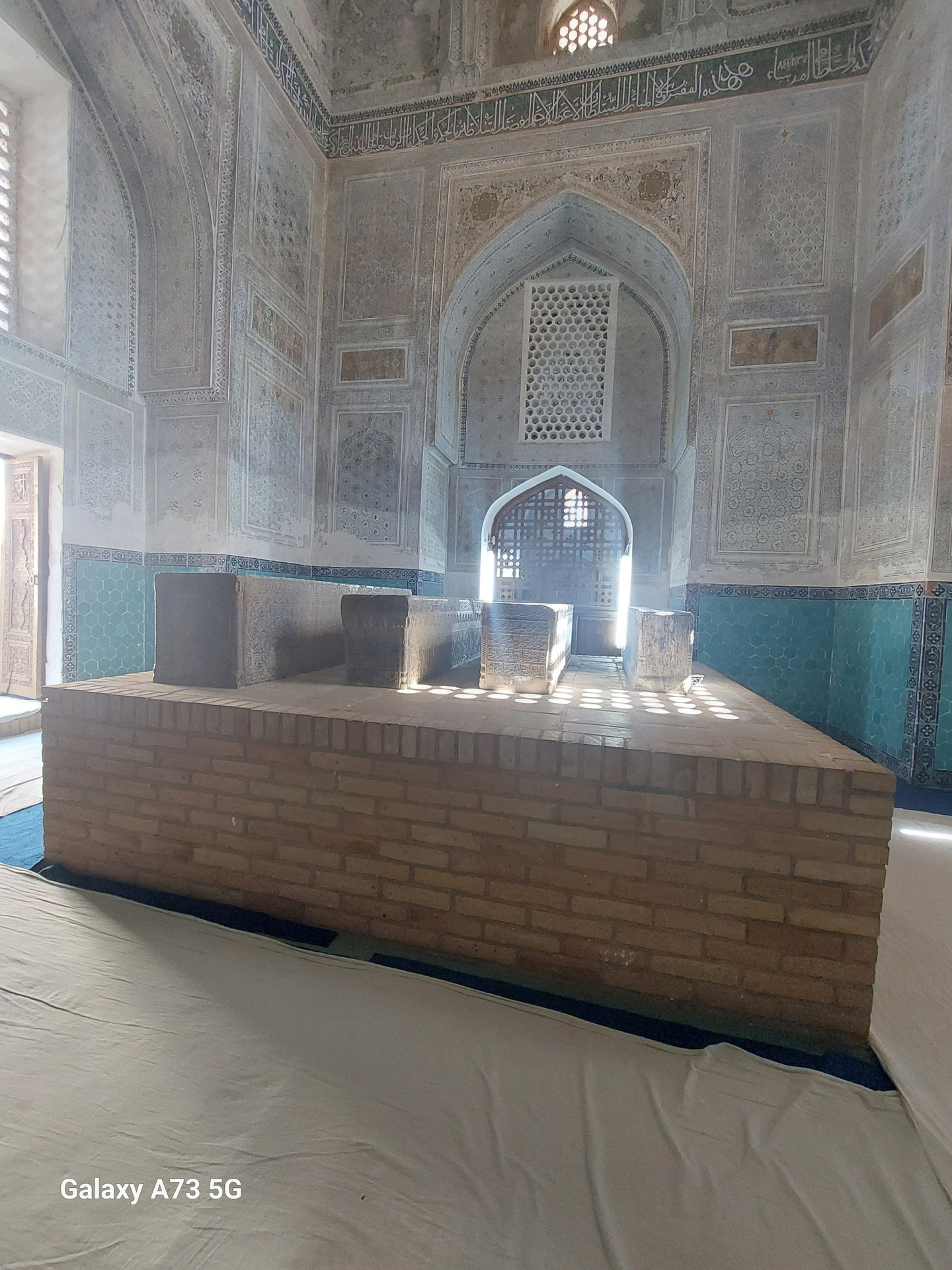
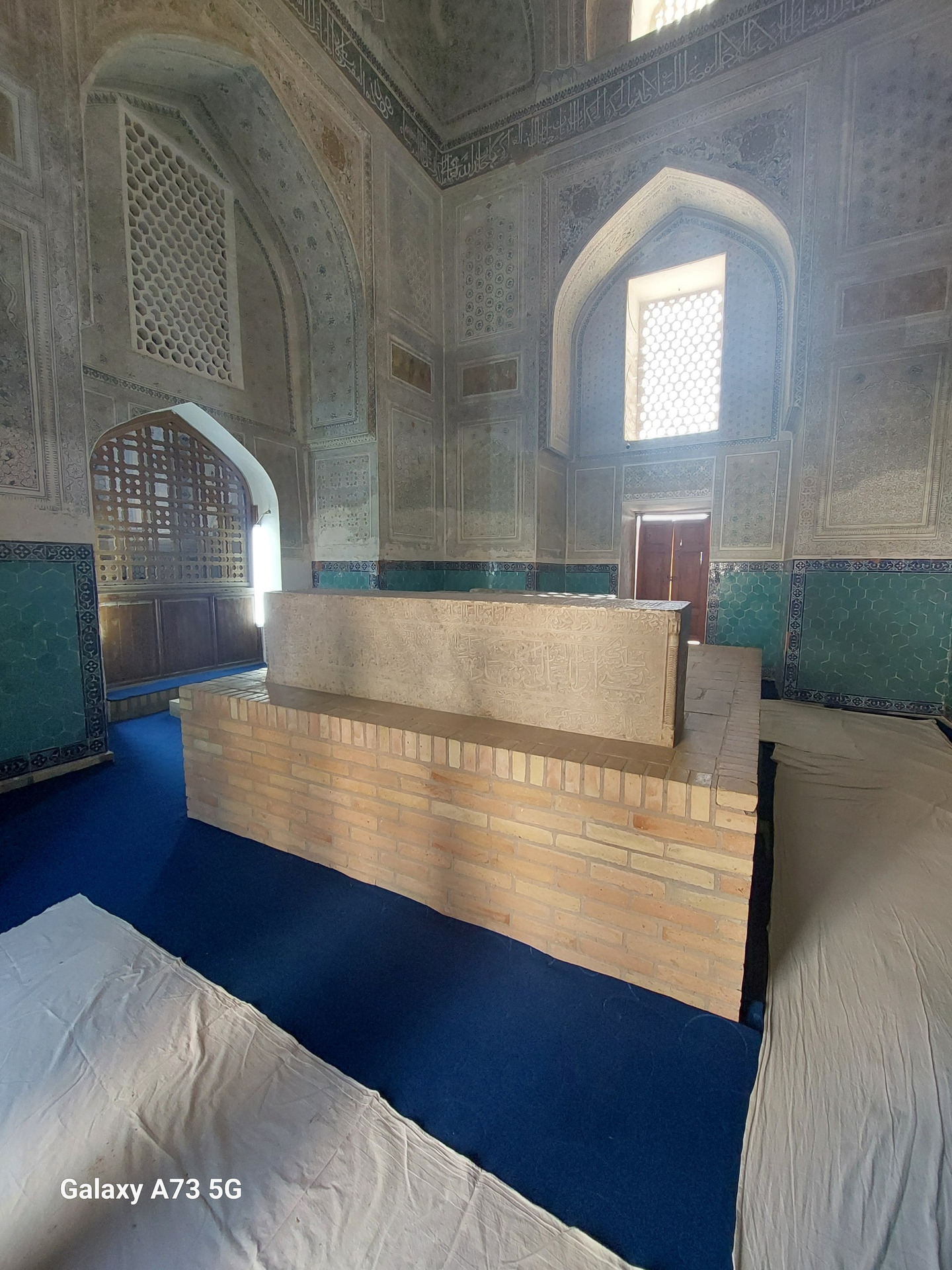
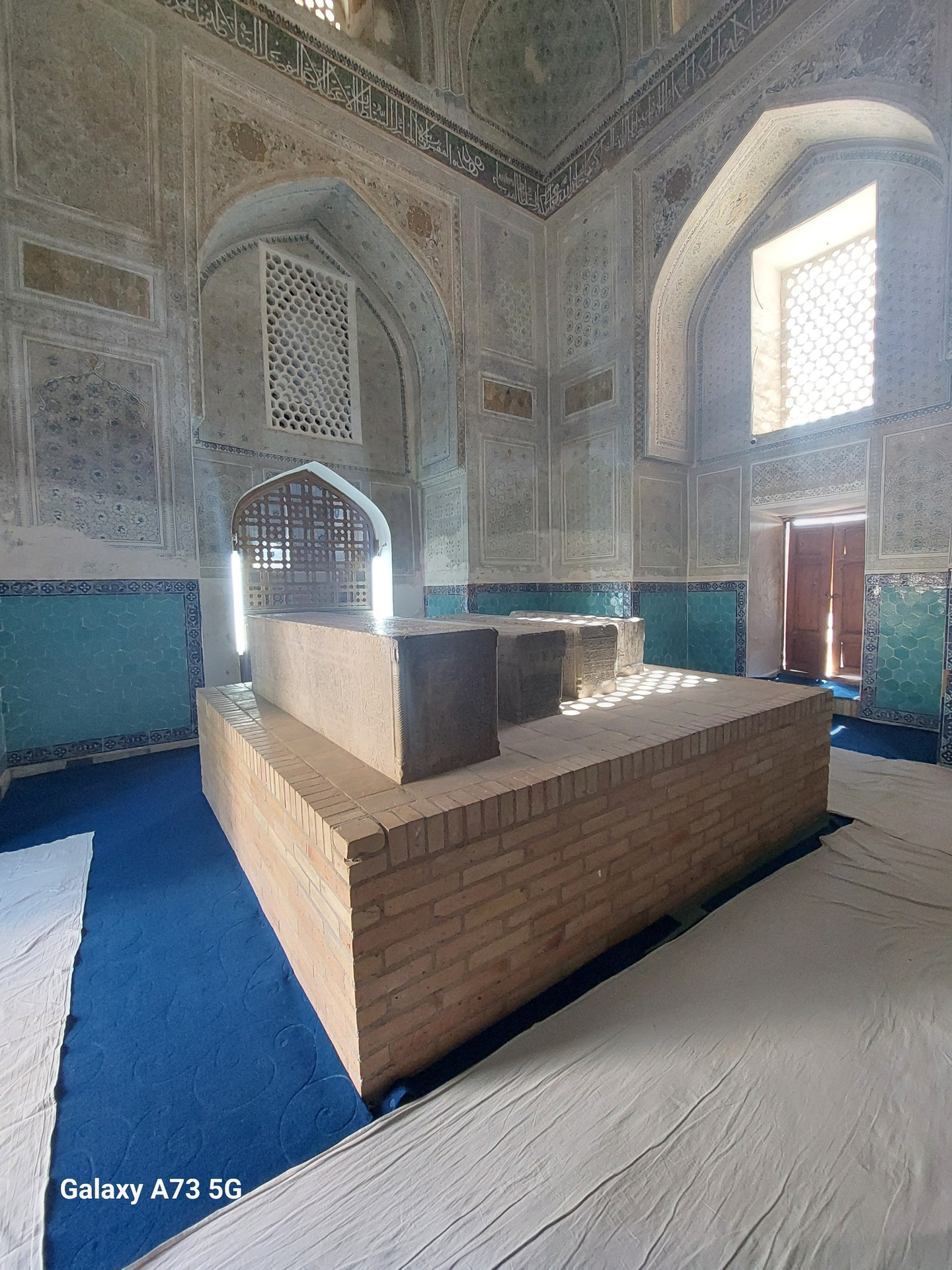
GUMBAZI SAYYIDON MAUSOLEUM (Shakhrisabz city)

Resources about the city of Kesh give information that Kesh (Kash) "Shakhrisabz" is covered with green grass most of the year, especially in spring, the courtyard, roofs and streets are green and literally translates as "Green City". It has written in Arabic resources that: "Kesh (Shahrisabz) has been a prosperous city since ancient times, it consisted of kuhandiz, hisna and Rabat, and also that the city was linked to Rabat of Medina and all structures in the city were built of clay and wood [1:65-66].
Historian Omonullo Buriev’s analyzed about "Central Asia in written sources of the Timurid era" provides information about Kesh and its historical buildings and describes it as follows: "Kesh began to flourish during the reign of Amir Temur; stone buildings were built. Including Dor-us-Siedat, Dor-us-Tilovat endowed him with rich lands, agricultural and administrative possessions and built himself a tall palace called Ak Sarai, and that his ivan (peshtok) is visible from several farsangs (distances). In addition, madrassas, honakas, rabats, and houses were built in the city and surroundings of Kesh, some of which related to His Majesty, and the other part to the emirs and the state.
As described in the sources, Gumbazi Sayyidon is part of the Dor ut Tilovat ensemble, as it had a direct connection with the Termez Sayyids. (Mausoleum of Gumbazi Sayyidon, XV century) [4:144], which was part of the ensemble "Dar ut-tilavat" [5:16-17]. The architectural monument of Gumbazi Sayidon has been built in 1437-1438 by Mirza Ulugbek, who built it as the "greenhouse of the Ulugbek family" [6:139-141]. The buildings built in Shakhrisabz mainly consist of a number of dahmas. The dome of the mausoleum of Sayyidon is covered with an octagonal dome (outer size 9x9, inner side 5.75x5.75). The arches on the inner walls of the mausoleum are double—row, with holes and wide shelves in the corners. Inside the room there are several more sagans, brought from neighboring tombs in the XV-XVIII centuries. The inscriptions on these sagan mention the name of the Sayyids of Termez [7:73-75].
The mausoleums of Gumbazi Sayyidon and Shamsiddin Kulol can be considered a special "religious and ideological center" of a huge number of Shakhrisabz monuments.
The Sayyids of Termez had a close relationship with Amir Temur and his family. Sahibkiran's ancestors were associated with the name of Sheikh Sayyid Barak and Sayyid Shamsiddin Amir Kulol, and as a result of intermarriage through marriage of Temur's descendants with the descendants of Termiz Sayyids, representatives of the descendants of Termiz Sayyid appeared in Kashkadarya. "Gumbazi Sayyidon" became their family mausoleum [8:28-29]. According to some reports, Amir Temur married his daughter Sultanbakhtbegim to Hassan, one of the Sayyids of Termez, and presented him with a certain part of the Kashkadarya oasis. Subsequently, Sayyid Hassan built his lyangar (place of Sufis) on this place.
Work on the search, accounting, preservation and restoration of this monument started during an archaeological expedition to the Kashkadarya region in 1923-70. In particular, in 1925, academician V. V. Bartold and archaeologist V. L. Vyatkin [9:64-70] began studying the historical monuments of Shakhrisabz [13: 64-70] Subsequently, the Committee for Museums and Protection of Antiquities, Art and Nature of the Sredazkomstaris included Aksaray in Shakhrisabz, the mausoleum of Imam Zadeh, the tomb of Gumbazi Sayidon, the tomb of Shamsiddin, the Kuk Gumbaz mosque, the mosque and madrasah of Abdullah Khan in the list of protected monuments in Karshi, Namazgoh mosque, monuments of Zahoki Maron and Shulluktepa " [10:20-21].
On October 1, 1993, in connection with the celebration of the anniversary of Mirzo Ulugbek in Uzbekistan, an expedition was organized to study the monuments of Shakhrisabz and financial resources were allocated. In particular, the amount allocated for the repair of historical and architectural monuments of the city of Shakhrisabz amounted to 106.4 million soums [11:6]. The mausoleum of Shamsiddin Kulol, the Kuk Gumbaz mosque, the mausoleums of Dar ut-tilovat and Gumbazi Sayidon were restored with these funds.
It should be noted that decorative work, an abundance of flowers, a variety of mosaics and the texture of similar architectural monuments built in the Middle Ages have been preserved to this day. This proves the skill of the builders and architects of that period, who created works of art in harmony with nature.
list of used literature
1.Ибн Ҳавқал. Китоб сурат ал-арз.-Тошкент: Мовароуннаҳр, 2011.
2.Рахимжонов Д. О. Абу Ҳавс Насафий ва унинг "Китоб ал-қанд" асари. Тошкент: Инновацион ривожланиш нашриёт матбаа уйи, 2020.
3. Бўриев О. Темурийлар даври ёзма манбаларида Марказий Осиё. Тошкент: Ўзбекистон, 1997.
4.Ртвеладзе Л.Л., Ртвеладзе Э.В. Мусульманские святыни Узбекистана. Ташкент, 2020.
5.Кадырова Т.Ф. Архитектура Совесткого Узбекистана. Москва, Стройиздат. 1987.
6.Пугаченкова Г.А., Ремпель Л.И. Выдающиеся памятники архитектуры Узбекистана. Ташкент: Гос. изд худ. лит. УзССР, 1958.
7.Маданий мерос агентлиги архиви. КД-7086 фонд, Л-рўйхат, 11-ст, 73-75 варақлар.
8.Турсунов С. Термизий буюк сиймолар.-Тошкент: Шарқ, 2002.
9.НА Уз, ф. 394, опись1, дело 190, лист 64-70 .
10.НА Уз, ф. 394, опись 1, дело 252, лист 20-21.
11.НА Уз, ф.М-7, опись 1, дело 61, лист б.