AK SARAY (Shahrisabz)

Hamidova M.S.
Acting Professor of NUUz,
Doctor of Historical Sciences (DSc)
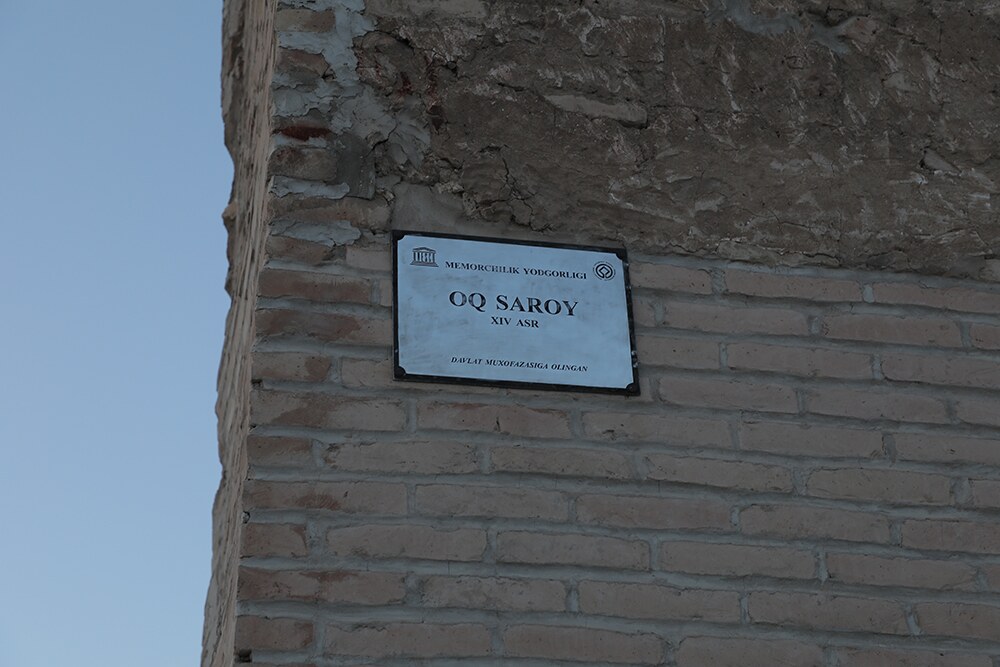
Ak Saray is a monument of the Timurid period located in Shahrisabz. Shahrisabz, the birthplace of Amir Timur, has experienced multiple periods of rise and decline over the centuries. In the Middle Ages, it was known as Kesh. The city of Kesh, which was Amir Timur's ancestral property, was enclosed by a defensive wall at the end of the 14th century. According to sources, the construction of the Kesh fortress wall began in 780/1378 and was completed within a year [1:96].
The rectangular-shaped wall had gates on all four sides. Historical sources state that when Amir Timur conquered Herat, he ordered its iron-plated gates to be brought to Shahrisabz and installed on the city wall. The emphasis on main streets, which became a tradition in medieval cities, is also observed here. As in other central cities, the main roads starting from the gates of the defensive walls intersected in the center. Shops lined these roads, increasing in number towards the center, where the main bazaar - Chorsu - was located. The Chorsu market that has survived to this day was built much later and is situated away from the center. Ak Saray was constructed in the southeast of the citadel. Opposite it were neighborhoods where aristocrats and religious leaders resided, while in the southwestern part of the city there were artisans' quarters. In the outskirts surrounding the citadel, gardens and orchards merged with vineyards along the canals [2:90-91]. This also influenced the architecture of the oasis, reflected in the unique structure and architectural decoration of the magnificent buildings constructed in Shakhrisabz.
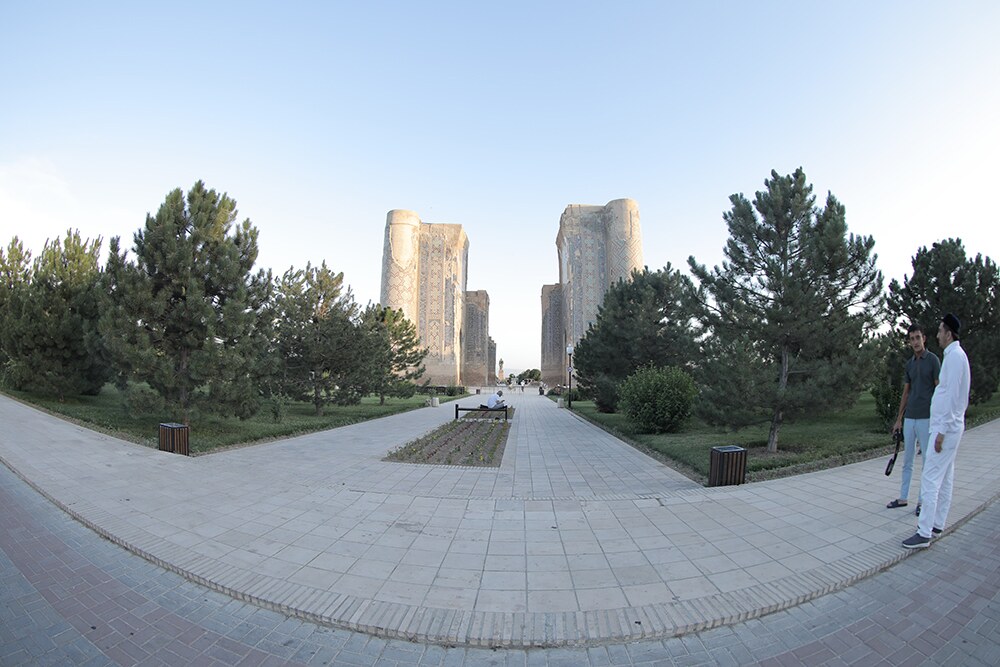
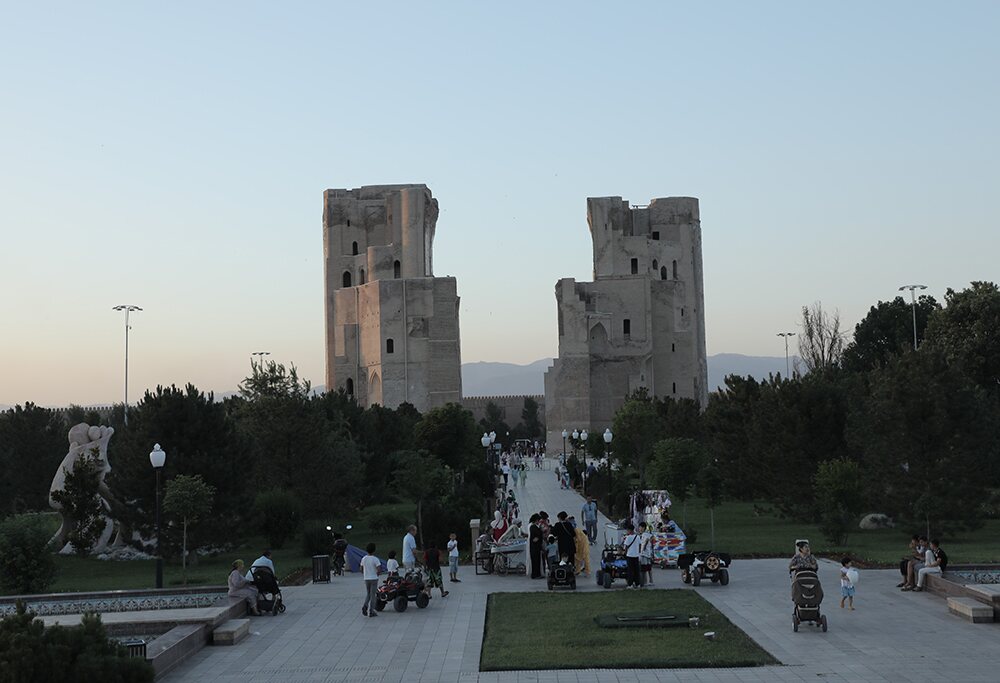
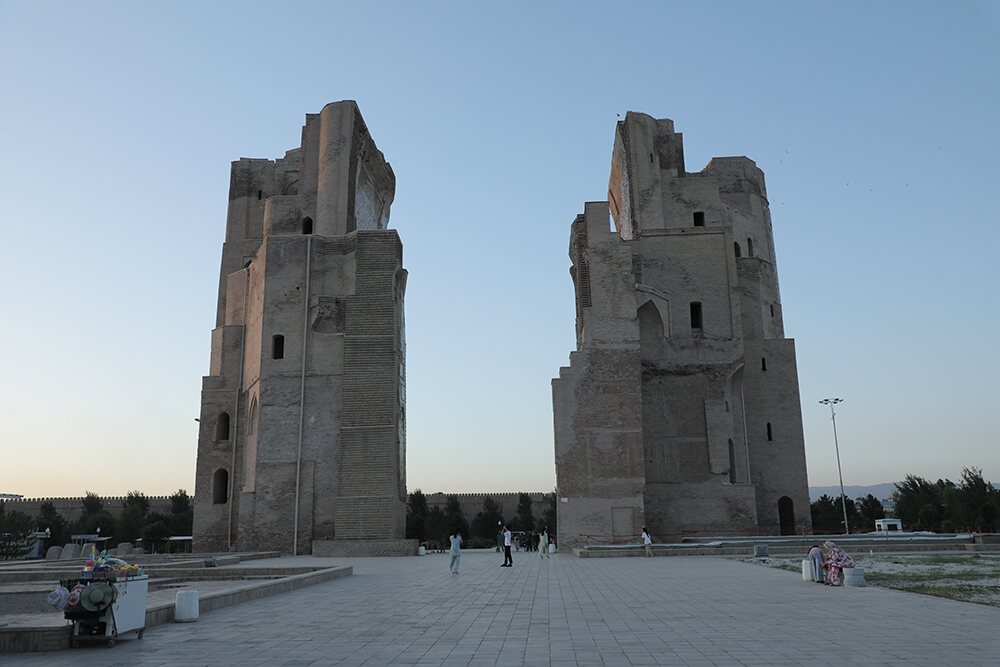
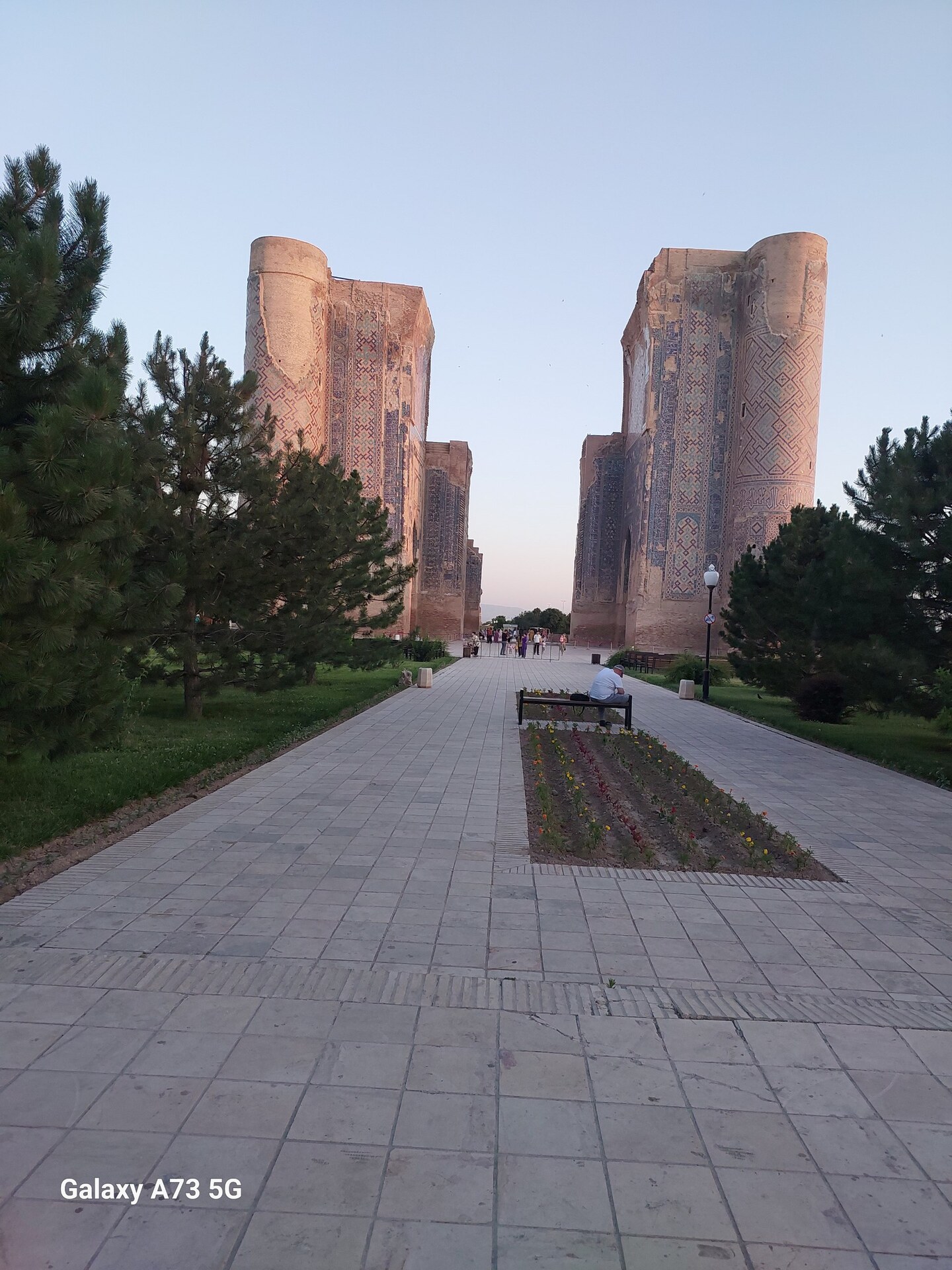
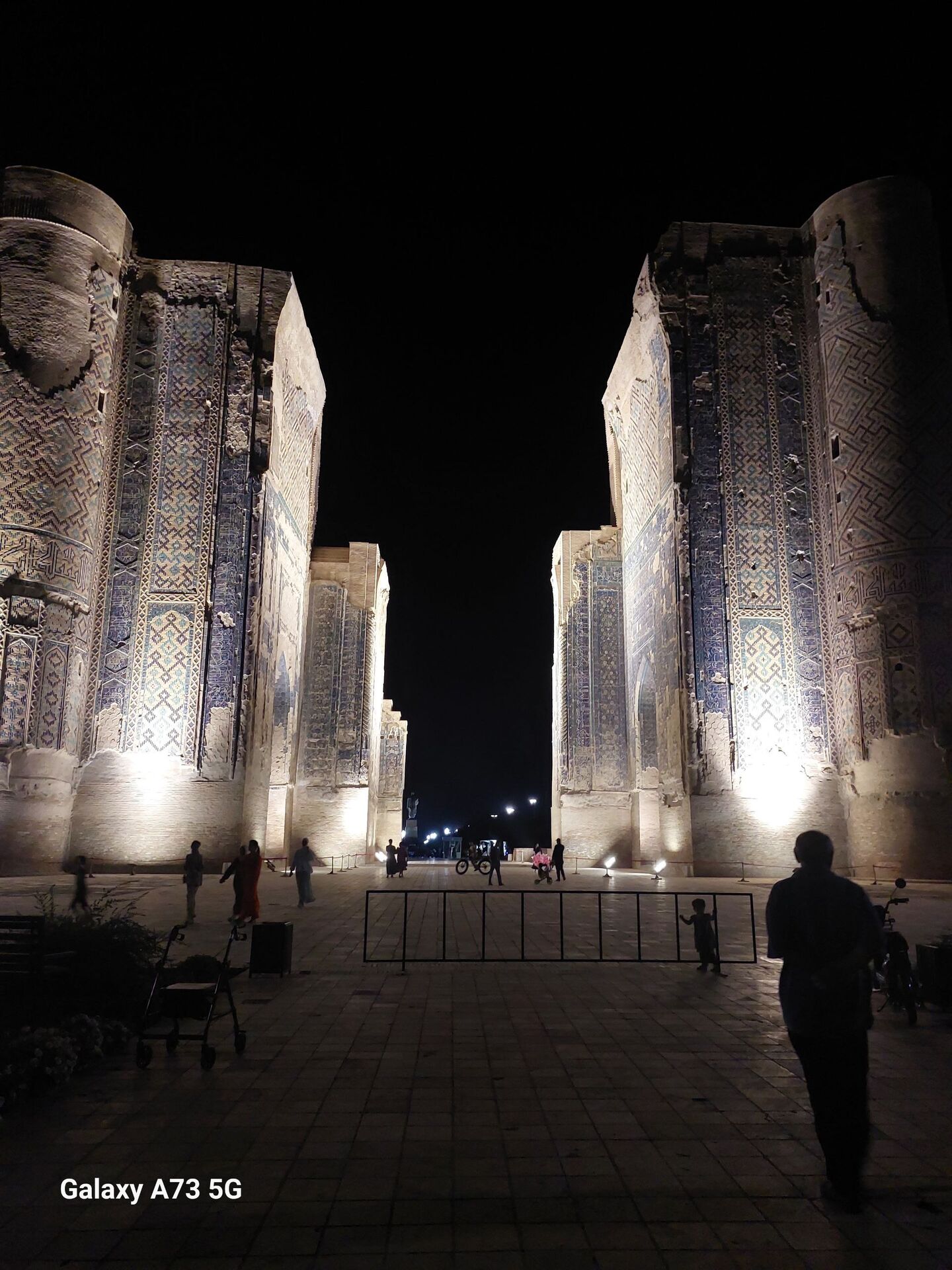
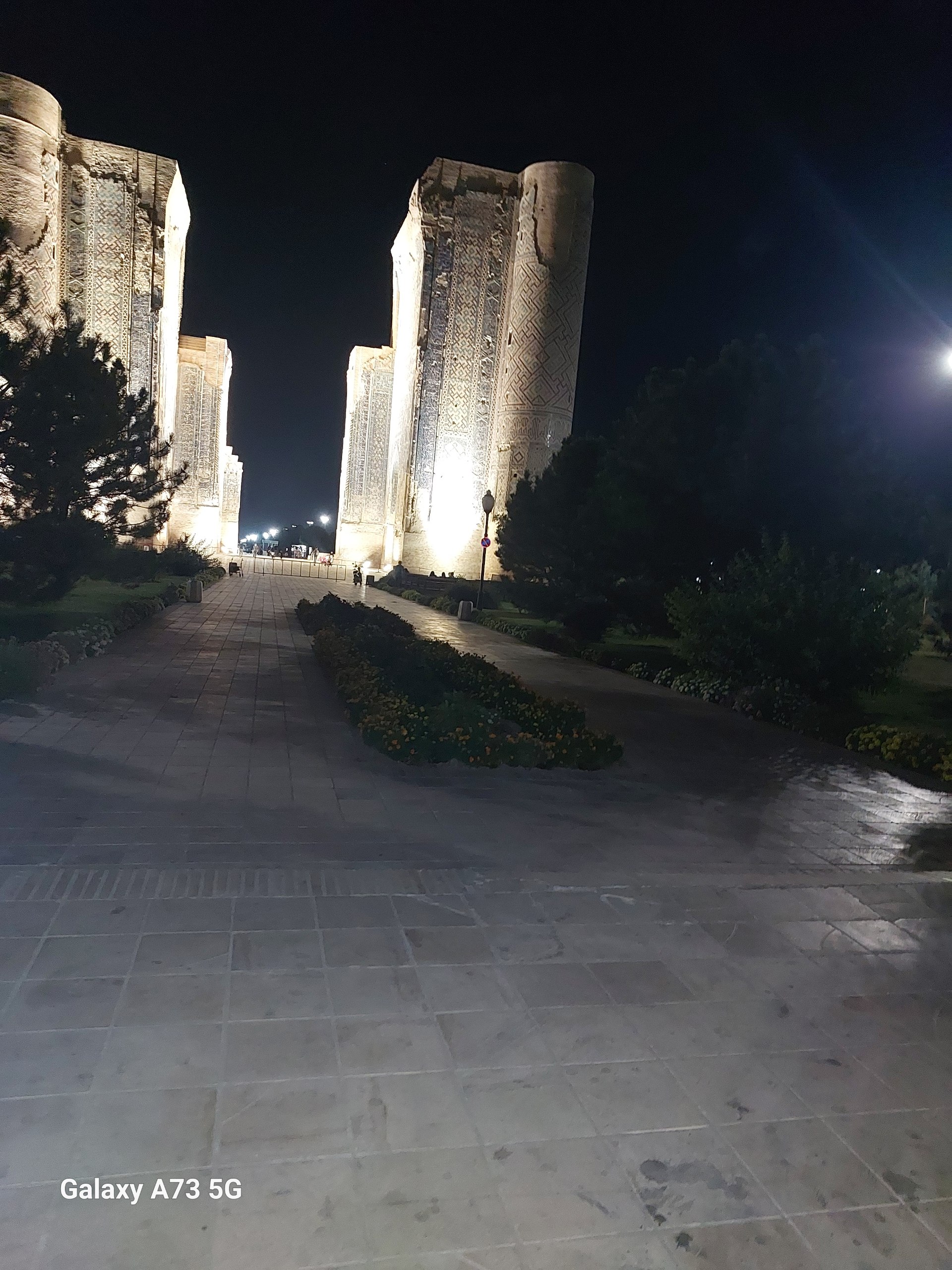
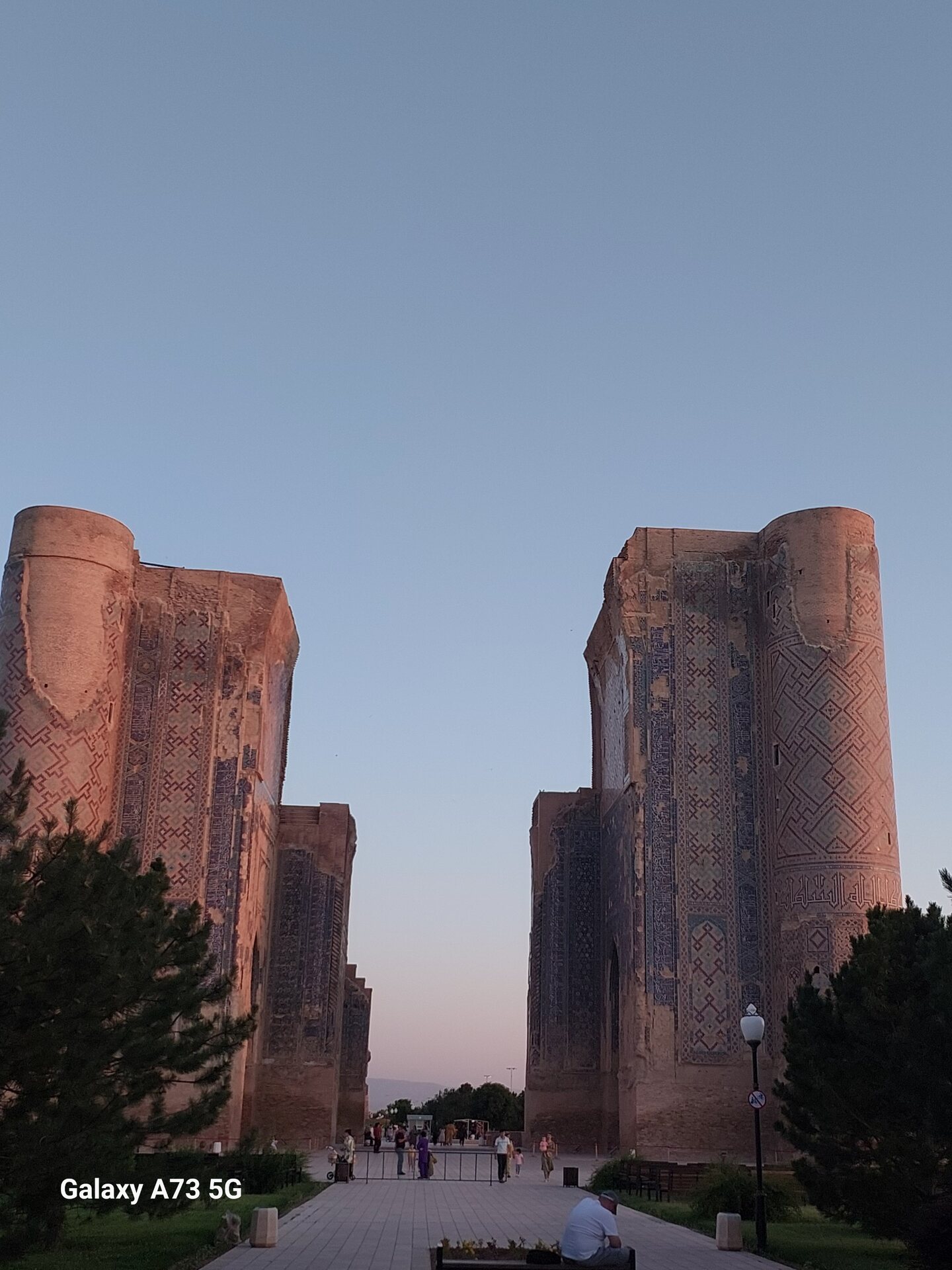
The Ak Saray was built between 1380 and 1403 by order of Amir Timur. Historical sources describe this palace as follows: "In the year seven hundred and eighty-one (March 1380), he ordered a fortress to be built in that city (Kesh) and had it zealously completed. And such a city it became that the celestial architect, having traveled the world for so many years, had never seen such a city and palace anywhere" [3:88]. Today, only the columns of the main arch have survived from this palace. Along with local craftsmen, masters captured during Amir Timur's campaigns in Urgench and Azerbaijan also participated in the construction of the structure. The exterior decorations of the building, particularly the columns of the main arch and the corner towers, are adorned with colorful glazed bricks, carved tiles, and ceramic plates featuring islimi patterns.
Rui Gonzales de Clavijo described the Ak Saray in Shahrisabz as ..."a unique structure adorned with gold, lapis lazuli, and other colorful decorations" [4:146-147]. This author also provided interesting information about the layout of the Ak Saray, specifically noting that the palace consisted of three parts: an administrative section, a residential area, and garden boulevards [5:146-147]. According to experts who have thoroughly studied the monument, the palace was traditionally built in a courtyard surrounded by rectangular porticos. The width of the courtyard was 120-125 meters, and the length was 240-245 meters [6:92]. The palaces of Amir Timur were among the most magnificent structures of their time, and there is no doubt that their construction reflected the skill of not only local architects but also master craftsmen who were brought from all the territories he had conquered. These palaces have not survived to the present day in their complete form. However, the material evidence found as a result of studying their ruins and remains allows us to form an idea of these palaces.
It is well known that the architectural monuments of this period are renowned not only for their vast size but also for their rich architectural decorations. Undoubtedly, the palaces of Amir Temur are an integral part of this architectural heritage, and such unique examples are not found either before or after the era of Amir Temur and the Timurids.
In 1925, Academician V.V.Bartold and archaeologist V.L.Vyatkin began studying the historical monuments of Shakhrisabz [7], and the Sredazkomstaris organization registered the Ak Saray monument in Shakhrisabz, Imam Zoda mausoleum, Gumbazi Sayyidon cemetery, Shamsiddin cemetery, Kok Gumbaz mosque, Abdullah Khan mosque and madrasah in Karshi, Namozgoh mosque, Zahoki maron and Shulluktepa monuments [8].
REFERENCES
- A.Sagdullayev va boshqalar. Qadimgi Kesh-Shahrisabz tarixidan lavhalar. – T., 1998. – B. 96.
- O‘sha asar. – B. 90-91.
- Sharafuddin Ali Yazdiy. Zafarnomaa / So‘zboshi tabdil, izohlar ko‘rsatkichlar mualliflari Ashraf Ahmad va Haydarbek Bobobekov. – T.: Sharq, 1997. – B. 88.
- Rui Gonsales de Klavixo. Samarqandga – Amir Temur saroyiga sayohat kundaligi (1403-1406 yillar). – Toshkent: O‘zbekiston, 2010. – B. 146-147.
- O‘sha joyda. – B. 146-147.
- A.Sagdullayev va boshqalar. Qadimgi Kesh-Shahrisabz tarixidan lavhalar. – T., 1998. – B. 92.
- O‘zMA, f. 394-jamg‘arma, 1-ro‘yxat, 190-ish, 64-70-varaqlar.
- O‘zMA, f. 394-jamg‘arma, 1-ro‘yxat, 252-ish, 20-21-varaqlar.